Lentils

Overview
Lentils provide plant protein, fibre, folate and non-haem iron, with very little fat. They are a versatile base for soups, salads and stews, and a useful part of meals containing little or no meat.
Whole brown, green and black lentils retain their seed coat and generally hold their shape when cooked. Split red and yellow lentils are usually dehulled, cook faster and soften readily, making them well suited to soups and dahls.
Other Nutritional Highlights
- Folate: Lentils contribute to dietary folate intake, supporting normal one-carbon metabolism.
- Plant protein and fibre: They contribute both within a varied dietary pattern.
- Non-haem iron: Lentils supply iron, although phytate affects its absorption. Including vitamin C–rich foods in the meal can help improve non-haem iron absorption [3].
Advanced Nutrition
Amino acids
Lentils supply cystine, which contributes to cysteine availability. Representative composition values are 118 mg per 100 g of boiled lentils, or approximately 234 mg in a 198 g cooked cup. Dry lentils contain approximately 322 mg per 100 g; this is an ingredient-weight comparison, not a cooked serving.
Food-composition values are representative, not fixed. Variety, preparation and source can change the amount.
Protein quality
In the studied cooked whole green and split red lentils, methionine plus cysteine had the lowest amino-acid score relative to the 1991 reference requirement pattern. “Limiting” describes that relative balance; it does not mean lentils lack these amino acids or make no useful contribution [1].
The study measured protein digestibility in rats, so its digestibility-adjusted scores are not direct measurements of adult-human dietary adequacy. A varied diet can provide complementary amino-acid profiles without requiring lentils and grains to be eaten in the same meal [1,2].
Food Context
Sourcing
- Whole brown, green and black lentils keep the seed coat. Red and yellow lentils are often split and dehulled, and they cook to a softer texture.
- Lentil polyphenols sit mainly in the seed coat. Proanthocyanidins were characterised there, mostly as polymers. Dehulled split lentils should not be treated as the same polyphenol food as whole lentils [4].
Synergies
- Include a vitamin C–rich food in the same meal if raising non-haem iron absorption is the aim [3].
Preparation
- Cook lentils until soft. Cooking presoaked lentils removed trypsin-inhibitor activity and lowered phytic acid. Tannins and catechins increased, and the size of the change depended on the variety [5].
- A 9-hour soak cut α-galactosides by 45–100%. Little of that loss was found in the soak water, and cooking afterwards changed those sugars only slightly [6].
- Split lentils soften without a long soak. Soak whole lentils when the aim is fewer of these oligosaccharides [6]. The lentil processing studies did not measure iron absorption, so a soak is not evidence that more iron will be absorbed [5,6].
- Sprouting for several days is not the same as an overnight soak. After 6 days of germination, trypsin-inhibitor activity and phytic acid fell, while tannins and catechins rose [5].
Essential Amino Acid Profile
Lentils contribute plant protein, with lysine relatively abundant compared with grains. The methionine-plus-cysteine score, and the cystine amount in a serving, are set out under Advanced Nutrition [1,2].
Recipes
2 recipes containing this food
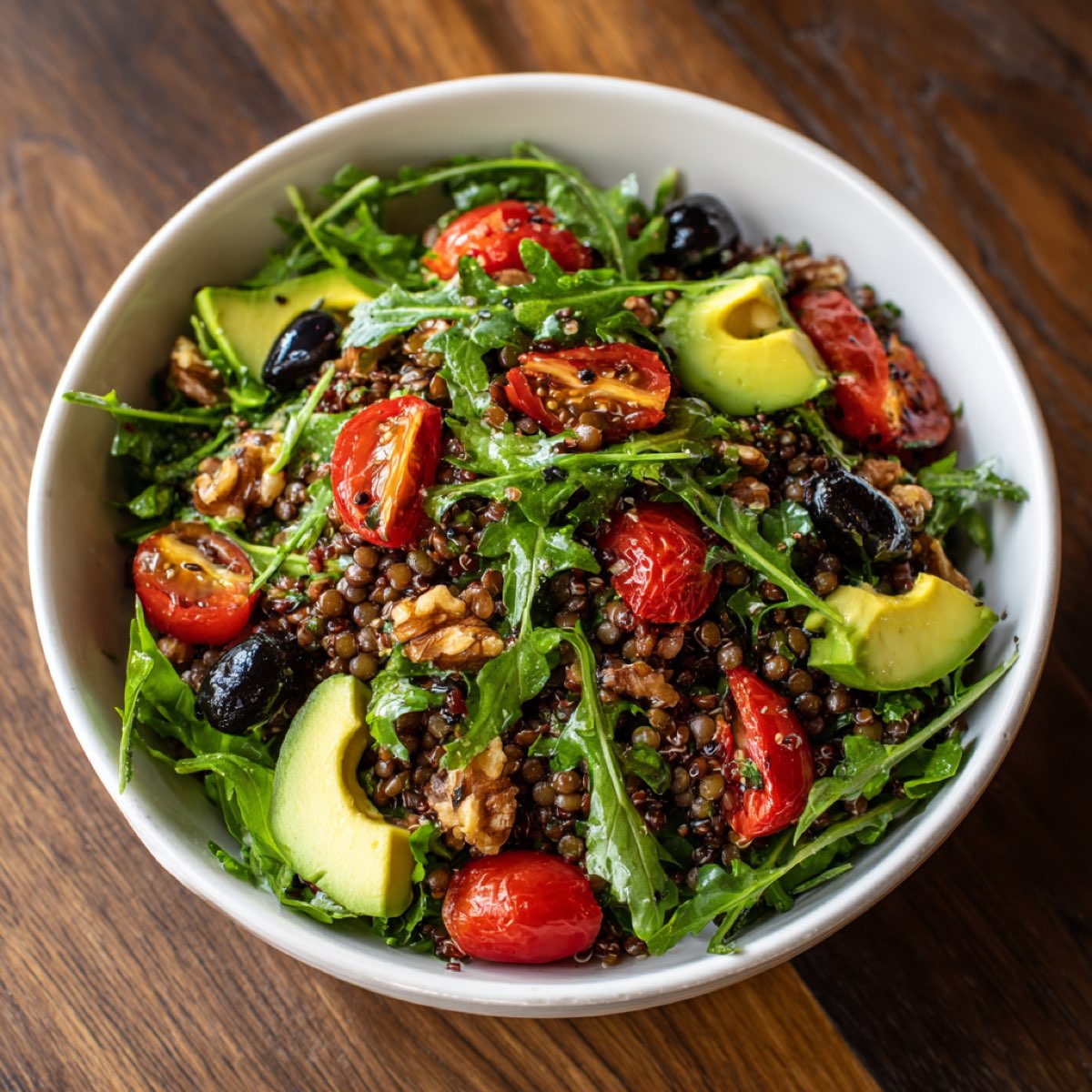
Rocket Lentil Avocado Midday Salad (Gut-Supporting)
Polyphenol-rich midday salad with quinoa or lentils, vegetables, avocado, and early harvest olive oil
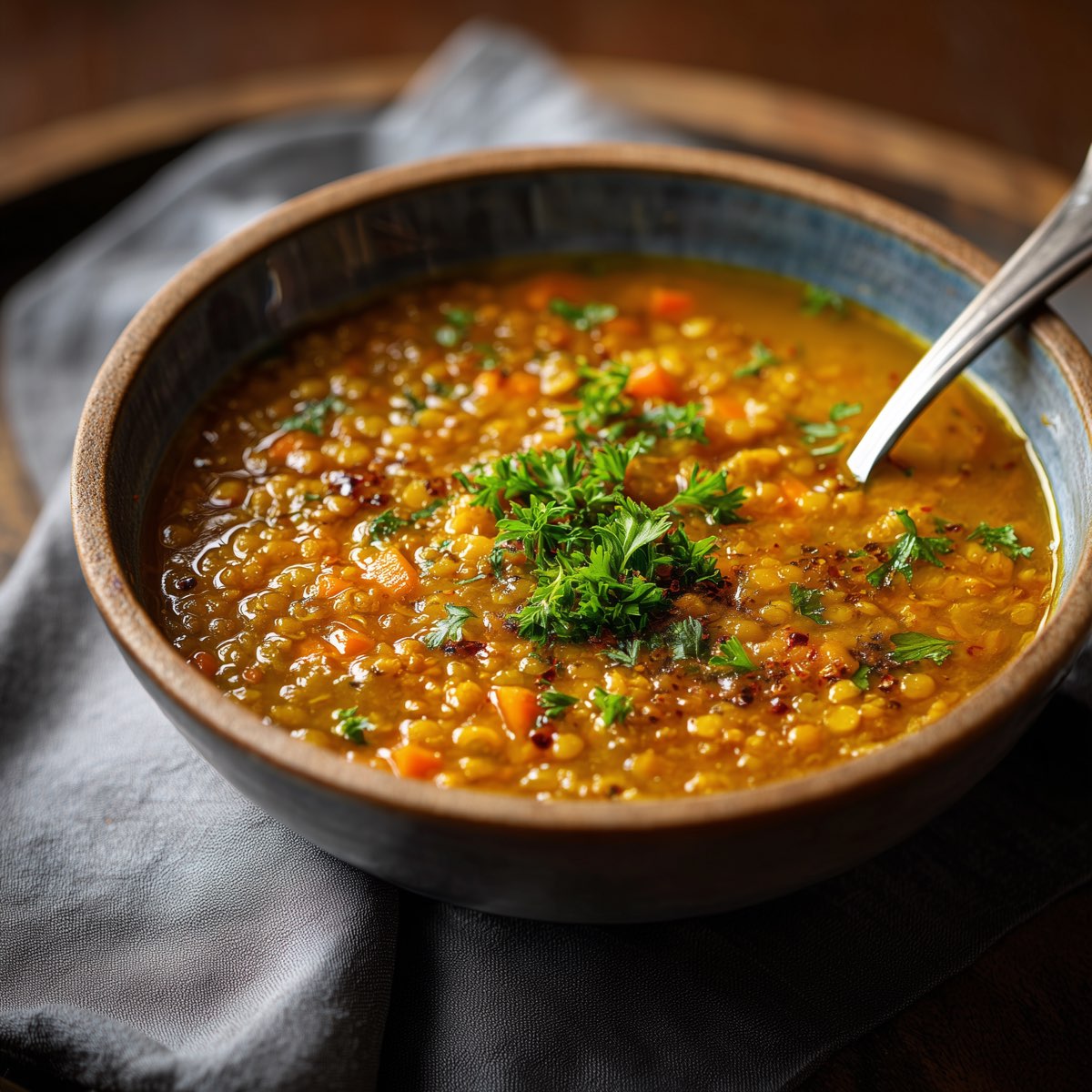
Turmeric Lentil Dahl
Turmeric- and ginger-spiced lentil dish rich in fibre, folate, and polyphenols
Nutrient Tables (per 100 g)
Selected food and preparation: Lentils, raw. per 100 g edible portion.
Core nutrients
| Nutrient | Amount per 100 g | % reference intake per 100 g |
|---|---|---|
| Energy | 352 kcal | — |
| Protein | 24.6 g | — |
| Total fat | 1.1 g | — |
| Saturated fat | 0.2 g | — |
| Carbohydrates | 63.4 g | — |
| Sugars | 2 g | — |
| Fibre | 10.7 g | — |
Key vitamins and minerals
Vitamins and minerals supplying at least 10% of an adult reference intake per 100 g, derived from the composition panel.
| Nutrient | Amount per 100 g | % reference intake per 100 g |
|---|---|---|
| Iron | 6.5 mg | 36.2% |
| Zinc | 3.3 mg | 29.7% |
| Magnesium | 47 mg | 11.2% |
| Phosphorus | 281 mg | 40.1% |
| Manganese | 1.4 mg | 60.6% |
| Potassium | 677 mg | 19.9% |
| Copper | 0.8 mg | 83.8% |
| Choline | 96.4 mg | 17.5% |
| Folate | 479 µg | 119.8% |
| Vitamin B6 | 0.5 mg | 41.5% |
| Vitamin B2 | 0.2 mg | 16.2% |
| Vitamin B1 | 0.9 mg | 72.8% |
| Vitamin B3 | 2.6 mg | 16.3% |
| Vitamin B5 | 2.1 mg | 42.8% |
Substances
4 substances in this food
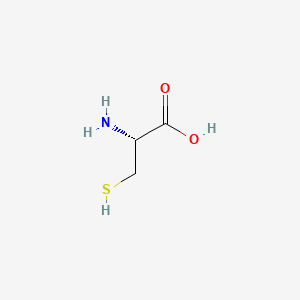
Cysteine
Cystine 322 mg per 100 g of Lentils, raw (FDC 172420). Cooked boiled lentils are a separate food (FDC 172421, 118 mg per 100 g). Composition only; not a glutathione-synthesis result.
Iron
USDA FoodData Central reports iron in Lentils, raw.
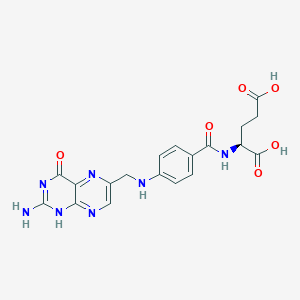
Vitamin B9 (Folate)
USDA FoodData Central reports folate in Lentils, raw. The recorded analyte is folate.
Zinc
USDA FoodData Central reports zinc in Lentils, raw.
References
[1] Nosworthy et al. (2017). Determination of the protein quality of cooked Canadian pulses. Cooked Canadian whole green and split red lentils, cooked without soaking, then analysed on a dry-matter basis. Table 3 cysteine is from performic-acid oxidation (whole green 0.26 g cysteine and 0.21 g methionine per 100 g dry matter; split red 0.22 g and 0.22 g), not the as-eaten cystine row. On the 1991 FAO pattern, methionine plus cysteine was the lowest ratio: amino-acid score 0.714, true protein digestibility 87.89% and PDCAAS 0.628 for whole green lentils; amino-acid score 0.594, true protein digestibility 90.60% and PDCAAS 0.538 for split red lentils. DIAAS used fecal protein digestibility rather than ileal amino-acid digestibility: 0.58 and 0.50. No cooked pulse in the set reached 0.75. Rat assay, not an adult-human adequacy measurement. Green-lentil PDCAAS was 0.63, against 0.51 cited for an average lentil.
[2] Mariotti and Gardner (2019). Dietary Protein and Amino Acids in Vegetarian Diets—A Review. Lysine is proportionally low in grains, and methionine plus cysteine are proportionally slightly low in legumes. The review treats “complete” and “incomplete” as misleading and finds no requirement to combine complementary proteins in the same meal when intake is varied across the day. Not a lentil digestibility trial.
[3] Hallberg et al. (1989). Iron absorption in man: ascorbic acid and dose-dependent inhibition by phytate. Human iron-absorption series: phytate inhibits non-haem iron absorption in a dose-dependent way; ascorbic acid can counteract that inhibition. Mixed-meal evidence, not a lentil trial.
[4] Dueñas et al. (2003). Proanthocyanidin Composition in the Seed Coat of Lentils (Lens culinaris L.). Lentil polyphenols are located essentially in the seed coat. In that coat, proanthocyanidin polymers were 65–75% (mean degree of polymerization 7–9) and oligomers 20–30%. Seed-coat composition, not a feeding trial and not a retail comparison of split versus whole lentils.
[5] Vidal-Valverde et al. (1994). Effect of processing on some antinutritional factors of lentils. Soaking lowered phytic acid without changing trypsin-inhibitor activity, and tannins and catechins rose. Cooking presoaked seeds removed trypsin-inhibitor activity and reduced phytic acid further; tannins and catechins increased. Six-day germination greatly reduced trypsin inhibitor and phytic acid. Effects varied by variety. Iron absorption was not measured.
[6] Vidal-Valverde et al. (1992). Effect of Processing on the Soluble Carbohydrate Content of Lentils. A 9-hour soak reduced α-galactosides by 45–100%, and only 1–10% of those losses were recovered in the soak water. Cooking the soaked lentils changed α-galactoside content only slightly.