Sunflower Lecithin

Overview
Sunflower lecithin provides choline for phosphatidylcholine synthesis, offering a soy-free alternative for those avoiding soy.
Within the BRAIN Diet framework, vegans should ensure adequate choline intake (e.g., soy or sunflower lecithin, soy foods, quinoa, broccoli) to support phosphatidylcholine synthesis and downstream LPC-DHA transport for brain delivery.
Food Context
Preparation
- Available as supplement
- Soy-free alternative to soy lecithin
- Important for vegan choline intake
- Supports phospholipid-bound omega-3 strategy
Recipes
Nutrition
Reliable composition data for this preparation are not yet available.
Recorded constituents
Bioactive compounds
| Compound / class | Content | Notes |
|---|---|---|
| Phosphatidylcholine | Present [3] | food-grade soybean or sunflower lecithin |
| Choline | Present [3] | sunflower food lecithin |
- Phosphatidylcholine: Contains phosphatidylcholine; the proportion varies with the lecithin product. [3]
- Choline: Provides choline bound in phosphatidylcholine; amounts depend on the product. [3]
Technical provenance
Phosphatidylcholine: EFSA (2017), Re-evaluation of lecithins (E 322) as a food additive. Table 2 separately identifies phosphatidylcholine in sunflower and soybean food lecithins. [3]
Choline: EFSA (2017), Re-evaluation of lecithins (E 322) as a food additive. Phosphatidylcholine in sunflower lecithin contains bound choline; no claim of free choline or equivalent mass of phosphatidylcholine. [3]
This value uses a documented composition interpretation. See FCIR-011.
Substances
2 substances in this food
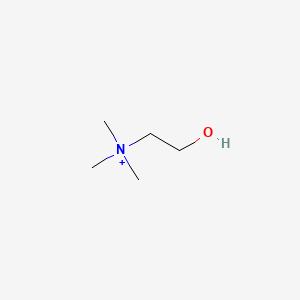
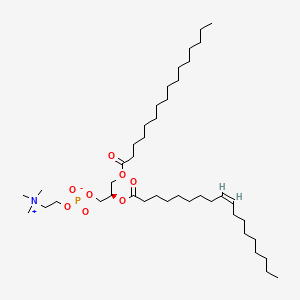
Phosphatidylcholine (PC)
Contains phosphatidylcholine; the proportion varies with the lecithin product.
References
[1] Sunflower lecithin provides phosphatidylcholine for choline intake in plant-based diets. Derbyshire & Maes 2023. The Role of Choline in Neurodevelopmental Disorders—A Narrative Review Focusing on ASC, ADHD and Dyslexia
[2] Adequate choline supports neurotransmitter synthesis and membrane integrity. Halder & Lal 2021. Cholinergic System and Its Therapeutic Importance in Inflammation and Autoimmunity
[3] EFSA (2017), Re-evaluation of lecithins (E 322) as a food additive