Olives

Overview
Olives provide monounsaturated fats (MUFA) and polyphenols, supporting cardiovascular and brain health.
Within the BRAIN Diet framework, sources of MUFA include extra-virgin olive oil, avocado, olives, and nuts.
Food Context
Sourcing
- Choose varieties with higher polyphenol content
Preparation
- Can be consumed as whole fruit or in oil form
- Part of Mediterranean diet pattern
- Supports MUFA intake goals
Recipes
1 recipe containing this food
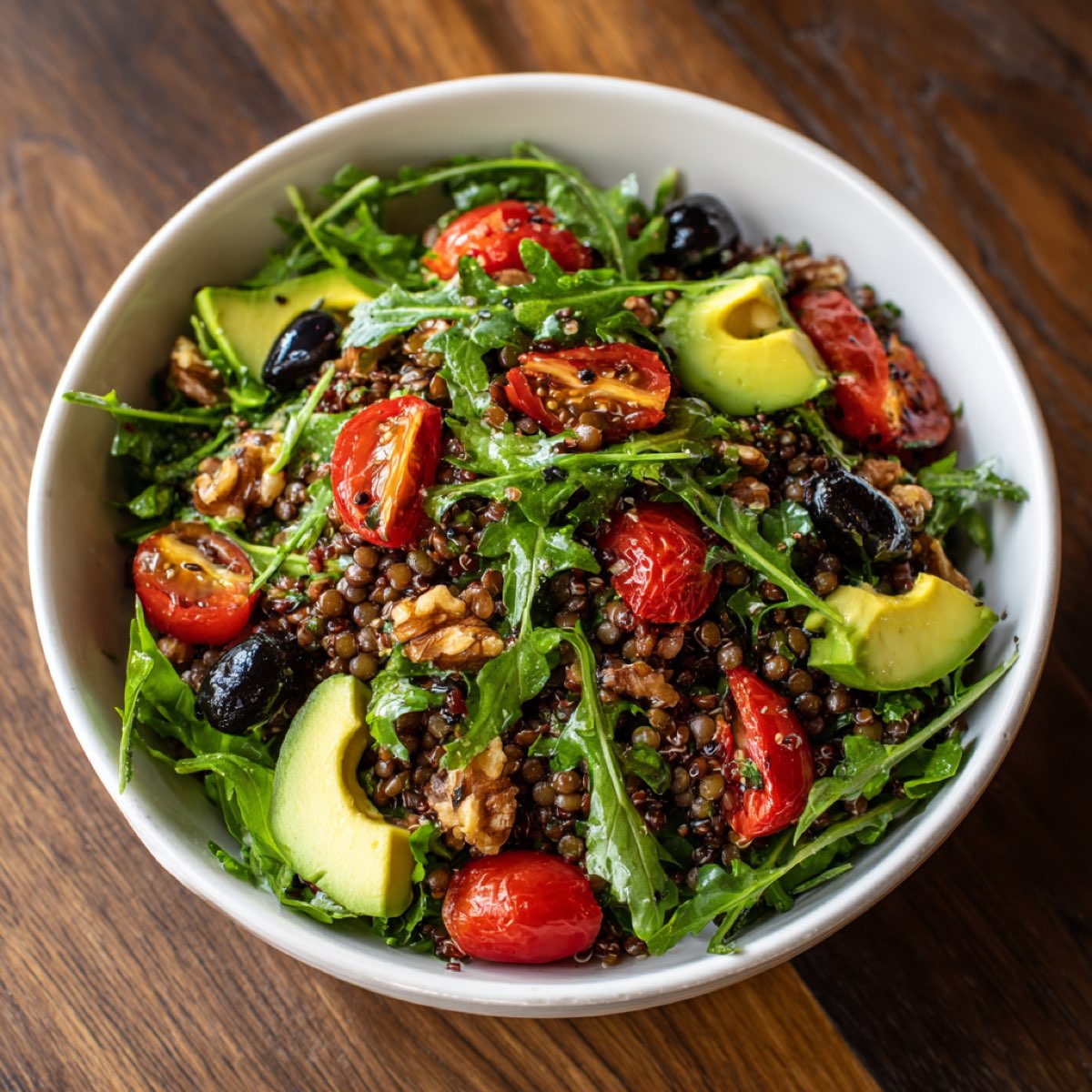
Rocket Lentil Avocado Midday Salad (Gut-Supporting)
Polyphenol-rich midday salad with quinoa or lentils, vegetables, avocado, and early harvest olive oil
Nutrient Tables (per 100 g)
Selected food and preparation: Olives, ripe, canned (small-extra large). per 100 g edible portion.
Core nutrients
| Nutrient | Amount per 100 g | % reference intake per 100 g |
|---|---|---|
| Energy | 116 kcal | — |
| Protein | 0.8 g | — |
| Total fat | 10.9 g | — |
| Saturated fat | 2.3 g | — |
| Carbohydrates | 6 g | — |
| Fibre | 1.6 g | — |
Key vitamins and minerals
Vitamins and minerals supplying at least 10% of an adult reference intake per 100 g, derived from the composition panel.
| Nutrient | Amount per 100 g | % reference intake per 100 g |
|---|---|---|
| Iron | 6.3 mg | 34.9% |
| Copper | 0.3 mg | 27.9% |
| Vitamin E | 1.7 mg | 11% |
Substances
References
[1] Olives and olive oil provide monounsaturated fats and polyphenols within Mediterranean dietary patterns. Schwingshackl et al. 2017. Olive oil in the prevention and management of type 2 diabetes mellitus: a systematic review and meta-analysis of cohort studies and intervention trials
[2] Olive oil phenolics influence intestinal inflammation and antioxidant status. Camuesco et al. 2006. Intestinal anti-inflammatory activity of combined quercitrin and dietary olive oil supplemented with fish oil, rich in EPA and DHA (n-3) polyunsaturated fatty acids, in rats with DSS-induced colitis