Black Tea
Overview
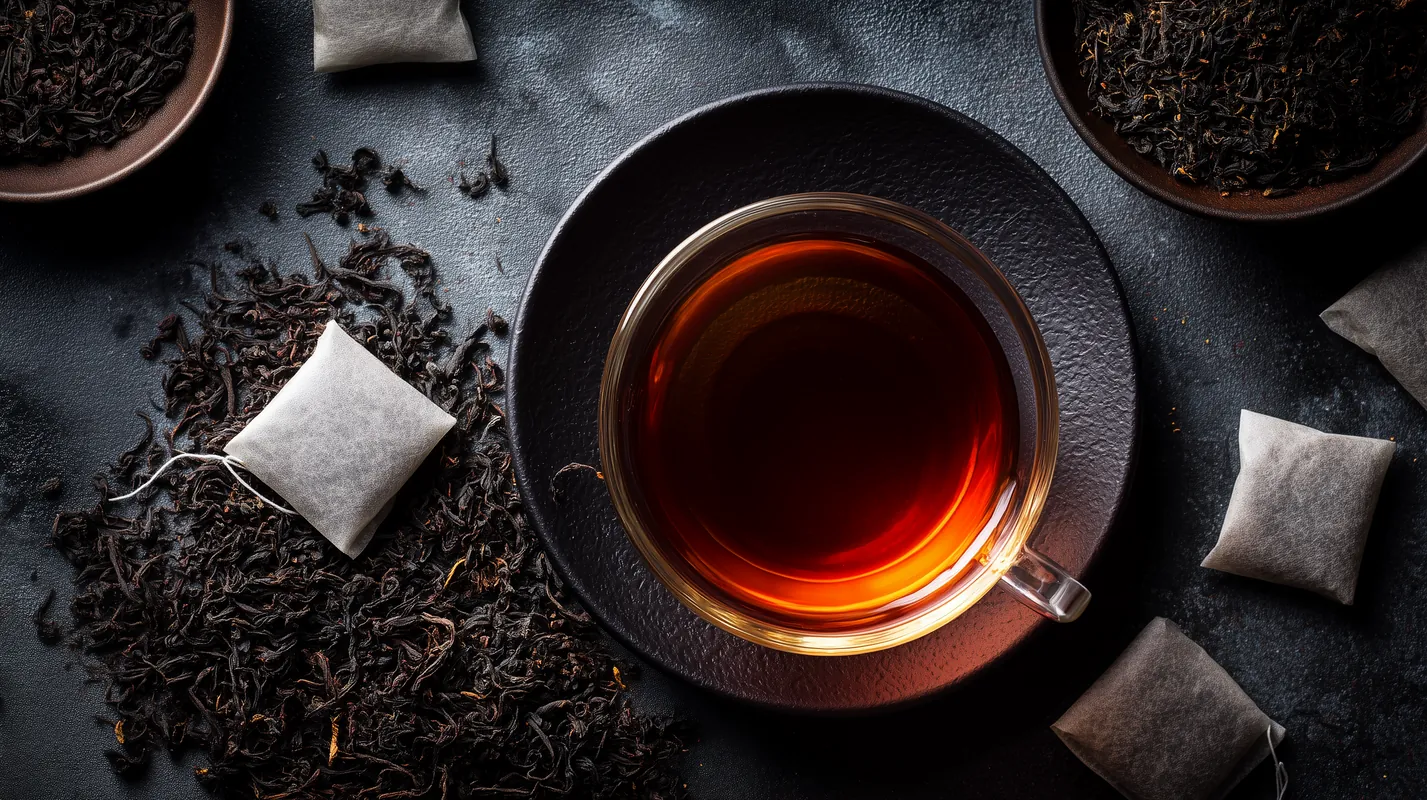
Black tea is a low-energy drink whose distinctive polyphenols include theaflavins formed during oxidation, alongside remaining catechins [1]. Unsweetened cups add flavour without much energy.
Within a BRAIN-aligned pattern it is a flavonoid beverage.
Food Context
Preparation
- Brew strength and time affect the resulting drink.
- Adding 100 ml semi-skimmed milk to 600 ml black tea did not significantly change blood catechin levels versus black tea alone in a small crossover study [2].
Recipes
Nutrient Tables (per 100 g)
Selected food and preparation: Beverages, tea, black, brewed, prepared with tap water. per 100 g edible portion.
Core nutrients
| Nutrient | Amount per 100 g | % reference intake per 100 g |
|---|---|---|
| Energy | 1 kcal | — |
| Saturated fat | 0 g | — |
| Carbohydrates | 0.3 g | — |
Bioactive compounds
| Compound / class | Amount per 100 g | Notes |
|---|---|---|
| Kaempferol | Present — quantity not established | — |
- Kaempferol: Dabeek and Marra 2019 supports this qualitative constituent record. See technical provenance for food form and measurement details.
Technical provenance
Kaempferol: Dabeek and Marra 2019 compile Phenol-Explorer and USDA flavonoid values showing kaempferol in Black Tea; a single defensible per-100 g value is not taken from the abbreviated USDA nutrient panel.
Substances
2 substances in this food
Kaempferol
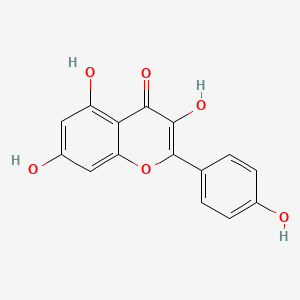
Dietary flavonol in leafy greens, herbs, tea and some fruits; studied as a food constituent and as an isolated hormetic/senolytic agent.
Manganese
USDA FoodData Central reports manganese in Beverages, tea, black, brewed, prepared with tap water.
References
[1] Li et al. (2013). Black tea: chemical analysis and stability. Black-tea-specific review describing the major theaflavins, their formation from catechins and the stability of these compounds.
[2] van het Hof et al. (1998). Bioavailability of catechins from tea: the effect of milk. Randomised crossover in 12 adults: adding 100 ml semi-skimmed milk to 600 ml black tea did not significantly change blood catechin exposure versus black tea alone.