Leeks

Overview
Leeks are allium vegetables providing fructooligosaccharides (FOS) prebiotic fiber, supporting gut microbiome diversity.
Within the BRAIN Diet framework, fructooligosaccharides (FOS) are found in onions, garlic, leeks, and asparagus, and are part of the allium family with prebiotic benefits.
Food Context
Synergies
- Part of diverse prebiotic fiber strategy
- Pair with other allium vegetables
Preparation
- Can be consumed cooked or raw
- Supports Bifidobacterium growth
Recipes
1 recipe containing this food
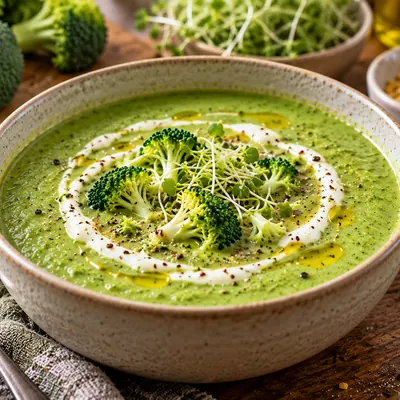
Broccoli, Potato and Onion Soup
A smooth broccoli, potato and onion soup for 4, with the broccoli blended and rested before a short simmer.
Nutrient Tables (per 100 g)
Selected food and preparation: Leeks, (bulb and lower leaf-portion), raw. per 100 g edible portion.
Core nutrients
| Nutrient | Amount per 100 g | % reference intake per 100 g |
|---|---|---|
| Energy | 61 kcal | — |
| Protein | 1.5 g | — |
| Total fat | 0.3 g | — |
| Saturated fat | 0 g | — |
| Carbohydrates | 14.2 g | — |
| Sugars | 3.9 g | — |
| Fibre | 1.8 g | — |
Key vitamins and minerals
Vitamins and minerals supplying at least 10% of an adult reference intake per 100 g, derived from the composition panel.
| Nutrient | Amount per 100 g | % reference intake per 100 g |
|---|---|---|
| Iron | 2.1 mg | 11.7% |
| Manganese | 0.5 mg | 20.9% |
| Copper | 0.1 mg | 13.3% |
| Folate | 64 µg | 16% |
| Vitamin B6 | 0.2 mg | 17.9% |
| Vitamin C | 12 mg | 13.3% |
| Vitamin K | 47 µg | 39.2% |
Bioactive compounds
| Compound / class | Amount per 100 g | Notes |
|---|---|---|
| Kaempferol | Present — quantity not established | — |
- Kaempferol: Dabeek and Marra 2019 supports this qualitative constituent record. See technical provenance for food form and measurement details.
Technical provenance
Kaempferol: Dabeek and Marra 2019 compile Phenol-Explorer and USDA flavonoid values showing kaempferol in Leeks; a single defensible per-100 g value is not taken from the abbreviated USDA nutrient panel.
Substances
2 substances in this food
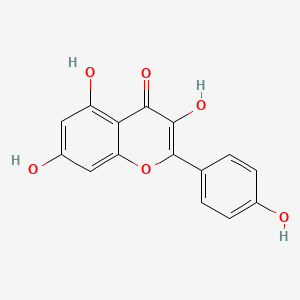
Kaempferol
Dietary flavonol in leafy greens, herbs, tea and some fruits; studied as a food constituent and as an isolated hormetic/senolytic agent.
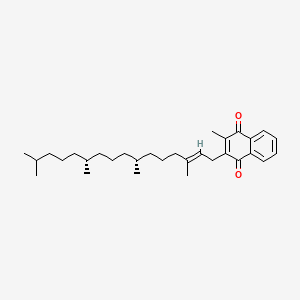
Vitamin K (Phylloquinone)
USDA FoodData Central reports vitamin K in Leeks, (bulb and lower leaf-portion), raw. This vitamin K record is not a vitamin K2 measurement.
References
[1] Allium vegetables including leeks supply organosulfur compounds and prebiotic fructans. Nicastro et al. 2015. Garlic and onions: their cancer prevention properties
[2] Fermentable fibres from alliums support beneficial gut microbiota taxa. Pouille et al. 2022. Chicory: Understanding the Effects and Effectors of This Functional Food