Amaranth
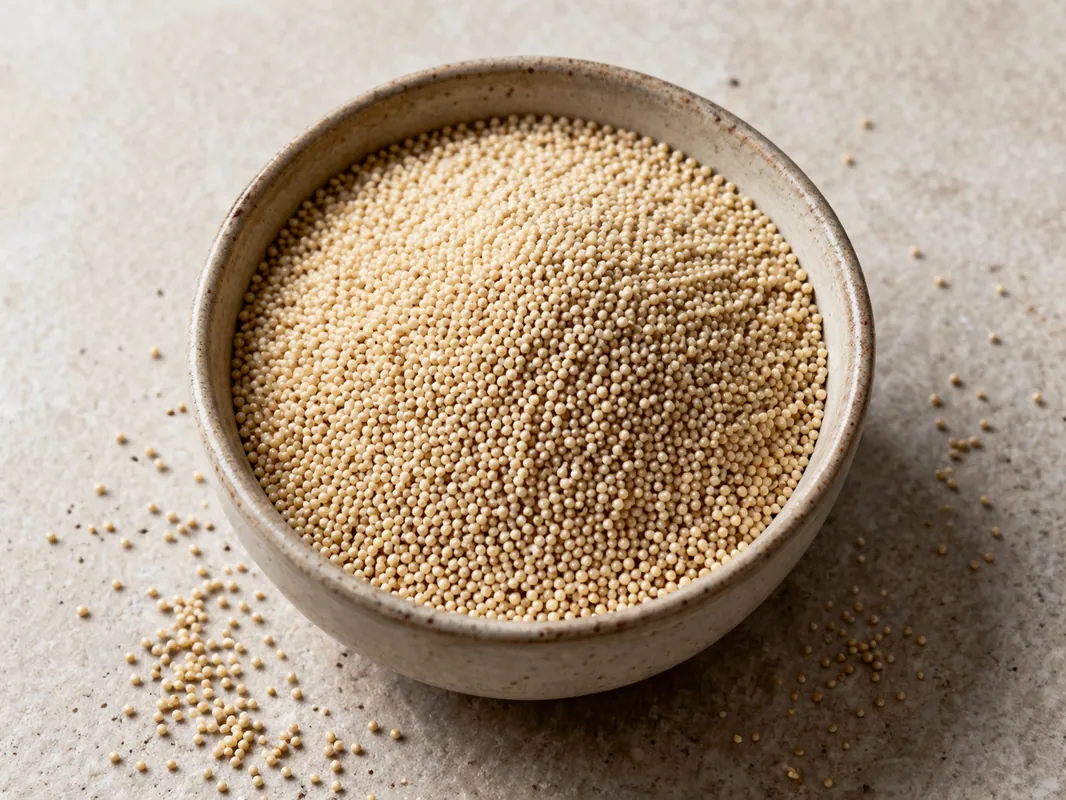
Overview
Amaranth is a gluten-free pseudograin with comparatively lysine-rich protein and substantial magnesium and iron. Phytate and oxalate in the grain can limit how much of those minerals are available [2,3].
Unlike ordinary cereals, amaranth does not need lysine rescue from legumes [1]. Processing changes both protein quality and mineral accessibility, so preparation matters [1,3]. In the BRAIN Diet, it is a rotating whole-grain option rather than a processed-grain staple.
Key Nutritional Highlights
- Gluten-free pseudograin with comparatively lysine-rich protein and substantial magnesium and iron [1].
- Phytate and oxalate mean table mineral totals are not absorbed amounts [2,3].
- Processing is a trade-off: popping or fermentation can reduce lysine, while germination can improve mineral accessibility [1,3].
- Useful for rotating whole-grain diversity in plant-forward patterns.
Food Context
Synergies
- Pair with legumes and other grains for dietary variety; this is not lysine complementarity of the wheat–legume type [1].
Preparation
- Rinse before cooking to reduce the small saponin amounts reported in amaranth grain [2].
- Germination has been reported to reduce phytic acid by about 30% and oxalate by about 38% and to improve in-vitro protein digestibility [3].
- Fermentation can improve digestibility while still reducing some lysine; popping can reduce lysine and digestibility, so processing choice is not simply “reduces antinutrients” [1].
- Can be used in porridge, baked goods, or fermented breads. Nitrate data from amaranth leaves should not be applied to this grain page [2].
Essential Amino Acid Profile
Amaranth provides a useful plant protein source with a relatively balanced indispensable amino-acid profile compared with conventional cereals.
Notable amino acids:
- Lysine (comparatively rich versus wheat, rice, maize and similar cereals)
- Methionine and cysteine (also relatively well represented in analysed samples)
No universal limiting amino acid is assigned here. Some genotypes and scoring methods have implicated tryptophan, leucine or other residues; those findings are sample-specific and are not treated as a property of all amaranth [1].
Protein pairing strategy:
Amaranth does not need legumes as a lysine rescue in the way ordinary cereal proteins do. Combining it with legumes or other grains remains a practical way to diversify plant-protein intake across a day.
Recipes
Nutrient Tables (per 100 g)
Selected food and preparation: Amaranth grain, uncooked. per 100 g edible portion.
Core nutrients
| Nutrient | Amount per 100 g | % reference intake per 100 g |
|---|---|---|
| Energy | 371 kcal | — |
| Protein | 13.6 g | — |
| Total fat | 7 g | — |
| Saturated fat | 1.5 g | — |
| Carbohydrates | 65.3 g | — |
| Sugars | 1.7 g | — |
| Fibre | 6.7 g | — |
Key vitamins and minerals
Vitamins and minerals supplying at least 10% of an adult reference intake per 100 g, derived from the composition panel.
| Nutrient | Amount per 100 g | % reference intake per 100 g |
|---|---|---|
| Iron | 7.6 mg | 42.3% |
| Zinc | 2.9 mg | 26.1% |
| Magnesium | 248 mg | 59% |
| Phosphorus | 557 mg | 79.6% |
| Manganese | 3.3 mg | 144.9% |
| Selenium | 18.7 µg | 34% |
| Calcium | 159 mg | 15.9% |
| Potassium | 508 mg | 14.9% |
| Copper | 0.5 mg | 58.3% |
| Choline | 69.8 mg | 12.7% |
| Folate | 82 µg | 20.5% |
| Vitamin B6 | 0.6 mg | 45.5% |
| Vitamin B2 | 0.2 mg | 15.4% |
| Vitamin B5 | 1.5 mg | 29.1% |
Bioactive compounds
| Compound / class | Amount per 100 g | Notes |
|---|---|---|
| Phytate | Present — quantity not established | Grain antinutrient; USDA iron and magnesium totals are not absorbed amounts. |
| Oxalate | Present — quantity not established | Grain antinutrient; quantity is processing-sensitive. |
- Phytate: Jan et al. 2023 supports this qualitative constituent record. See technical provenance for food form and measurement details.
- Oxalate: Hejazi et al. 2016 supports this qualitative constituent record. See technical provenance for food form and measurement details.
Technical provenance
Phytate: Jan et al. 2023 review amaranth-seed phytic acid as 2.9–7.9 g/kg (citing Thakur et al. 2021). USDA SR Legacy (Amaranth grain, uncooked; FDC 170682) does not quantify phytate. This row records presence, not a per-100 g USDA value.
Oxalate: Hejazi et al. 2016 measured oxalate in amaranth grain and reported an approximately 38% reduction after optimized germination, with an approximately 30% reduction in phytic acid. USDA SR Legacy does not quantify oxalate. This row records presence, not a per-100 g USDA value.
Substances
References
[1] Amare et al. (2015). Protein Quality of Amaranth Grains Cultivated in Ethiopia as Affected by Popping and Fermentation. Three Ethiopian amaranth grain varieties had lysine 65–74 mg/g protein, close to legumes and about twice that of common cereals; popping reduced total lysine by about 36% and in-vitro protein digestibility by 8.3–17.1%, while fermentation reduced lysine by about 20% and increased digestibility by 4.8–7.5%.
[2] Jan et al. (2023). Amaranth and quinoa as potential nutraceuticals: A review of anti-nutritional factors, health benefits and their applications in food, medicinal and cosmetic sectors. Review of amaranth-grain antinutritional factors, including seed phytic acid of 2.9–7.9 g/kg; germination, fermentation and cooking can reduce some antinutrients, and nitrate findings for leaves are not grain composition.
[3] Hejazi et al. (2016). Improvement of the in vitro protein digestibility of amaranth grain through optimization of the malting process. Optimized germination reduced phytic acid by about 30% and oxalate by about 38% in amaranth grain and improved in-vitro protein digestibility; tannin increased, so processing is not uniformly beneficial.