Asparagus
Overview
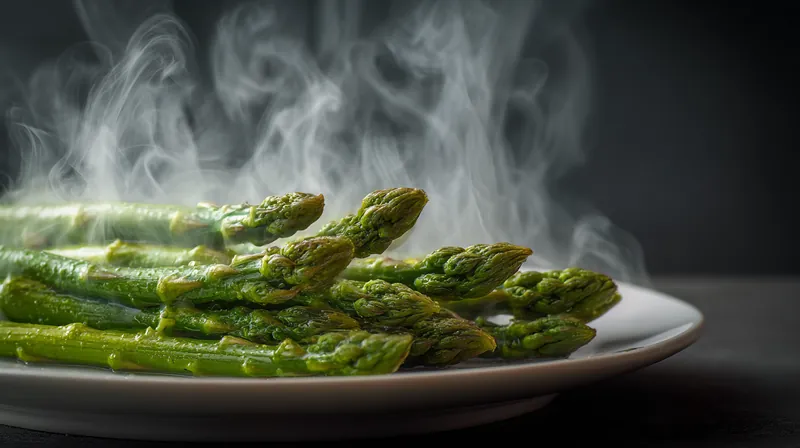
Asparagus is a low-calorie vegetable providing folate and fibre. Edible spears also contain modest amounts of inulin-type fructans, although considerably less than asparagus root; evidence from root extracts should therefore not be treated as the composition of the vegetable as eaten [1,2].
Within the BRAIN Diet framework, asparagus contributes folate and fermentable plant fibre as part of varied vegetable intake.
Key Nutritional Highlights
- Folate-rich low-energy vegetable.
- Edible spears contain modest inulin-type fructans; root extracts are not the vegetable as eaten [1,2].
- A fresh-weight fructan quantity is not established for this page [1,2].
Food Context
Sourcing
- Distinguish edible spears from root-derived fructan extracts and spear by-products. Root values must not be attributed to the spear [1,2].
Preparation
- Trim woody stem bases. Steam, roast, or sauté rather than boiling when folate retention is a priority; the 52 µg per 100 g figure is for raw USDA spears.
- Can be consumed lightly cooked or raw.
Recipes
Nutrient Tables (per 100 g)
Selected food and preparation: Asparagus, raw. per 100 g edible portion.
Core nutrients
| Nutrient | Amount per 100 g | % reference intake per 100 g |
|---|---|---|
| Energy | 20 kcal | — |
| Protein | 2.2 g | — |
| Total fat | 0.1 g | — |
| Saturated fat | 0 g | — |
| Carbohydrates | 3.9 g | — |
| Sugars | 1.9 g | — |
| Fibre | 2.1 g | — |
Key vitamins and minerals
Vitamins and minerals supplying at least 10% of an adult reference intake per 100 g, derived from the composition panel.
| Nutrient | Amount per 100 g | % reference intake per 100 g |
|---|---|---|
| Iron | 2.1 mg | 11.9% |
| Copper | 0.2 mg | 21% |
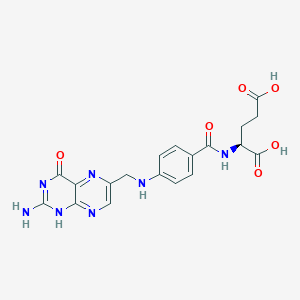
| Folate | 52 µg | 13% |
| Vitamin B2 | 0.1 mg | 10.8% |
| Vitamin B1 | 0.1 mg | 11.9% |
| Vitamin K | 41.6 µg | 34.7% |
Bioactive compounds
| Compound / class | Amount per 100 g | Notes |
|---|---|---|
| Inulin-type fructans | Present in edible spear; fresh-weight quantity not established for this page. | Do not use root concentrations as spear values. |
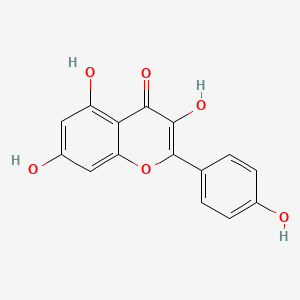
| Kaempferol | Present — quantity not established | — |
- Inulin-type fructans: Redondo-Cuenca et al. 2023 supports this qualitative constituent record. See technical provenance for food form and measurement details.
- Kaempferol: Dabeek and Marra 2019 supports this qualitative constituent record. See technical provenance for food form and measurement details.
Technical provenance
Inulin-type fructans: Goñi et al. 2024 quantified inulin at about 1.48–1.52 g/100 g dry weight in edible spear versus 14.92 g/100 g dry weight in root; DP3/DP4 oligosaccharides were quantified in root only. Redondo-Cuenca et al. 2023 reported the same pattern (1.30 vs 16.18 g inulin/100 g dry matter). USDA SR Legacy (Asparagus, raw; FDC 168389) reports total fibre 2.1 g/100 g and does not quantify FOS. This row records spear presence, not a converted fresh-weight USDA value. Do not use root concentrations as spear values.
Kaempferol: Dabeek and Marra 2019 compile Phenol-Explorer and USDA flavonoid values showing kaempferol in Asparagus; a single defensible per-100 g value is not taken from the abbreviated USDA nutrient panel.
Substances
3 substances in this food
Kaempferol
Dietary flavonol in leafy greens, herbs, tea and some fruits; studied as a food constituent and as an isolated hormetic/senolytic agent.
Vitamin B9 (Folate)
USDA FoodData Central reports folate in Asparagus, raw. The recorded analyte is folate.
References
[1] Goñi et al. (2024). Composition and Functional Properties of the Edible Spear and By-Products from Asparagus officinalis L. and Their Potential Prebiotic Effect. Edible-spear inulin was about 1.48–1.52 g/100 g dry weight versus 14.92 g/100 g dry weight in root; DP3/DP4 oligosaccharides were quantified in root only.
[2] Redondo-Cuenca et al. (2023). Nutritional composition of green asparagus (Asparagus officinalis L.), edible part and by-products, and assessment of their effect on the growth of human gut-associated bacteria. Confirms the same spear-versus-root pattern: inulin 1.30 g/100 g dry matter in edible spear versus 16.18 g/100 g in root, with DP3/DP4 oligosaccharides in root only.