Saffron

Overview
Saffron is the dried stigma of Crocus sativus, prized as a culinary spice for its golden colour, honeyed aroma, and distinctive flavour. Its defining phytochemistry includes crocin (a carotenoid pigment), safranal (a volatile aroma compound), and related crocus constituents that reviews link to neurotransmitter, anti-inflammatory, and antioxidant pathways [1,3].
Within the BRAIN Diet framework, saffron belongs with concentrated herbs and spices—used in threads or pinches steeped in warm liquid or fat, not as a bulk staple or daily supplement. Clinical literature on mood, stress, and ADHD has largely tested standardized extracts or stigma at fixed medicinal doses; those trials inform the biology but do not map directly to recipe-level pinches [1–4]. Gentle blooming and limiting prolonged high heat help preserve volatile and pigment fractions in cooking
Key Nutritional Highlights
- Crocin and safranal define saffron's pigment and aroma; typical culinary pinches are far smaller than standardized extract doses used in trials [1,2].
- USDA spice data report iron (~11 mg) and magnesium (~264 mg) per 100 g, but practical intake is pinches, not gram-scale portions.
- Systematic review evidence synthesizes antidepressant mechanisms—including serotonin-related pathways—and clinical signals for C. sativus extracts in depression research [1].
- A comparative review links crocin, crocetin, and safranal to neurotransmitter, anti-inflammatory, and neuroprotective mechanisms, with extract efficacy signals in mild-to-moderate depression; an eight-week RCT in healthy adults also reported improved subclinical mood with standardized extract [2,3].
- Pilot ADHD trial data exist for saffron stigma at medicinal doses—not culinary pinches [4].
- Safranal and crocins are heat- and temperature-sensitive; infusion medium and temperature strongly affect aroma and pigment extraction [5].
Food Context
Synergies
- Bloom saffron in fat or warm liquid within mixed dishes (rice, stews, roast vegetables) to distribute colour and aroma evenly.
- Use as part of a broader herb-and-spice pattern for phytochemical diversity rather than as a single targeted ingredient.
Preparation
- Crush or steep threads in warm water, broth, or olive oil (~50–70 °C) before adding to the dish; safranal enrichment in oil is favoured at moderate temperatures (≤ ~80 °C) [5].
- Add saffron-infused oil or liquid near the end of cooking when possible to limit prolonged high-heat exposure to volatiles [5].
- Store in a cool, dark, dry place; crocin and safranal degrade with light, moisture, heat, and oxidation [5].
Recipes
2 recipes containing this food
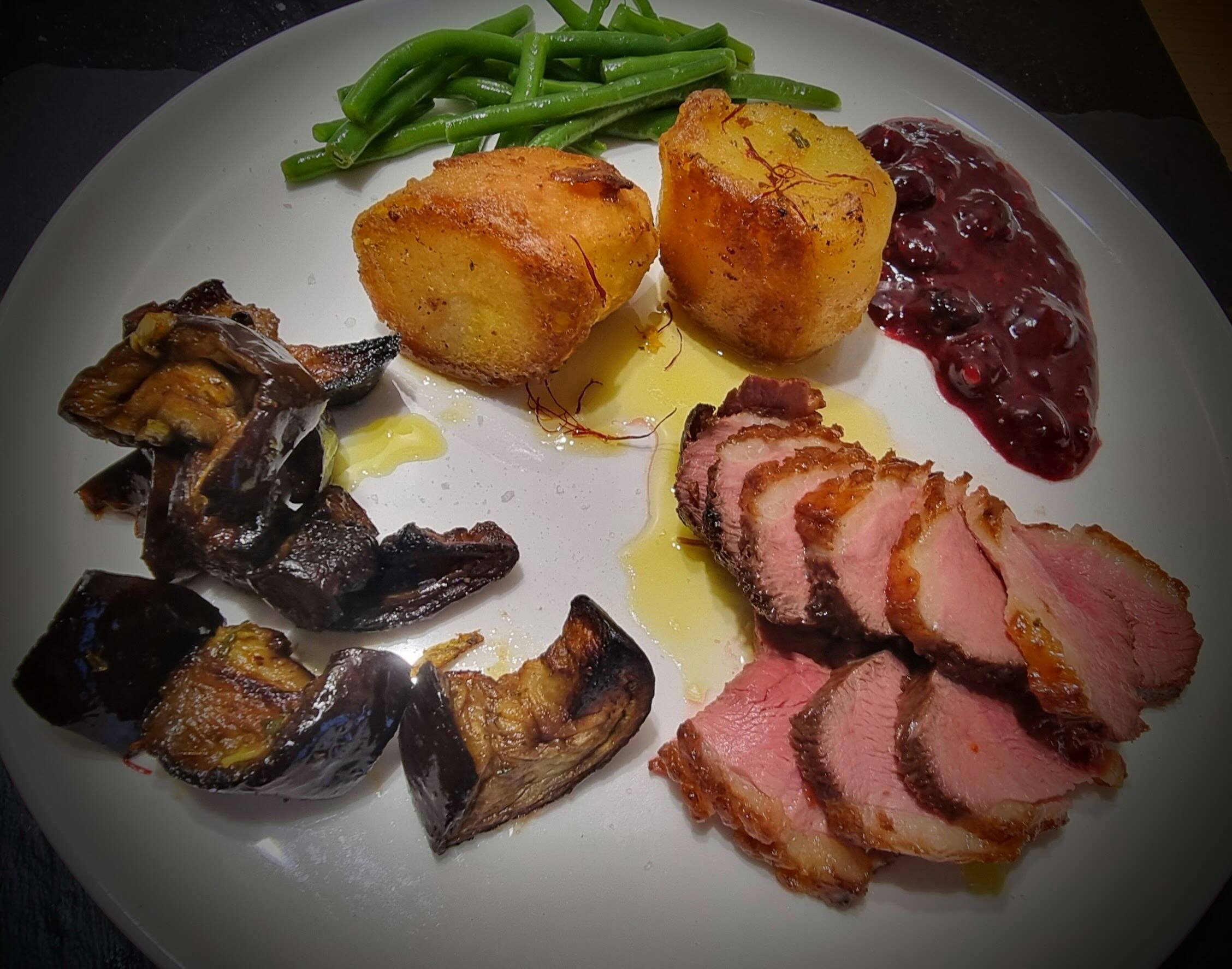
Roast Duck Breast with Berry Sauce
A rich main dish built around crisp-skinned duck breast with a bright blueberry and raspberry sauce, designed to balance richness with acidity and aromatic depth.
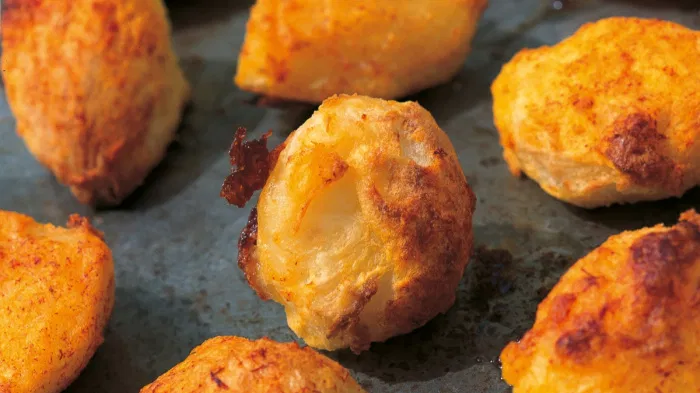
Saffron Roast Potatoes
Crisp roast potatoes finished with saffron-infused olive oil, designed to maximise colour, flavour and texture while remaining adaptable to many main dishes.
Nutrient Tables (per 100 g)
Selected food and preparation: Spices, saffron. per 100 g edible portion.
Core nutrients
| Nutrient | Amount per 100 g | % reference intake per 100 g |
|---|---|---|
| Energy | 310 kcal | — |
| Protein | 11.4 g | — |
| Total fat | 5.9 g | — |
| Saturated fat | 1.6 g | — |
| Carbohydrates | 65.4 g | — |
| Fibre | 3.9 g | — |
Key vitamins and minerals
Vitamins and minerals supplying at least 10% of an adult reference intake per 100 g, derived from the composition panel.
| Nutrient | Amount per 100 g | % reference intake per 100 g |
|---|---|---|
| Iron | 11.1 mg | 61.7% |
| Magnesium | 264 mg | 62.9% |
| Selenium | 5.6 µg | 10.2% |
| Calcium | 111 mg | 11.1% |
| Potassium | 1724 mg | 50.7% |
| Folate | 93 µg | 23.3% |
| Vitamin B6 | 1 mg | 77.7% |
Substances
References
[1] Systematic review evidence synthesizes antidepressant mechanisms—including serotonin-related pathways—and clinical signals for C. sativus extracts in depression research. Lopresti & Drummond 2014. Saffron (Crocus sativus) for depression — systematic review of clinical studies and antidepressant mechanisms
[2] Jackson & Forster 2021. Saffron extract supplementation, mood, and psychosocial stress response in healthy adults (RCT)
[3] Exploring the Potential of Saffron as a Therapeutic Agent in Depression Treatment: A Comparative Review. Chauhan et al. 2024. Comparative review of saffron for depression — neurotransmitter, anti-inflammatory, and neuroprotective mechanisms
[4] Pilot ADHD trial data exist for saffron stigma at medicinal doses—not culinary pinches. Baziar & Aqamolaei 2019. Crocus sativus vs methylphenidate in children with ADHD — randomized double-blind pilot (medicinal dosing)
[5] Store in a cool, dark, dry place; crocin and safranal degrade with light, moisture, heat, and oxidation. Criado-Navarro & Ledesma-Escobar 2024. Bioactive compound distribution by infusion temperature and time in oil/water systems — gastronomic extraction of crocin and safranal