Corn

Overview
Corn provides lutein and zeaxanthin [7]. The 644 µg per 100 g on this page is USDA lutein plus zeaxanthin for raw sweet yellow corn, not a zeaxanthin amount. Carotenoid absorption improves with co-ingested dietary fat [3].
Within the BRAIN Diet framework, corn is a whole-grain/starchy vegetable contributing carotenoid diversity; sweet corn and maize products differ in sugar and processing [1,2,3].
Key Nutritional Highlights
- Lutein and zeaxanthin source; cognitive and visual dietary interest [1,2].
- Carotenoid absorption improved with dietary fat at the same meal [3].
- Whole kernel and polenta forms retain more fibre than refined corn products.
- Choose minimally processed forms; pairing with beans completes amino-acid profile.
Food Context
Synergies
- Pair with fat for carotenoid absorption; co-consuming a small amount of unsaturated fat improves micelle formation and chylomicron packaging, increasing carotenoid and fat-soluble vitamin absorption
- Part of diverse vegetable intake; dietary diversity (≥30 plant foods per week) supports microbial richness and resilience
Preparation
- Can be consumed fresh, cooked, or as whole grain; cooking may enhance some nutrient bioavailability
- Supports carotenoid diversity; lutein and zeaxanthin have been associated with improved cognitive performance, especially in domains such as memory, processing speed, and visual-spatial function
Recipes
1 recipe containing this food
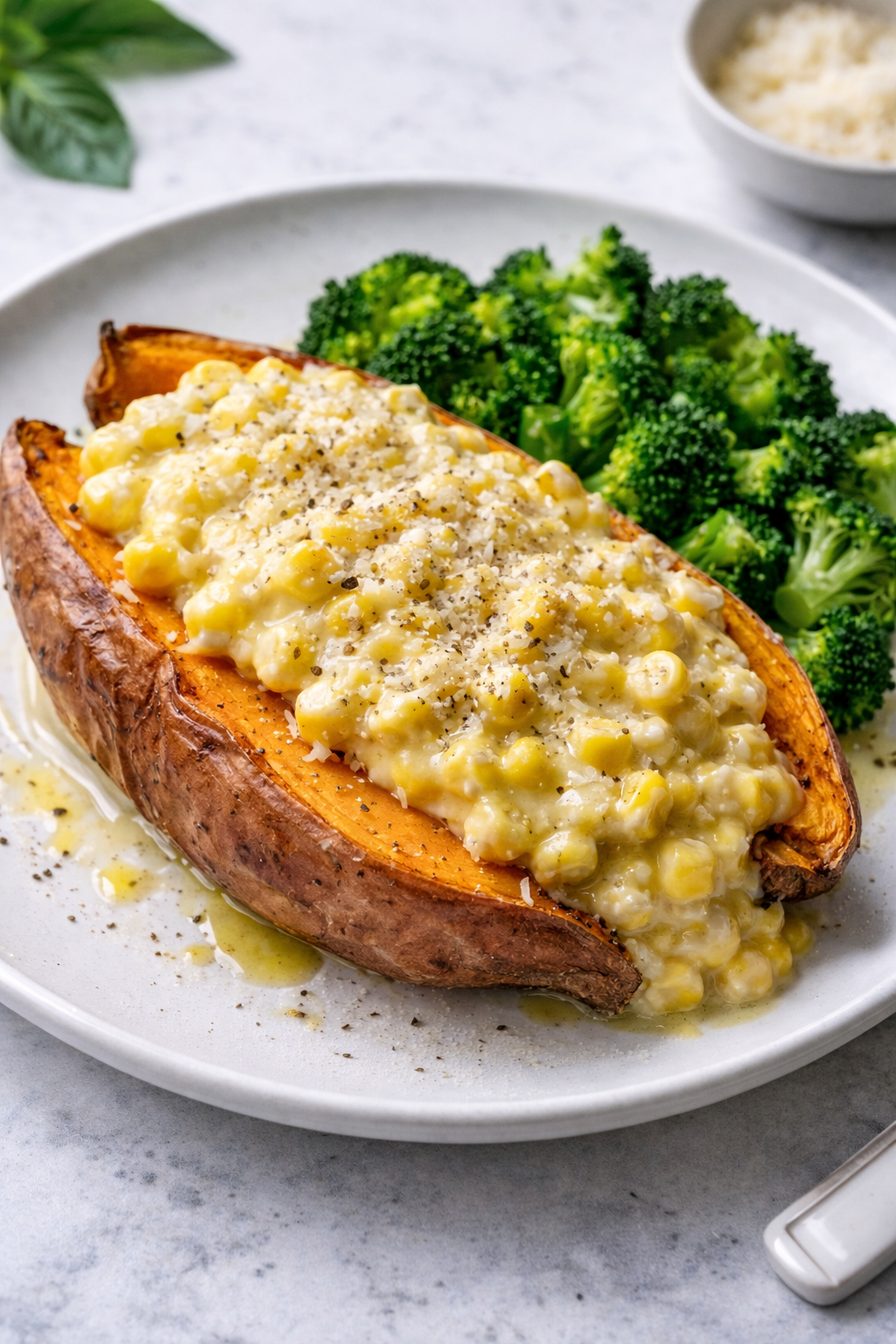
Creamed Corn on Roasted Sweet Potato
Roasted sweet potato with creamed corn and a mixed lipid phase to enhance carotenoid absorption; served with broccoli for fibre and glucosinolates.
Nutrient Tables (per 100 g)
Selected food and preparation: Corn, sweet, yellow, raw. per 100 g edible portion.
Core nutrients
| Nutrient | Amount per 100 g | % reference intake per 100 g |
|---|---|---|
| Energy | 86 kcal | — |
| Protein | 3.3 g | — |
| Total fat | 1.4 g | — |
| Saturated fat | 0.3 g | — |
| Carbohydrates | 18.7 g | — |
| Sugars | 6.3 g | — |
| Fibre | 2 g | — |
Key vitamins and minerals
Vitamins and minerals supplying at least 10% of an adult reference intake per 100 g, derived from the composition panel.
| Nutrient | Amount per 100 g | % reference intake per 100 g |
|---|---|---|
| Phosphorus | 89 mg | 12.7% |
| Folate | 42 µg | 10.5% |
| Vitamin B1 | 0.2 mg | 12.9% |
| Vitamin B3 | 1.8 mg | 11.1% |
| Vitamin B5 | 0.7 mg | 14.3% |
Substances
2 substances in this food
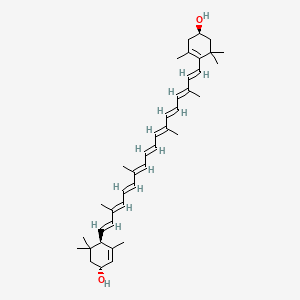
Lutein
Perry et al. (2009) identified lutein in studied cooked corn. A separate amount for this page’s preparation is not established.
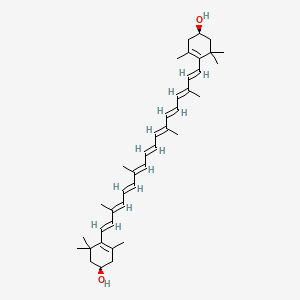
Zeaxanthin
Perry et al. (2009) identified zeaxanthin in studied cooked corn. A separate amount for this page’s preparation is not established.
References
[1] Johnson et al. (2014). Role of lutein and zeaxanthin in visual and cognitive function throughout the lifespan
[2] Yagi et al. (2021). Lutein Has a Positive Impact on Brain Health in Healthy Older Adults: A Systematic Review of Randomized Controlled Trials and Cohort Studies
[3] Lieblein-Boff et al. (2015). The effects of lutein and zeaxanthin on cognitive function: a systematic review. Carotenoid absorption improves with co-ingested dietary fat.
[4] Vishwanathan et al. (2014). Lutein is the predominant carotenoid in infant brain
[5] Kindel et al. (2010). The mechanism of the formation and secretion of chylomicrons. The mechanism of the formation and secretion of chylomicrons.
[6] Brown et al. (2004). Carotenoid bioavailability is higher from salads ingested with full-fat than with fat-reduced salad dressings as measured with electrochemical detection. Carotenoid bioavailability is higher from salads ingested with full-fat than with fat-reduced salad dressings as measured with electrochemical detection.
[7] Eisenhauer et al. (2017). Lutein and Zeaxanthin—Food Sources, Bioavailability and Dietary Variety in Age-Related Macular Degeneration Protection. Table 4 reports 202 µg trans-zeaxanthin and 202 µg trans-lutein per 100 g in the cooked corn measured by Perry et al. (2009).