Roast Duck Breast with Berry Sauce
Overview
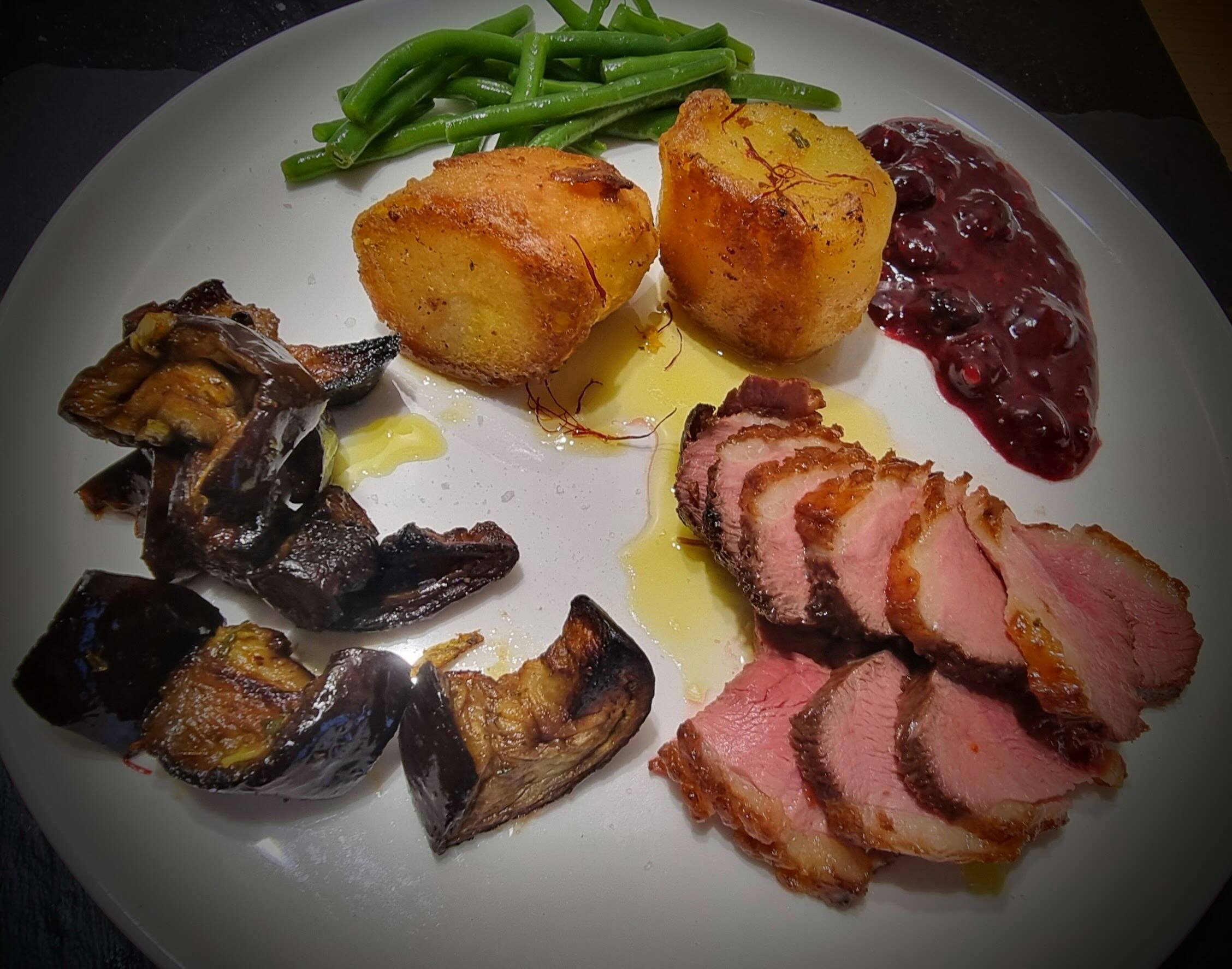
This recipe focuses on properly cooked duck breast paired with a bright berry sauce that balances richness with acidity and fruit depth. The method emphasises controlled fat rendering, clean slicing, and a lightly emulsified sauce rather than a heavy reduction. The result is a dish that feels indulgent yet structured, allowing the duck to remain the central element while the sauce provides contrast and lift.
It works particularly well when served with simple roasted vegetables or potatoes that absorb the duck juices and complement the sauce's acidity.
Ingredients (serves 2)
Duck
- 2 skin-on duck breasts, about 615 g raw in total (roughly 300 g each), yielding about 300 g of cooked duck
- salt
Berry sauce
- 150 g (5.3 oz) blueberries
- 80 g (2.8 oz) raspberries
- 2 tbsp (30 ml) water or light stock
- 1–2 tsp balsamic vinegar
- small knob of butter (about 10 g)
- pinch cinnamon or crushed juniper (optional)
- salt and black pepper
Saffron oil finish
- pinch saffron threads
- 1–2 tbsp extra-virgin olive oil
Method
1. Prepare the duck
- Score the duck skin lightly in a crosshatch pattern, avoiding the flesh.
- Season well with salt.
- Place skin-side down in a cold pan.
- Cook gently over medium heat for 6–8 minutes, allowing the fat to render slowly and the skin to crisp.
- Turn and cook for 3–4 minutes more depending on thickness.
- Remove from pan and rest for at least 5 minutes before slicing.
2. Make the berry sauce
- Place blueberries and water in a small pan.
- Heat gently for 3–4 minutes until berries begin to burst.
- Add raspberries and cook another 1–2 minutes.
- Lightly crush some fruit with a spoon.
- Add balsamic vinegar and seasoning.
- Remove from heat and whisk in the butter to emulsify.
Do not over-reduce — the sauce should remain bright and lightly textured.
3. Prepare saffron oil garnish
- Crush saffron threads.
- Stir into warm olive oil.
- Leave to infuse for at least 5 minutes.
4. Assemble
- Slice the duck breasts.
- Spoon the berry sauce neatly onto the plate.
- Arrange duck slices beside the sauce.
- Drizzle a small amount of saffron-infused olive oil lightly over the duck just before serving.
Use sparingly — this is an aromatic finish rather than a sauce.
Nutrition
Per serving, recipe serves 2. Each included ingredient is scaled from a named per-100 g composition record by edible grams. Optional ingredients are excluded. Missing analytical values are not treated as zero.
| Nutrient | Per serving |
|---|---|
| Energy | 490 kcal |
| Protein | 36 g |
| Carbohydrates | 16 g |
| Sugars | 9.8 g |
| Fibre | 4.4 g |
| Total fat | 32 g |
| Saturated fat | 9.9 g |
| Sodium | 100 mg |
Sodium shown excludes salt and pepper added to taste.
Key vitamins and minerals
| Nutrient | Per serving | Reference intake |
|---|---|---|
| Selenium | 34 µg | 61% RDA |
| Vitamin B2 | 0.75 mg | 58% RDA |
| Vitamin B3 | 8.2 mg | 51% RDA |
| Vitamin B5 | 2.5 mg | 50% AI |
| Copper | 0.43 mg | 47% RDA |
| Phosphorus | 330 mg | 47% RDA |
| Zinc | 4.2 mg | 38% RDA |
| Vitamin B1 | 0.43 mg | 36% RDA |
Vitamins and minerals supplying at least 15% of an adult reference intake, plus explicitly featured design-relevant nutrients, up to eight. RDA is a recommended dietary allowance; AI is an adequate intake, used where the evidence does not support an RDA. Nutrients below the threshold are still calculated and still count towards a daily total; a featured row is not a claim that the serving supplies a complete daily dose.
Bioactive compounds
| Compound | Per serving |
|---|---|
| Cyanidin | Present — quantity not established |
| Delphinidin | Present — quantity not established |
| Malvidin | Present — quantity not established |
| Peonidin | Present — quantity not established |
| Petunidin | Present — quantity not established |
| Quercetin | Present — quantity not established |
| Kaempferol | Present — quantity not established |
| Pelargonidin | Present — quantity not established |
| Vitamin K2 | Present |
These compounds have no recognised intake target, so quantified amounts are shown without a percentage. A presence-only entry is carried from a supported food relationship and is not converted into an invented serving amount.
Calculation details
| Ingredient | Weight used | Composition record |
|---|---|---|
| 2 skin-on duck breasts (about 615 g raw), yielding about 300 g cooked | 300 g | USDA FDC 172411 — Duck, domesticated, meat only, cooked, roasted |
| 150 g blueberries | 150 g | USDA FDC 171711 — Blueberries, raw |
| 80 g raspberries | 80 g | USDA FDC 167755 — Raspberries, raw |
| 1–2 tsp balsamic vinegar | 7.5 g | USDA FDC 172241 — Vinegar, balsamic |
| 1–2 tbsp extra-virgin olive oil, for the saffron oil | 20 g | USDA FDC 171413 — Oil, olive, salad or cooking |
| pinch saffron threads | 0.17 g | USDA FDC 170934 — Spices, saffron |
| small knob of butter (10 g) | 10 g | USDA FDC 173410 — Butter, without salt |
Mainly from:
- Energy: 2 skin-on duck breasts (about 615 g raw), yielding about 300 g cooked, Extra Virgin Olive Oil
- Protein: 2 skin-on duck breasts (about 615 g raw), yielding about 300 g cooked
- Carbohydrates: Blueberries, Raspberries
- Sugars: Blueberries, Raspberries
- Fibre: Raspberries, Blueberries
- Total fat: 2 skin-on duck breasts (about 615 g raw), yielding about 300 g cooked, Extra Virgin Olive Oil
- Saturated fat: 2 skin-on duck breasts (about 615 g raw), yielding about 300 g cooked, Butter
- Sodium: 2 skin-on duck breasts (about 615 g raw), yielding about 300 g cooked
Assumptions and exclusions:
- 2 skin-on duck breasts (about 615 g raw), yielding about 300 g cooked: Calculated from the cooked portion served: 150 g per serving, 300 g for two. Worked back to raw on protein, which rendering does not remove: 300 g cooked duck meat at 23.48 g protein per 100 g (FDC 172411) holds 70.4 g protein, and raw duck meat and skin carries 11.49 g per 100 g (FDC 172408), so about 615 g raw is needed — two breasts of roughly 300 g. The implied yield is close to 50%, because a duck breast's fat cap renders away in the pan.
- 1–2 tsp balsamic vinegar: midpoint 1.5 tsp at 5 g per teaspoon, as for cider vinegar (FDC 173469)
- 1–2 tbsp extra-virgin olive oil, for the saffron oil: midpoint 1.5 tbsp at 13.5 g per tablespoon
- pinch saffron threads: Half of the ~0.35 g the Saffron Roast Potatoes page records for the whole meal.
- small knob of butter (10 g): A knob is not a measure, so 10 g is declared as the recipe's default for the sauce. The record is unsalted butter; salted butter would add about 80 mg sodium.
- 2 skin-on duck breasts (about 615 g raw), yielding about 300 g cooked: There is no Duck food page; the Duck Fat page carries a duck liver record. At 201 kcal and 11.2 g fat per 100 g this record is far richer than skinless breast (FDC 171511, 140 kcal), and it sits within 1 kcal and 0.4 g fat of the breast-with-skin record (FDC 171510, 202 kcal), so it represents a portion eaten with its crisped skin. FDC 171510 reports no zinc, B12 or B6, so the more complete record is used rather than leaving three nutrients unknown.
- 1–2 tsp balsamic vinegar: ; no food page
- 2 tbsp (30 ml) water or light stock — water is the default and contributes no energy or nutrients
- pinch cinnamon or crushed juniper (optional) — optional, no stated quantity
- salt and black pepper — added to taste, so it is not part of an exact sodium total
- Duck is calculated from the cooked portion actually served: 150 g per serving, 300 g in total, eaten with its crisped skin. That needs about 615 g of raw skin-on breast, since roughly half the raw weight is fat that renders into the pan and is discarded rather than eaten.
- A knob of butter is taken as 10 g, and unsalted.
- Balsamic vinegar and the finishing olive oil are calculated at the midpoint of their stated ranges.
Serving Suggestions
Serve with:
These sides absorb the duck juices and complement the berry sauce's acidity while adding texture and colour to the plate.
Notes
- Duck benefits from resting; slicing too early will release juices.
- The sauce should remain loose rather than syrupy.
- A light drizzle of saffron oil enhances aroma without overpowering the duck.
Explore the foods and substances
Show 4 foods and their substances
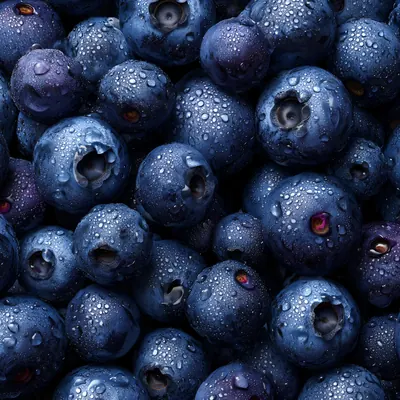
Blueberries
Berries providing anthocyanins, vitamin C and fibre
Substances: Cyanidin and Cyanidin-3-Glucoside (C3G), Delphinidin, Kaempferol, Malvidin, Manganese, Peonidin, Petunidin, Quercetin (and Isoquercetin), Vitamin C (Ascorbate)
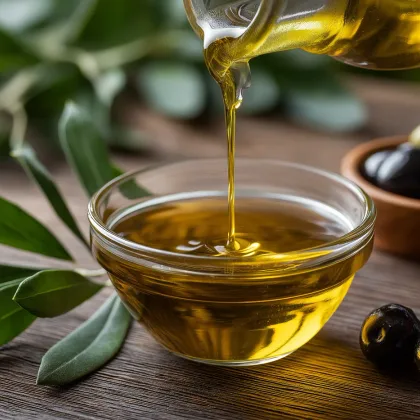
Extra Virgin Olive Oil
Polyphenol-rich oil with hydroxytyrosol and anti-inflammatory properties
Substances: Hydroxytyrosol (Olive Polyphenol), Oleacein, Oleocanthal, Tyrosol

Raspberries
Polyphenol-rich berries with fiber
Substances: Cyanidin and Cyanidin-3-Glucoside (C3G), Pelargonidin, Vitamin B9 (Folate), Vitamin C (Ascorbate)

Saffron
Culinary spice rich in crocin and safranal; gentle preparation preserves colour and aroma