Beetroot
Overview
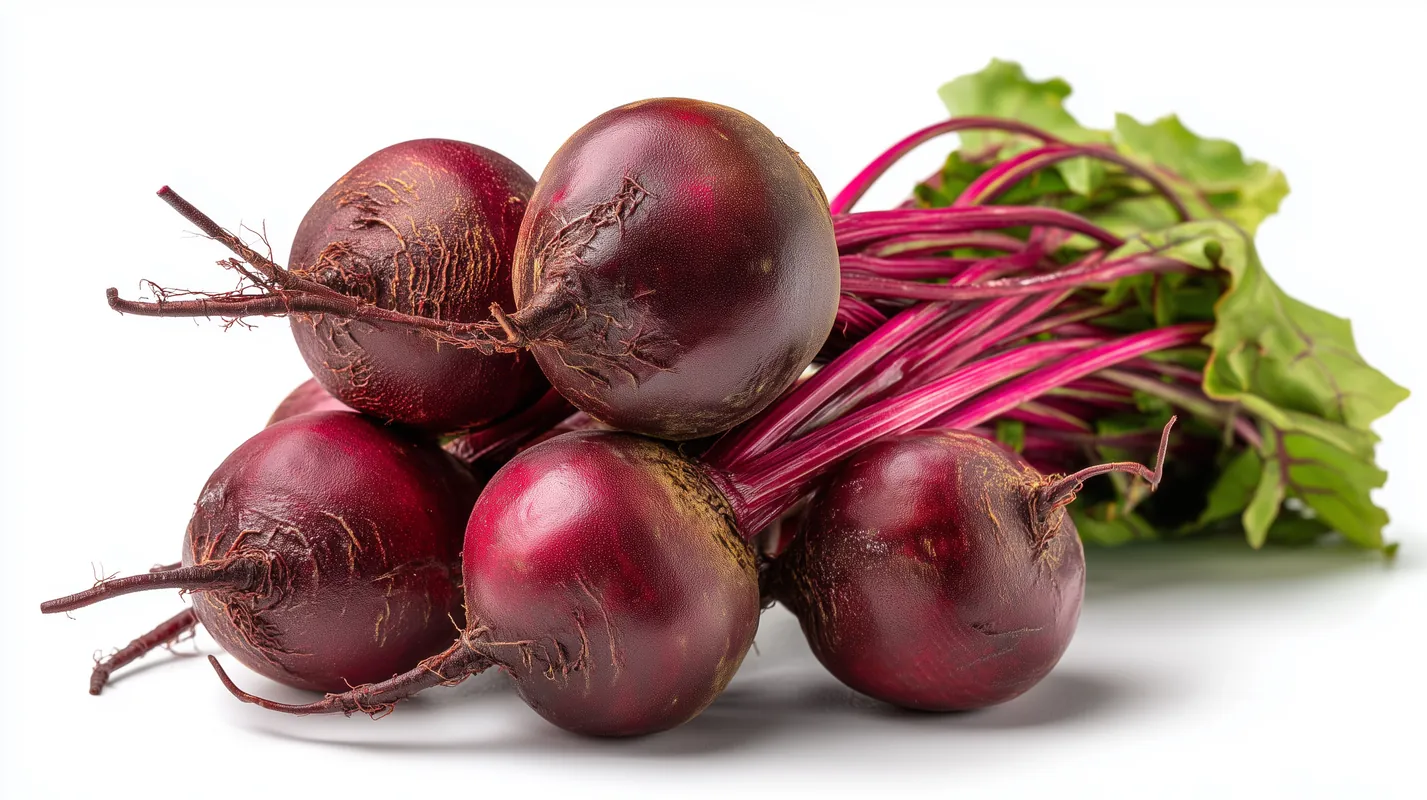
Beetroot is a root vegetable characterised by naturally occurring nitrate and red-violet betalain pigments, with useful folate. Nitrate and pigment levels vary with cultivar, growing conditions and preparation.
Within a BRAIN-aligned pattern it is included as an ordinary vegetable for this combination of pigments, nitrate and folate, not as a nitrate supplement.
Food Context
Use beetroot as a whole vegetable rather than treating it as equivalent to a concentrated nitrate product.
Preparation
- Raw and lightly cooked preparations generally retain more nitrate than prolonged high-temperature cooking.
- Roasting is useful for flavour; it does not turn beetroot into a nitrate extract.
Recipes
2 recipes containing this food
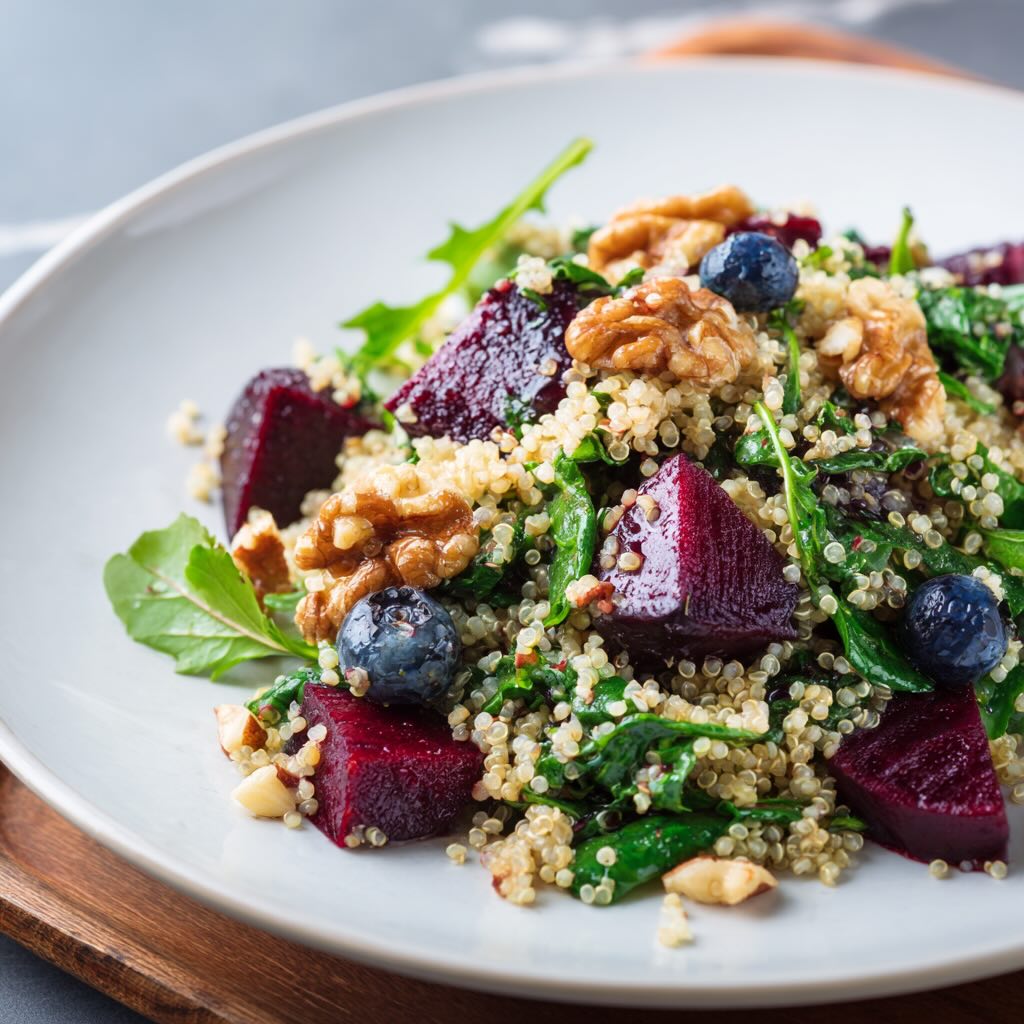
Mitochondrial Power Bowl
A nitrate-rich, polyphenol-dense bowl combining leafy greens, beets, berries, nuts, and early harvest olive oil
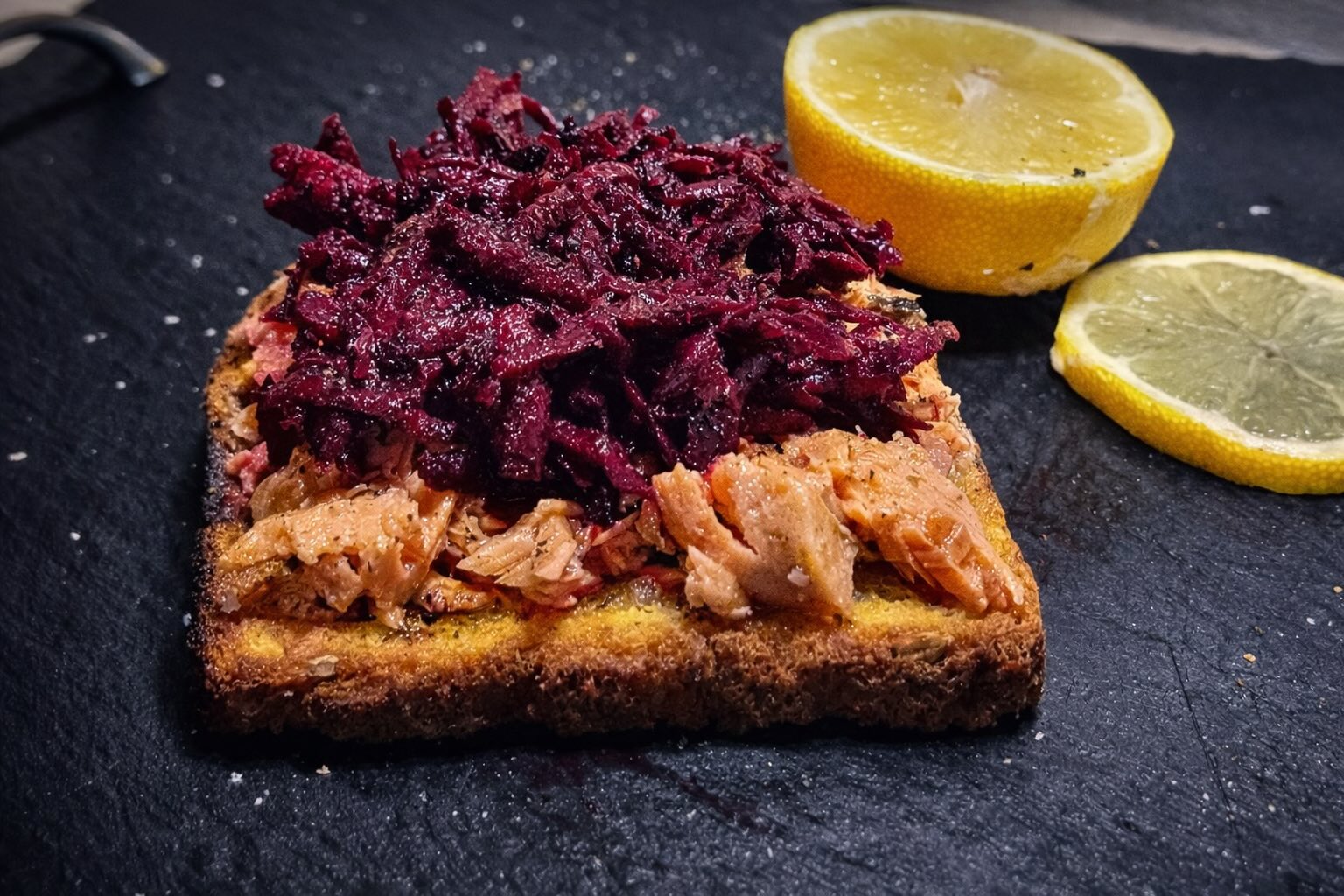
Salmon & Grated Beetroot Toast (with Lemon)
A fast, brain-forward open sandwich combining omega-3 rich salmon, nitrate/polyphenol beetroot, and lemon acidity for a sharp, savoury bite.
Nutrient Tables (per 100 g)
Core nutrients
| Nutrient | Amount per 100 g | % RDA per 100 g |
|---|---|---|
| Energy | 43 kcal | — |
| Protein | 1.6 g | — |
| Total fat | 0.2 g | — |
| Saturated fat | 0 g | — |
| Carbohydrates | 9.6 g | — |
| Sugars | 6.8 g | — |
| Fibre | 2.8 g | — |
Key vitamins and minerals
Vitamins and minerals supplying at least 15% of an adult reference intake per 100 g, derived from the composition panel. Tags do not decide which rows appear.
| Nutrient | Amount per 100 g | % RDA per 100 g |
|---|---|---|
| Folate | 109 µg | 27.3% |
Advanced Nutrition
Other quantitative vitamins and minerals from the same composition panel. They remain available for Substance cards and later scoring; they are not headline nutrients of this food.
| Nutrient | Amount per 100 g | % RDA per 100 g |
|---|---|---|
| Iron | 0.8 mg | 4.4% |
| Zinc | 0.4 mg | 3.2% |
| Magnesium | 23 mg | 5.5% |
| Phosphorus | 40 mg | 5.7% |
| Manganese | 0.3 mg | 14.3% |
| Selenium | 0.7 µg | 1.3% |
| Calcium | 16 mg | 1.6% |
| Potassium | 325 mg | 9.6% |
| Copper | 0.1 mg | 8.3% |
| Sodium | 78 mg | — |
| Choline | 6 mg | 1.1% |
| Vitamin B6 | 0.1 mg | 5.2% |
| Vitamin B2 | 0 mg | 3.1% |
| Vitamin B1 | 0 mg | 2.6% |
| Vitamin B3 | 0.3 mg | 2.1% |
| Vitamin B5 | 0.2 mg | 3.1% |
| Vitamin C | 4.9 mg | 5.4% |
| Vitamin A | 2 µg | 0.2% |
| Vitamin E | 0 mg | 0.3% |
| Vitamin K | 0.2 µg | 0.2% |
Bioactive compounds
Explicitly identified compounds, including individual fatty acids, with a defensible quantity or an explicit qualitative status. Asterisks (*) identify supplementary sources below. Unquantified or trace constituents are not automatically admitted to the Substances list.
| Compound / class | Amount per 100 g | Notes |
|---|---|---|
| Nitrate | Present — quantity not established * | — |
- * Nitrate: Beetroot is a recognised dietary nitrate vegetable. Quantity varies with cultivar, season and storage.
Substances
Substances admitted through a supported nutrition-table row. Not every table row appears here. Cards are not BRS mappings.
6 substances in this food
Iron
Oxygen transport; dopamine synthesis (tyrosine hydroxylase cofactor)
Magnesium
Enzymatic cofactor (>300 reactions); neurotransmitters; mitochondria; redox balance
Manganese
Cofactor for MnSOD (SOD2); mitochondrial antioxidant defense

Nitrate
Dietary nitrate that converts to nitric oxide, supporting vascular function and mitochondrial efficiency
Potassium
Electrolyte for nerve transmission, muscle function, and blood pressure regulation
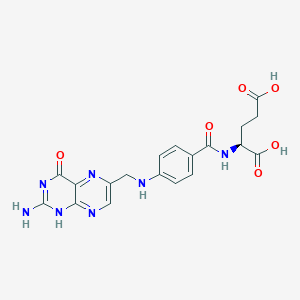
Vitamin B9 (Folate; 5-MTHF)
One-carbon metabolism; methylation; homocysteine recycling
References
[1] Labelled generic context: flavanol-rich cocoa and vascular function in humans, not beetroot nitrate evidence. Schroeter & Heiss 2006. (-)-Epicatechin mediates beneficial effects of flavanol-rich cocoa on vascular function in humans
[2] Labelled generic context: B-vitamin review, not beetroot composition evidence. Kennedy et al. 2016. B Vitamins and the Brain: Mechanisms, Dose and Efficacy—A Review