Cranberries

Overview
Cranberries provide proanthocyanidins (PACs) and anthocyanins—mainly Cyanidin and Peonidin backbones—with urinary-tract and polyphenol interest [1]. Berry-class flavonoids have cognitive systematic-review support in aging populations [2].
Within the BRAIN Diet framework, cranberries are used fresh, frozen, or as low-sugar preparations; juice cocktails with added sugar reduce BRAIN Diet alignment.
Key Nutritional Highlights
- PAC-rich berry with urinary-tract polyphenol interest [1].
- Berry flavonoid cognitive evidence from systematic reviews [2].
- Very tart fresh — low-sugar preparations preferred.
- Dried sweetened cranberries are dessert-tier, not polyphenol staples.
Food Context
Synergies
- Part of diverse polyphenol intake
- Pair with other resveratrol sources
Preparation
- Can be consumed fresh, dried, or as juice
- Supports gut microbiome diversity
Recipes
Nutrient Tables (per 100 g)
Selected food and preparation: Cranberries, raw. per 100 g edible portion.
Core nutrients
| Nutrient | Amount per 100 g | % reference intake per 100 g |
|---|---|---|
| Energy | 46 kcal | — |
| Protein | 0.5 g | — |
| Total fat | 0.1 g | — |
| Saturated fat | 0 g | — |
| Carbohydrates | 12 g | — |
| Sugars | 4.3 g | — |
| Fibre | 3.6 g | — |
Key vitamins and minerals
Vitamins and minerals supplying at least 10% of an adult reference intake per 100 g, derived from the composition panel.
| Nutrient | Amount per 100 g | % reference intake per 100 g |
|---|---|---|
| Manganese | 0.3 mg | 11.6% |
| Vitamin C | 14 mg | 15.6% |
Bioactive compounds
| Compound / class | Amount per 100 g | Notes |
|---|---|---|
| Cyanidin | Present — quantity not established | Cranberries, raw; NDB 09078 — glycosides / reported aglycone equivalents |
| Peonidin | Present — quantity not established | Cranberries, raw; NDB 09078 — glycosides / reported aglycone equivalents |
- Cyanidin, Peonidin: USDA flavonoid database, Release 3.3; the studied food form is shown beside each constituent. Glycoside-derived records do not establish free-aglycone amounts.
Technical provenance
Cyanidin: USDA flavonoid database Release 3.3 (2018); Printed page 31–32; Cranberries, raw; NDB 09078. Positive mean in the named food row, not an assumed association from database title. No free-aglycone mass inferred.
Peonidin: USDA flavonoid database Release 3.3 (2018); Printed page 31–32; Cranberries, raw; NDB 09078. Positive mean in the named food row, not an assumed association from database title. No free-aglycone mass inferred.
Substances
3 substances in this food

Peonidin
USDA’s flavonoid database identifies peonidin-derived glycosides in cranberries, raw. A separate amount for this page is not established. This does not establish free-aglycone content.
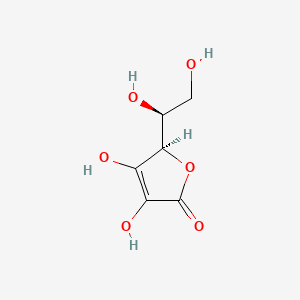
Vitamin C (Ascorbate)
USDA FoodData Central reports vitamin C in Cranberries, raw.
Cyanidin and Cyanidin-3-Glucoside (C3G)
USDA’s flavonoid database identifies cyanidin-derived glycosides in cranberries, raw. A separate amount for this page is not established. This does not establish free-aglycone content.
References
[1] PAC-rich berry with urinary-tract polyphenol interest. Hein & Whyte 2019. Systematic Review of the Effects of Blueberry on Cognitive Performance as We Age
[2] Berry flavonoid cognitive evidence from systematic reviews. Neshatdoust & Saunders 2016. High-flavonoid intake induces cognitive improvements linked to changes in serum brain-derived neurotrophic factor: Two randomised, controlled trials