Pistachios

Overview
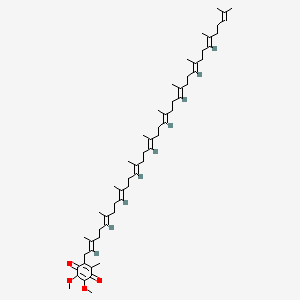
Pistachios provide CoQ10 (plant source), healthy fats, and protein, supporting mitochondrial function and antioxidant defenses. Coenzyme Q10 (CoQ10): Organ meats (heart, liver), oily fish (sardines, mackerel), beef, Spinach, broccoli, pistachios, olive oil (lower amounts).
Within the BRAIN Diet framework, coQ10 supports mitochondrial electron transport and antioxidant protection for neurons.
Food Context
Synergies
- Part of diverse nut intake; dietary diversity (≥30 plant foods per week) supports microbial richness and resilience
- Pair with other CoQ10 sources for optimal mitochondrial support
Preparation
- Can be consumed raw or roasted; gentle roasting preserves nutrients
- Supports mitochondrial function via CoQ10; CoQ10 deficiency leads to reduced ATP production and mitochondrial dysfunction
Essential Amino Acid Profile
Pistachios provide plant protein but are not a complete protein; lysine is typically limiting for nuts and seeds.
Protein pairing strategy:
Pair with legumes or grains to complete essential amino acid coverage.
Recipes
1 recipe containing this food
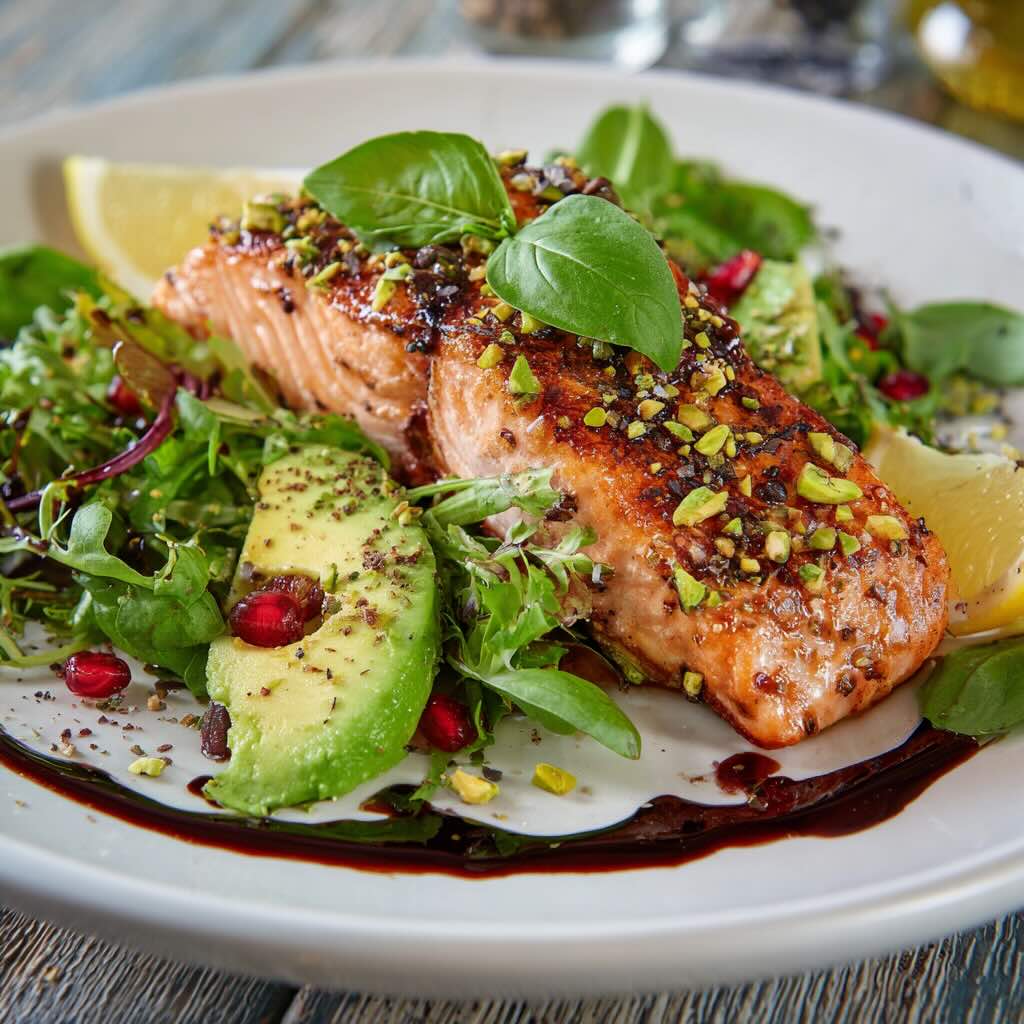
Salmon Bowl-pistachio-cacao-nibs
A Mediterranean-style bowl combining salmon, avocado, pistachios, cacao nibs, and early harvest olive oil — rich in omega-3 fats, polyphenols, and fibre.
Nutrient Tables (per 100 g)
Selected food and preparation: Nuts, pistachio nuts, raw. per 100 g edible portion.
Core nutrients
| Nutrient | Amount per 100 g | % reference intake per 100 g |
|---|---|---|
| Energy | 560 kcal | — |
| Protein | 20.2 g | — |
| Total fat | 45.3 g | — |
| Saturated fat | 5.9 g | — |
| Carbohydrates | 27.2 g | — |
| Sugars | 7.7 g | — |
| Fibre | 10.6 g | — |
Key vitamins and minerals
Vitamins and minerals supplying at least 10% of an adult reference intake per 100 g, derived from the composition panel.
| Nutrient | Amount per 100 g | % reference intake per 100 g |
|---|---|---|
| Iron | 3.9 mg | 21.8% |
| Zinc | 2.2 mg | 20% |
| Magnesium | 121 mg | 28.8% |
| Phosphorus | 490 mg | 70% |
| Manganese | 1.2 mg | 52.2% |
| Selenium | 7 µg | 12.7% |
| Calcium | 105 mg | 10.5% |
| Potassium | 1025 mg | 30.1% |
| Copper | 1.3 mg | 144.4% |
| Folate | 51 µg | 12.8% |
| Vitamin B6 | 1.7 mg | 130.8% |
| Vitamin B2 | 0.2 mg | 12.3% |
| Vitamin B1 | 0.9 mg | 72.5% |
| Vitamin B5 | 0.5 mg | 10.4% |
| Vitamin E | 2.9 mg | 19.1% |
Bioactive compounds
| Compound / class | Amount per 100 g | Notes |
|---|---|---|
| CoQ10 | Present [1] | pistachio kernels |
- CoQ10: Reported in pistachio kernels. [1]
Technical provenance
CoQ10: Nano-Liquid Chromatography for Coenzyme Q10 in Pistachio Samples (2023). Primary Table 2 measures individual CoQ10 in six named pistachio samples. [1]
Substances
1 substance in this food
References
[1] Nano-Liquid Chromatography for Coenzyme Q10 in Pistachio Samples (2023)