Mucuna Beans

Overview
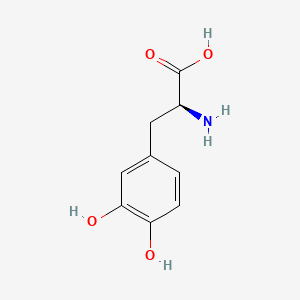
Mucuna beans are velvet bean seeds, Mucuna pruriens. Seed studies confirm L-DOPA (levodopa), a pharmacologically active precursor of dopamine [2]. Its presence does not establish a suitable dietary dose.
Food Context
Preparation
Soaking, boiling and other processing methods are discussed in the composition review [1]. These descriptions do not establish safe residual L-DOPA levels for a particular cooked preparation. Raw seeds, cooked beans, extracts and supplements have different compositions; seed assay results cannot be transferred between them.
Recipes
Nutrition
Reliable composition data for this preparation are not yet available.
Recorded constituents
Bioactive compounds
| Compound / class | Content | Notes |
|---|---|---|
| L-DOPA | Present in studied seeds; cooked content not established [3] | — |
- L-DOPA: Boonchoong et al. (2018): Mucuna pruriens var. utilis seed material. [3]
Technical provenance
L-DOPA: Boonchoong et al. (2018), primary abstract: M. pruriens var. utilis seed samples, 3.54–3.70% w/w by HPLC (3.54–3.70 g per 100 g seed material). The record does not establish the moisture basis or a concentration for cooked beans. [3]
Substances
References
[1] Sowdhanya et al. (2024). Nutritional significance of velvet bean and opportunities for its processing into value-added products. A review of composition and processing; it does not supply a single composition panel for cooked beans.
[2] Boonchoong et al. (2018). Quantitative Analysis of L-DOPA in Mucuna pruriens Seeds by High Performance Liquid Chromatography. Seed-specific evidence; not a cooked-food concentration.