Black Goji
Overview
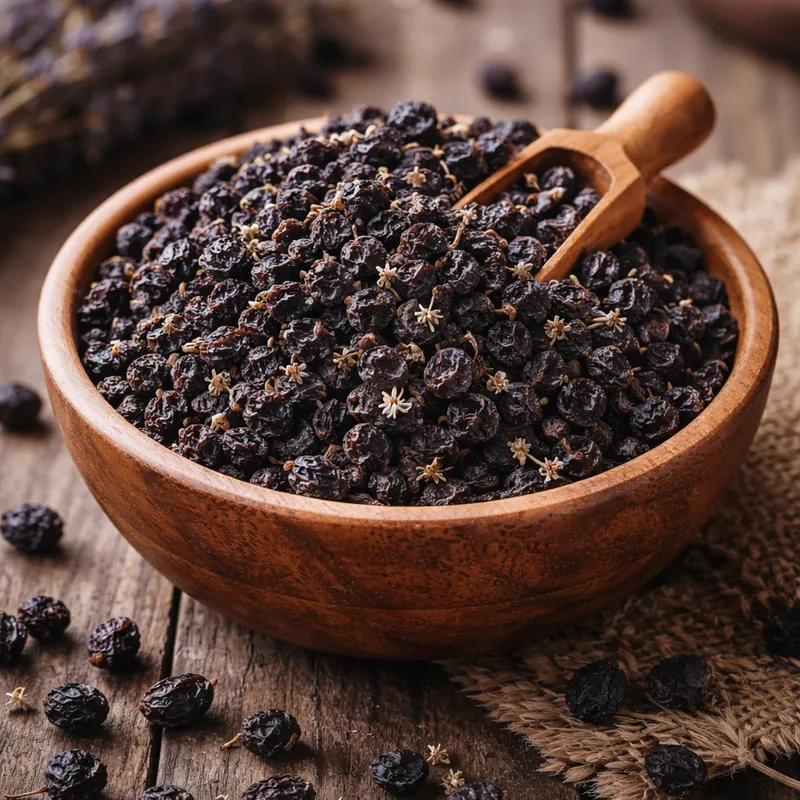
Black goji (Lycium ruthenicum) is a small berry characterised by dense anthocyanins. Analyses of fruit from multiple Chinese regions found a shared anthocyanin pattern but substantial variation in individual and total concentrations [1].
Within a BRAIN-aligned pattern it is one berry among others. It does not replace everyday fruit.
Food Context
Sourcing
- Use berries labelled Lycium ruthenicum; do not treat black plum or common goji as the same food.
Preparation
- Typically dried or infused; serving sizes stay small.
Recipes
Nutrition
Reliable composition data for this preparation are not yet available.
Substances
References
[1] Wang et al. (2018). Comparison and multivariate statistical analysis of anthocyanin composition in Lycium ruthenicum Murray from different regions to trace geographical origins: The case of China. HPLC analysis of 45 L. ruthenicum samples found a consistent anthocyanin pattern with region-dependent concentrations.