Dandelion Greens

Overview
Dandelion greens are bitter leafy greens providing prebiotic fiber and supporting gut health.
Within the BRAIN Diet framework, they are part of a diverse leafy green intake strategy that supports gut microbiome diversity.
Food Context
Synergies
- Part of diverse prebiotic fiber strategy
Preparation
- Can be consumed raw or cooked
- Bitter taste may be an acquired preference
- Supports gut microbiome diversity
Recipes
Nutrient Tables (per 100 g)
Selected food and preparation: Dandelion greens, raw. per 100 g edible portion.
Core nutrients
| Nutrient | Amount per 100 g | % reference intake per 100 g |
|---|---|---|
| Energy | 45 kcal | — |
| Protein | 2.7 g | — |
| Total fat | 0.7 g | — |
| Saturated fat | 0.2 g | — |
| Carbohydrates | 9.2 g | — |
| Sugars | 0.7 g | — |
| Fibre | 3.5 g | — |
Key vitamins and minerals
Vitamins and minerals supplying at least 10% of an adult reference intake per 100 g, derived from the composition panel.
| Nutrient | Amount per 100 g | % reference intake per 100 g |
|---|---|---|
| Iron | 3.1 mg | 17.2% |
| Manganese | 0.3 mg | 14.9% |
| Calcium | 187 mg | 18.7% |
| Potassium | 397 mg | 11.7% |
| Copper | 0.2 mg | 19% |
| Vitamin B6 | 0.3 mg | 19.3% |
| Vitamin B2 | 0.3 mg | 20% |
| Vitamin B1 | 0.2 mg | 15.8% |
| Vitamin C | 35 mg | 38.9% |
| Vitamin A | 508 µg | 56.4% |
| Vitamin E | 3.4 mg | 22.9% |
| Vitamin K | 778.4 µg | 648.7% |
Substances
1 substance in this food
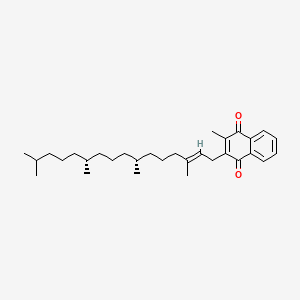
Vitamin K (Phylloquinone)
USDA FoodData Central reports vitamin K in Dandelion greens, raw. This vitamin K record is not a vitamin K2 measurement.
References
[1] Bitter greens and chicory-family plants supply fermentable fibre that supports gut microbiota composition. Pouille et al. 2022. Chicory: Understanding the Effects and Effectors of This Functional Food
[2] Leafy plant foods contribute carotenoids and antioxidant phytonutrients relevant to neuroprotection. Johnson et al. 2014. Role of lutein and zeaxanthin in visual and cognitive function throughout the lifespan