Acetate
Overview
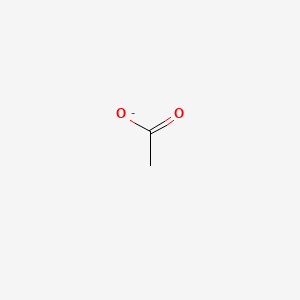
Acetate is the most abundant short-chain fatty acid (SCFA) produced by gut bacteria through fermentation of dietary fiber. It is the simplest SCFA and serves as a building block for other SCFAs. Acetate plays important roles in supporting intestinal barrier integrity, regulating immune responses, and promoting synthesis of key neurotransmitters such as dopamine and serotonin. ADHD groups have been shown to exhibit significantly lower levels of acetic acid.
Recipes
Foods
Biological Mechanisms and Implications
No biological targets found for substance: Acetate
References
- ADHD group exhibiting significantly lower levels of key SCFAs, including acetic acid Steckler et al. 2024
- SCFAs support intestinal barrier integrity, regulate immune responses, and promote synthesis of key neurotransmitters such as dopamine and serotonin Silva et al. 2020
- SCFAs are byproducts of fibre fermentation in the gut and have been linked to improving brain function via the gut-brain axis
- Found in: Produced by gut bacteria from fiber fermentation