Blueberries
Overview
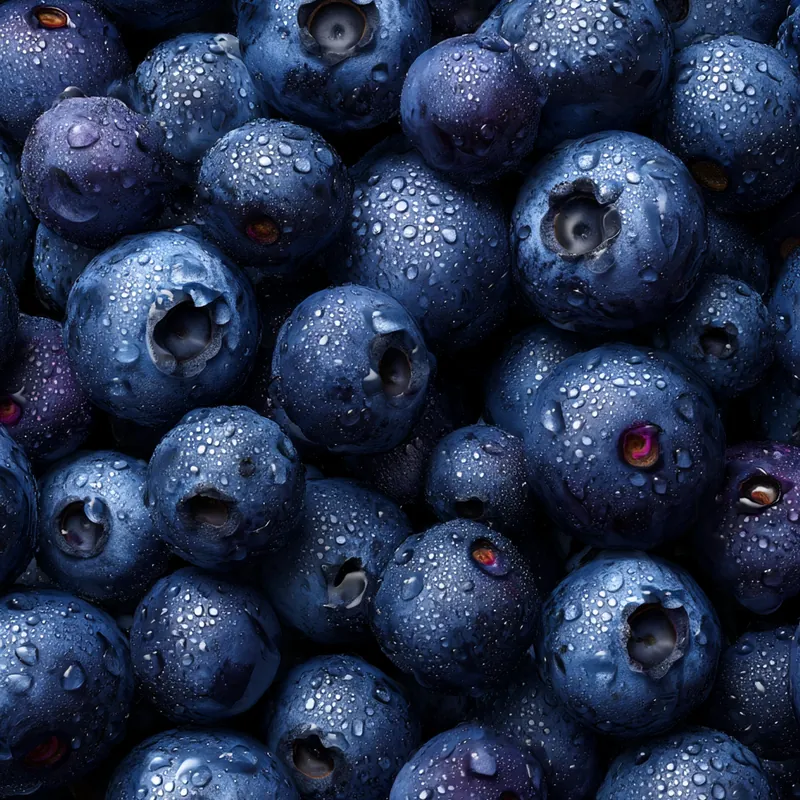
Blueberries provide anthocyanins built from cyanidin, delphinidin, malvidin, peonidin and petunidin glycosides, together with vitamin C and fibre [1]. Human blueberry studies have examined cognitive performance with age [2].
Within a BRAIN-aligned pattern they are an everyday berry, not a stand-alone intervention. Fresh or frozen whole fruit keeps fibre that juice does not.
Food Context
Preparation
- Prefer whole berries when retaining the fruit's fibre is the aim.
Recipes
3 recipes containing this food
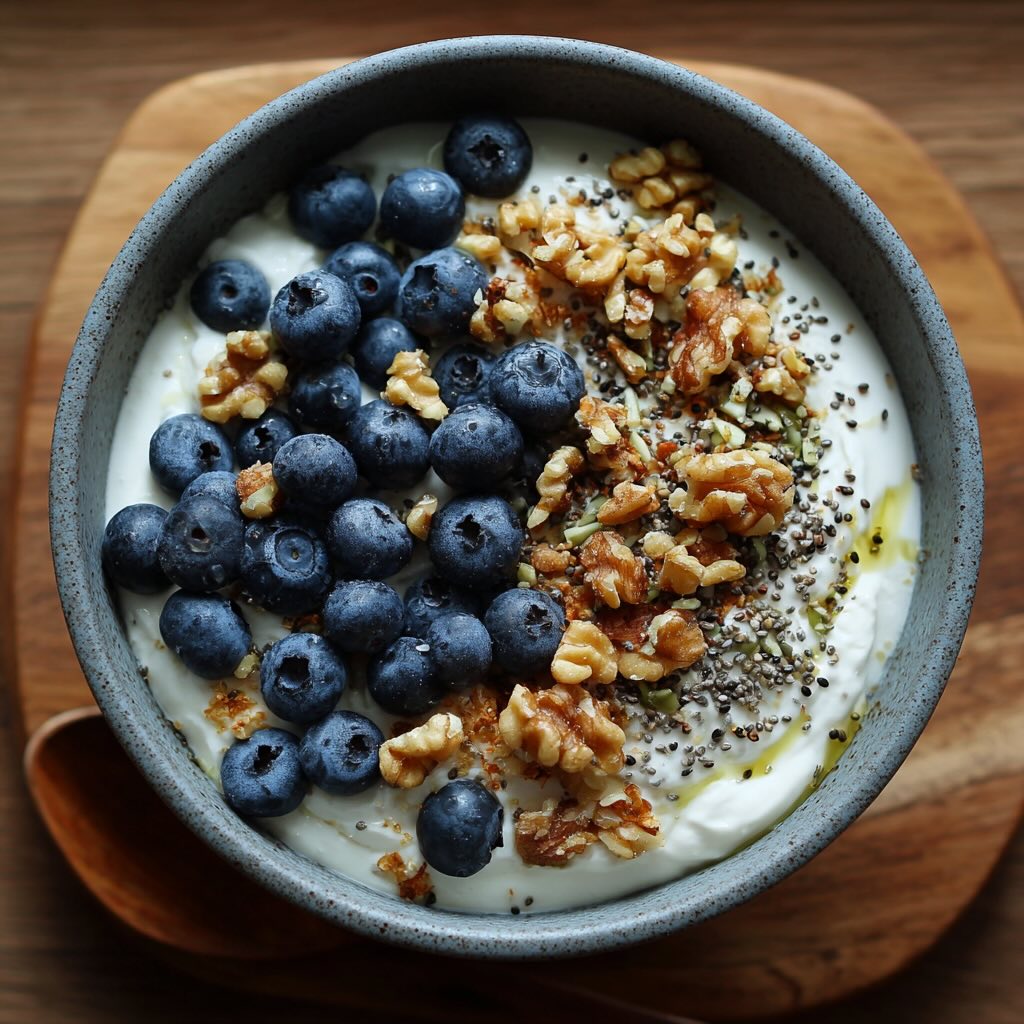
Ginger Yogurt and Blueberries
A polyphenol-rich breakfast bowl with high fibre, combining ginger, omega-3 nuts, blueberry polyphenols, and probiotic yogurt.
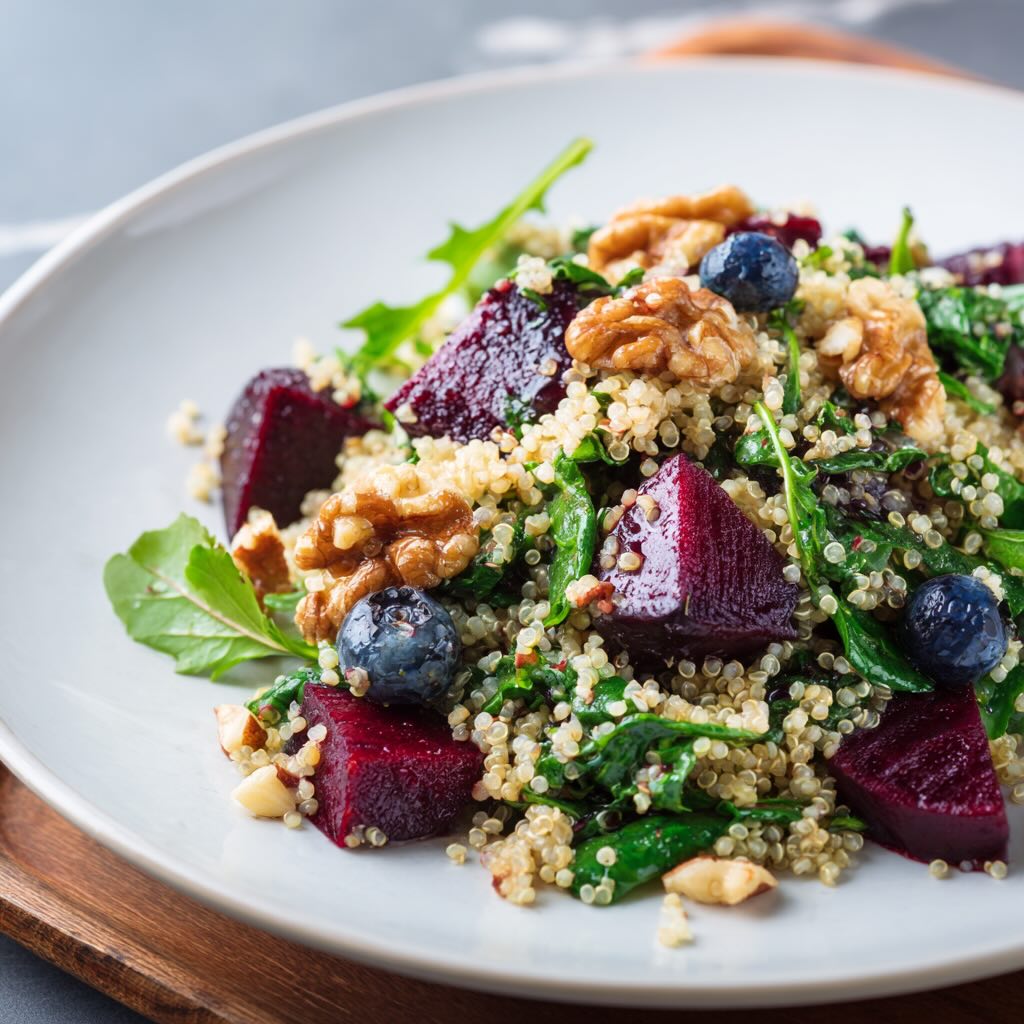
Mitochondrial Power Bowl
A nitrate-rich, polyphenol-dense bowl combining leafy greens, beets, berries, nuts, and early harvest olive oil
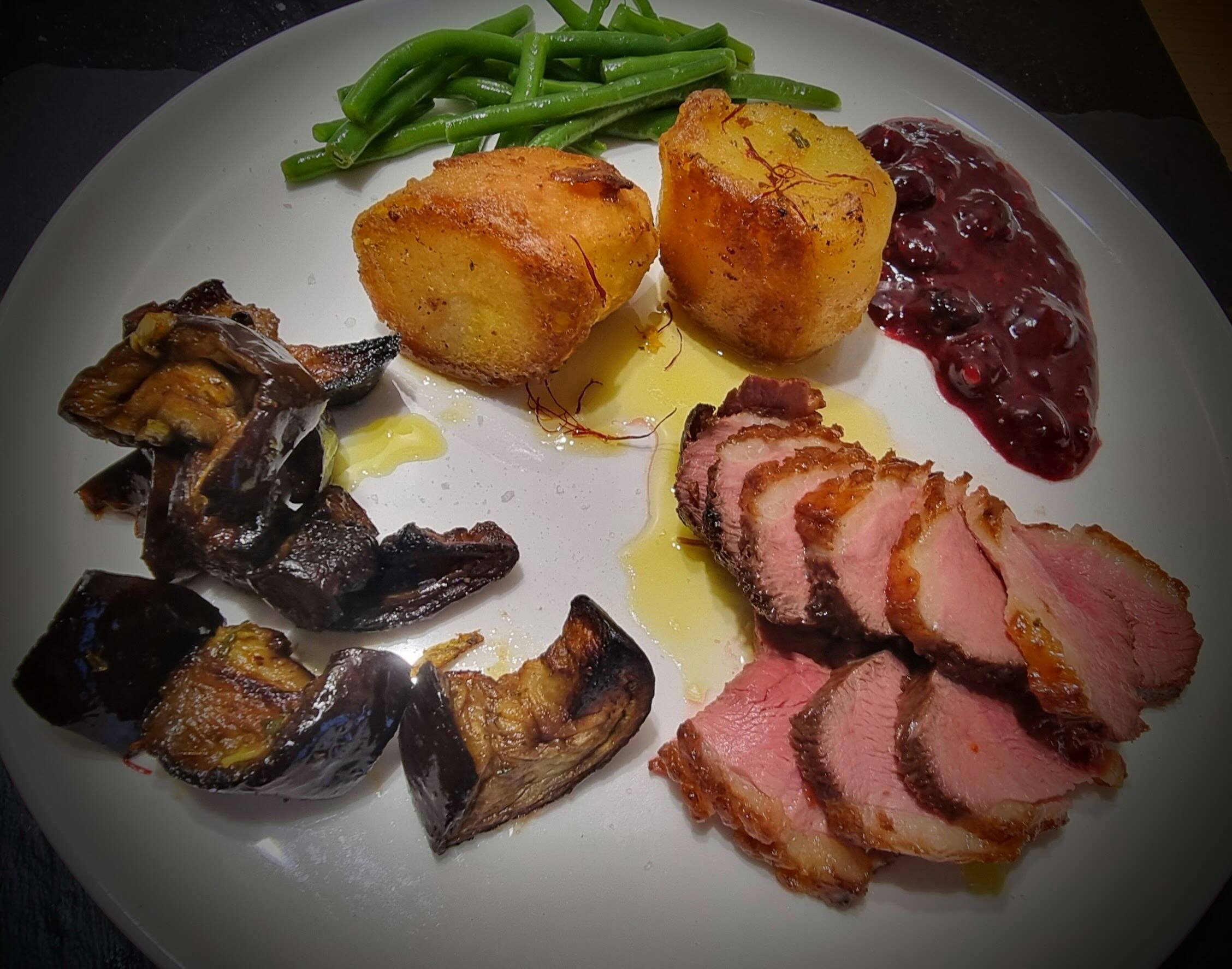
Roast Duck Breast with Berry Sauce
A rich main dish built around crisp-skinned duck breast with a bright blueberry and raspberry sauce, designed to balance richness with acidity and aromatic depth.
Nutrient Tables (per 100 g)
Selected food and preparation: Blueberries, raw. per 100 g edible portion.
Core nutrients
| Nutrient | Amount per 100 g | % reference intake per 100 g |
|---|---|---|
| Energy | 57 kcal | — |
| Protein | 0.7 g | — |
| Total fat | 0.3 g | — |
| Saturated fat | 0 g | — |
| Carbohydrates | 14.5 g | — |
| Sugars | 10 g | — |
| Fibre | 2.4 g | — |
Key vitamins and minerals
Vitamins and minerals supplying at least 10% of an adult reference intake per 100 g, derived from the composition panel.
| Nutrient | Amount per 100 g | % reference intake per 100 g |
|---|---|---|
| Manganese | 0.3 mg | 14.6% |
| Vitamin C | 9.7 mg | 10.8% |
| Vitamin K | 19.3 µg | 16.1% |
Bioactive compounds
| Compound / class | Amount per 100 g | Notes |
|---|---|---|
| Cyanidin | Present — quantity not established | Blueberries, cultivated (highbush), raw; NDB 09050 — glycosides / reported aglycone equivalents |
| Delphinidin | Present — quantity not established | Blueberries, cultivated (highbush), raw; NDB 09050 — glycosides / reported aglycone equivalents |
| Malvidin | Present — quantity not established | Blueberries, cultivated (highbush), raw; NDB 09050 — glycosides / reported aglycone equivalents |
| Peonidin | Present — quantity not established | Blueberries, cultivated (highbush), raw; NDB 09050 — glycosides / reported aglycone equivalents |
| Petunidin | Present — quantity not established | Blueberries, cultivated (highbush), raw; NDB 09050 — glycosides / reported aglycone equivalents |
| Quercetin | Present — quantity not established | Blueberries, cultivated (highbush), raw; NDB 09050 — glycosides / reported aglycone equivalents |
| Kaempferol | Present — quantity not established | — |
- Cyanidin, Delphinidin, Malvidin, Peonidin, Petunidin, Quercetin: USDA flavonoid database, Release 3.3; the studied food form is shown beside each constituent. Glycoside-derived records do not establish free-aglycone amounts.
- Kaempferol: Dabeek and Marra 2019 supports this qualitative constituent record. See technical provenance for food form and measurement details.
Technical provenance
Cyanidin: USDA flavonoid database Release 3.3 (2018); Printed page 27–28; Blueberries, cultivated (highbush), raw; NDB 09050. Positive mean in the named food row, not an assumed association from database title. No free-aglycone mass inferred.
Delphinidin: USDA flavonoid database Release 3.3 (2018); Printed page 27–28; Blueberries, cultivated (highbush), raw; NDB 09050. Positive mean in the named food row, not an assumed association from database title. No free-aglycone mass inferred.
Malvidin: USDA flavonoid database Release 3.3 (2018); Printed page 27–28; Blueberries, cultivated (highbush), raw; NDB 09050. Positive mean in the named food row, not an assumed association from database title. No free-aglycone mass inferred.
Peonidin: USDA flavonoid database Release 3.3 (2018); Printed page 27–28; Blueberries, cultivated (highbush), raw; NDB 09050. Positive mean in the named food row, not an assumed association from database title. No free-aglycone mass inferred.
Petunidin: USDA flavonoid database Release 3.3 (2018); Printed page 27–28; Blueberries, cultivated (highbush), raw; NDB 09050. Positive mean in the named food row, not an assumed association from database title. No free-aglycone mass inferred.
Quercetin: USDA flavonoid database Release 3.3 (2018); Printed page 27–28; Blueberries, cultivated (highbush), raw; NDB 09050. Positive mean in the named food row, not an assumed association from database title. No free-aglycone mass inferred.
Kaempferol: Dabeek and Marra 2019 compile Phenol-Explorer and USDA flavonoid values showing kaempferol in Blueberries; a single defensible per-100 g value is not taken from the abbreviated USDA nutrient panel.
Functional metrics
| Metric | Score | Notes |
|---|---|---|
| Total polyphenols (Folin proxy) | Varies by cultivar and ripeness | Strongly covaries with anthocyanin and flavonol content in berry matrices. |
Note: Functional-metric values depend strongly on assay method, processing, and product formulation. Use these as contextual metrics, not strict like-for-like nutrient equivalents.
Substances
9 substances in this food

Delphinidin
USDA’s flavonoid database identifies delphinidin-derived glycosides in blueberries, cultivated (highbush), raw. A separate amount for this page is not established. This does not establish free-aglycone content.
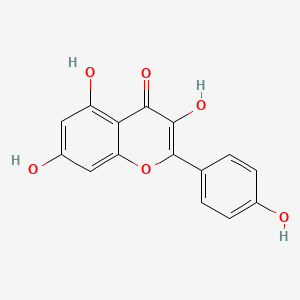
Kaempferol
Dietary flavonol in leafy greens, herbs, tea and some fruits; studied as a food constituent and as an isolated hormetic/senolytic agent.
Malvidin
USDA’s flavonoid database identifies malvidin-derived glycosides in blueberries, cultivated (highbush), raw. A separate amount for this page is not established. This does not establish free-aglycone content.
Manganese
USDA FoodData Central reports manganese in Blueberries, raw.
Peonidin
USDA’s flavonoid database identifies peonidin-derived glycosides in blueberries, cultivated (highbush), raw. A separate amount for this page is not established. This does not establish free-aglycone content.
Petunidin
USDA’s flavonoid database identifies petunidin-derived glycosides in blueberries, cultivated (highbush), raw. A separate amount for this page is not established. This does not establish free-aglycone content.
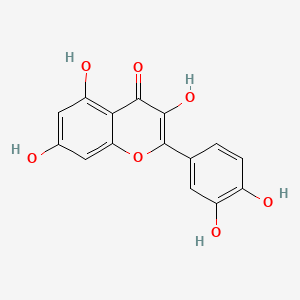
Quercetin (and Isoquercetin)
USDA’s flavonoid database identifies quercetin-derived glycosides in blueberries, cultivated (highbush), raw. A separate amount for this page is not established. This does not establish free-aglycone content.
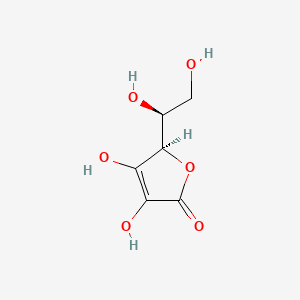
Vitamin C (Ascorbate)
USDA FoodData Central reports vitamin C in Blueberries, raw.
Cyanidin and Cyanidin-3-Glucoside (C3G)
USDA’s flavonoid database identifies cyanidin-derived glycosides in blueberries, cultivated (highbush), raw. A separate amount for this page is not established. This does not establish free-aglycone content.
References
[1] Lee et al. (2016). Compositions and Contents Anthocyanins in Blueberry (Vaccinium corymbosum L.) Varieties. HPLC–MS analysis identified glycosides of cyanidin, delphinidin, malvidin, peonidin and petunidin in highbush blueberries, with marked cultivar variation.
[2] Hein et al. (2019). Systematic Review of the Effects of Blueberry on Cognitive Performance as We Age. Systematic review of blueberry interventions and cognitive performance in aging; findings varied by study design and outcome.