Heart

Overview
Heart is an organ meat often highlighted for its CoQ10 content, supporting mitochondrial electron transport and antioxidant function [1]. Reviews of edible offal note that different organs concentrate different nutrients; in practice, heart is typically used as an occasional rotational offal food rather than a daily staple [2].
Within the BRAIN Diet framework, heart can be used strategically when prioritising mitochondrial-supportive nutrients such as CoQ10, while keeping the overall dietary pattern plant-forward. Sourcing from reputable producers and using gentle, moist-heat cooking methods help preserve palatability and avoid excessive high-heat byproducts [1,2].
Key Nutritional Highlights
- Nutrient-dense source of complete protein plus highly bioavailable vitamins and minerals.
- Typically richer than standard muscle meat in vitamin B12 and other micronutrients.
- Contains no dietary fibre, so meals are usually more balanced with vegetables, legumes, or whole grains.
- Nutrient concentrations can be very high, so portion size and frequency are useful practical levers.
- Processing and cooking method still matter for overall dietary context.
Food Context
Synergies
- Part of nutrient-dense animal food strategy
Sourcing
- Source from grass-fed/pasture-raised when possible
Preparation
- Best prepared with gentle cooking
- Important for CoQ10 intake
Recipes
Essential Amino Acid Profile
This food provides a complete essential amino acid profile typical of animal proteins.
Nutrient Tables (per 100 g)
Selected food and preparation: Beef, variety meats and by-products, heart, raw. per 100 g edible portion.
Core nutrients
| Nutrient | Amount per 100 g | % reference intake per 100 g |
|---|---|---|
| Energy | 112 kcal | — |
| Protein | 17.7 g | — |
| Total fat | 3.9 g | — |
| Saturated fat | 1.4 g | — |
| Carbohydrates | 0.1 g | — |
Key vitamins and minerals
Vitamins and minerals supplying at least 10% of an adult reference intake per 100 g, derived from the composition panel.
| Nutrient | Amount per 100 g | % reference intake per 100 g |
|---|---|---|
| Iron | 4.3 mg | 23.9% |
| Zinc | 1.7 mg | 15.5% |
| Phosphorus | 212 mg | 30.3% |
| Selenium | 21.8 µg | 39.6% |
| Copper | 0.4 mg | 44% |
| Vitamin B12 | 8.6 µg | 356.3% |
| Vitamin B6 | 0.3 mg | 21.5% |
| Vitamin B2 | 0.9 mg | 69.7% |
| Vitamin B1 | 0.2 mg | 19.8% |
| Vitamin B3 | 7.5 mg | 47.1% |
| Vitamin B5 | 1.8 mg | 35.8% |
Bioactive compounds
| Compound / class | Amount per 100 g | Notes |
|---|---|---|
| CoQ10 | Present — separate amount not established | Beef heart tissue |
- CoQ10: Mattila et al. (2000) analysed CoQ10 in beef heart. A separate amount for this page’s preparation is not established.
Technical provenance
CoQ10: Primary abstract explicitly analyzes individual CoQ10 in beef steak and beef heart; no generic cut-specific amount inferred.
Substances
2 substances in this food
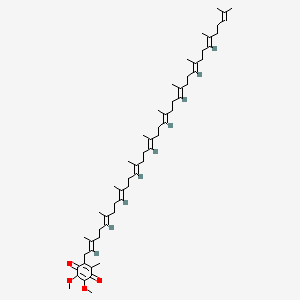
Coenzyme Q10 (CoQ10)
Mattila et al. (2000) analysed CoQ10 in beef heart. A separate amount for this page’s preparation is not established.
Iron
USDA FoodData Central reports iron in Beef, variety meats and by-products, heart, raw.
References
[1] Heart is an organ meat often highlighted for its CoQ10 content, supporting mitochondrial electron transport and antioxidant function. Crane et al. 2001. Biochemical functions of coenzyme Q10 in mitochondria
[2] Reviews of edible offal note that different organs concentrate different nutrients; in practice, heart is typically used as an occasional rotational offal food rather than a daily staple. Latoch & Stasiak 2024. Edible offal as a valuable source of nutrients (review)