Turkey Wing Stew
Overview
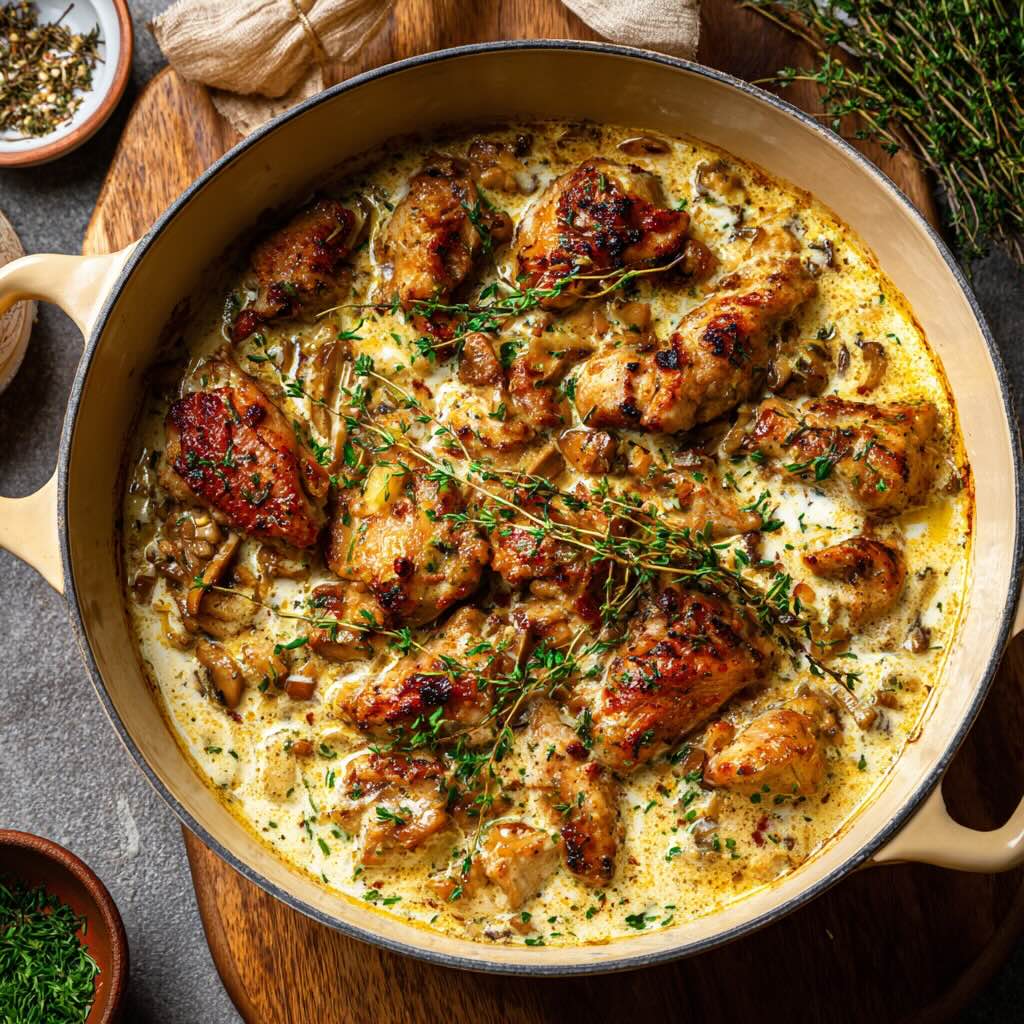
This deeply nourishing stew is made from slow-cooked turkey wings, releasing gelatin and glycine-rich collagen into the broth. It's a budget-friendly meal. Turkey wings provide tryptophan (an amino acid precursor to serotonin), selenium, and B vitamins — nutrients involved in various body processes including mood regulation.
Ingredients
- 2 large turkey wings (around 1 kg)
- 1 onion, chopped
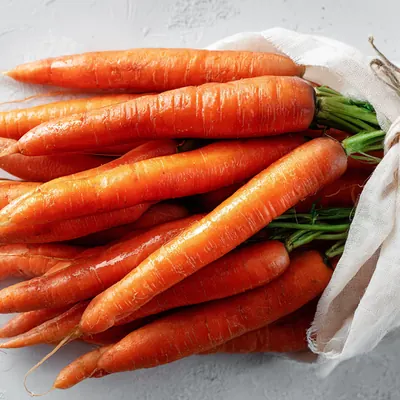
- 2 carrots, diced
- 2 celery sticks, chopped
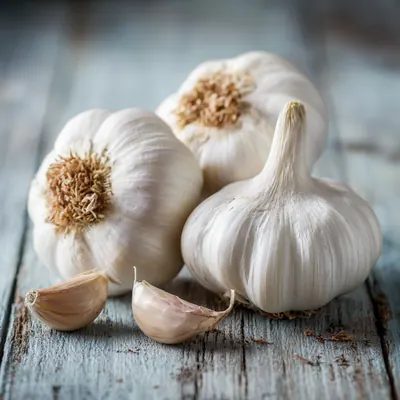
- 3 cloves garlic, minced
- 1 tbsp apple cider vinegar (helps extract minerals from bones)
- 2 tbsp (30 ml) olive oil
- 1 tsp turmeric (optional)
- 1 tsp (5 ml) thyme or rosemary
- Salt and pepper to taste
- Water to cover (~1.5 L)
Nutrition calculation uses rosemary as the herb.
Method
-
In a large pot or Dutch oven, sauté onions, garlic, carrots, and celery in olive oil until soft (5–7 min).
-
Add the turkey wings and brown lightly on all sides.
-
Add turmeric and herbs; stir to coat.
-
Pour in enough water to fully submerge wings; add apple cider vinegar.
-
Bring to boil, then reduce to low simmer and cook for 3–4 hours, skimming any foam.
-
Remove turkey wings, separate meat from bones and cartilage.
-
Return shredded meat to broth; discard bones or reserve for stock.
-
Taste and season. Serve hot with optional leafy greens or fermented vegetables.
Nutrition
Per serving, recipe serves 3. Each included ingredient is scaled from a named per-100 g composition record by edible grams. Optional ingredients are excluded. Missing analytical values are not treated as zero.
| Nutrient | Per serving |
|---|---|
| Energy | 310 kcal |
| Protein | 41 g |
| Carbohydrates | 9.2 g |
| Sugars | 3.9 g |
| Fibre | 2.3 g |
| Total fat | 12 g |
| Saturated fat | 2.2 g |
| Sodium | 400 mg |
Sodium excludes salt added to taste.
Key vitamins and minerals
| Nutrient | Per serving | Reference intake |
|---|---|---|
| Vitamin B3 | 18 mg | 111% RDA |
| Vitamin B12 | 2.5 µg | 103% RDA |
| Vitamin B6 | 1.2 mg | 90% RDA |
| Selenium | 45 µg | 82% RDA |
| Phosphorus | 410 mg | 58% RDA |
| Vitamin A | 350 µg | 39% RDA |
| Vitamin B5 | 1.6 mg | 31% AI |
| Vitamin B2 | 0.36 mg | 27% RDA |
Vitamins and minerals supplying at least 15% of an adult reference intake, plus explicitly featured design-relevant nutrients, up to eight. RDA is a recommended dietary allowance; AI is an adequate intake, used where the evidence does not support an RDA. Nutrients below the threshold are still calculated and still count towards a daily total; a featured row is not a claim that the serving supplies a complete daily dose.
Bioactive compounds
| Compound | Per serving |
|---|---|
| Quercetin | Present — quantity not established |
| Kaempferol | Present — quantity not established |
| Allicin | Present |
These compounds have no recognised intake target, so quantified amounts are shown without a percentage. A presence-only entry is carried from a supported food relationship and is not converted into an invented serving amount.
Calculation details
| Ingredient | Weight used | Composition record |
|---|---|---|
| 2 large turkey wings (around 1 kg), yielding ~438 g meat | 438 g | USDA FDC 171527 — Turkey, wing, from whole bird, meat only, with added solution, roasted |
| 1 onion, chopped | 110 g | USDA FDC 170000 — Onions, raw |
| 2 carrots, diced | 122 g | USDA FDC 170393 — Carrots, raw |
| 2 celery sticks, chopped | 80 g | USDA FDC 169988 — Celery, raw |
| 3 cloves garlic, minced | 9 g | USDA FDC 169230 — Garlic, raw |
| 1 tbsp apple cider vinegar | 15 g | USDA FDC 173469 — Vinegar, cider |
| 2 tbsp (30 ml) olive oil | 27 g | USDA FDC 171413 — Oil, olive, salad or cooking |
| 1 tsp (0.7 g) rosemary | 0.70 g | USDA FDC 173473 — Rosemary, fresh |
Mainly from:
- Energy: 2 large turkey wings (around 1 kg), yielding ~438 g meat, Extra Virgin Olive Oil
- Protein: 2 large turkey wings (around 1 kg), yielding ~438 g meat
- Carbohydrates: Carrots, Onions
- Sugars: Carrots, Onions
- Fibre: Carrots, Onions
- Total fat: Extra Virgin Olive Oil, 2 large turkey wings (around 1 kg), yielding ~438 g meat
- Saturated fat: Extra Virgin Olive Oil, 2 large turkey wings (around 1 kg), yielding ~438 g meat
- Sodium: 2 large turkey wings (around 1 kg), yielding ~438 g meat, Carrots
Assumptions and exclusions:
- 2 large turkey wings (around 1 kg), yielding ~438 g meat: USDA SR Legacy FDC 171527 food_portion: 1 wing = 219 g meat; 2 wings = 438 g
- 1 onion, chopped: USDA SR Legacy FDC 170000 food_portion: 1 medium = 110 g
- 2 carrots, diced: USDA SR Legacy FDC 170393 food_portion: 1 medium = 61 g; 2 = 122 g
- 2 celery sticks, chopped: USDA SR Legacy FDC 169988 food_portion: 1 stalk, medium = 40 g; 2 = 80 g
- 3 cloves garlic, minced: USDA SR Legacy FDC 169230 food_portion: 3 cloves = 9 g
- 1 tbsp apple cider vinegar: USDA SR Legacy FDC 173469 food_portion: 1 tbsp = 14.9 g
- 2 tbsp (30 ml) olive oil: USDA SR Legacy FDC 171413 food_portion: 1 tablespoon = 13.5 g
- 1 tsp (0.7 g) rosemary: USDA SR Legacy FDC 173473 food_portion: 1 tsp = 0.7 g
- 2 large turkey wings (around 1 kg), yielding ~438 g meat: The Turkey food page records raw whole-bird meat.
- 2 celery sticks, chopped: ; no Celery food page
- 1 tsp turmeric (optional) — the recipe marks it optional
- salt and pepper, to taste — added to taste, so it is not part of an exact sodium total
- water to cover (~1.5 L) — water contributes no energy or nutrients
- leafy greens (optional, to serve) — an optional accompaniment with no stated quantity
- fermented vegetables (optional, to serve) — an optional accompaniment with no stated quantity
- The pot is taken as three servings; the recipe does not state a number, and a stew built on two turkey wings could reasonably be divided differently.
- These figures are calculated from composition records, not measured from the finished stew. The model covers the turkey meat returned to the pot and the stated oil, but a 3–4 hour simmer also draws fat, gelatin and other solids from the bones, cartilage and skin into the broth, and a meat-only record cannot quantify them. The energy actually eaten is therefore likely to be somewhat higher than shown. No adjustment is applied, because none can be made without a measured final yield or an analysis of the finished dish.
- Optional leafy greens and fermented vegetables served alongside are excluded, as is salt added to taste.
The pot is divided into three servings. The recipe does not state a number, so this is an editorial decision rather than something the ingredients determine; an earlier untraced line of ~450 kcal and 35 g protein per serving corresponds to no plausible division of the calculated pot and has been withdrawn.
Note: glycine and gelatin extracted from bone and cartilage depend on simmer time and are not captured by a meat-only composition record.
Explore the foods and substances
Show 8 foods and their substances
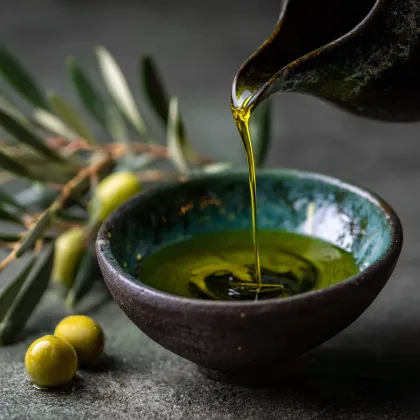
Olive Oil
See extra virgin olive oil for detailed information

Onions
Inulin prebiotic, quercetin, and glutathione precursors
Substances: Kaempferol, Quercetin (and Isoquercetin), Vitamin C (Ascorbate)


Turkey
High tryptophan and niacin for serotonin synthesis and NAD+ production
Substances: Selenium, Tryptophan, Vitamin B12 (Cobalamin), Vitamin B3 (Niacin), Vitamin B6 (Pyridoxine → PLP)

Turmeric
Curcumin source; pair with black pepper and fat for absorption
Substances: Curcumin (Turmeric)

Vinegar
Apple cider vinegar for glucose regulation and bean soaking pH optimization