Capers
Overview
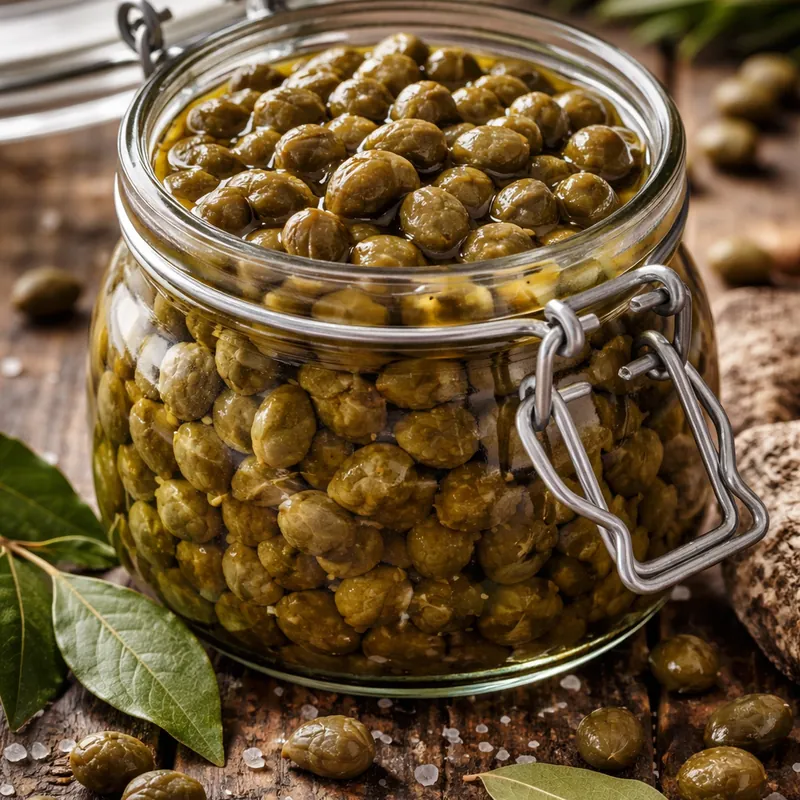
Capers are among the richest common food sources of quercetin, a flavonoid polyphenol studied for antioxidant and anti-inflammatory roles in diet-derived bioactive networks [1]. They are used as a condiment at small portions rather than as a bulk calorie source.
Within the BRAIN Diet framework, capers are a high-quercetin seasoning supporting polyphenol diversity; high-flavonoid dietary patterns have been associated with cognitive endpoints in controlled trials [2]. Pickled varieties can be high in sodium — rinsing may be appropriate.
Key Nutritional Highlights
- Among the highest quercetin concentrations per 100 g of common foods (condiment-use portions) [1].
- Low energy density (~27 kcal per 100 g); practical intake is seasoning-scale.
- Flavonoid-rich dietary patterns link to cognitive improvements in human trials [2].
- Rinse high-sodium pickled capers; buying jars preserved in extra virgin olive oil is an even better strategy; use as a polyphenol booster in Mediterranean-style dishes.
Food Context
Synergies
- Part of diverse polyphenol intake strategy
- Pair with other quercetin sources
Preparation
- Can be used as seasoning or condiment
- Rinse if high-sodium pickled variety
Recipes
1 recipe containing this food
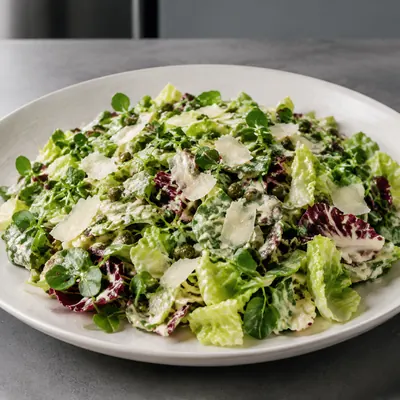
Mixed-Leaf Tahini Caesar Salad
A Caesar-style mixed-leaf salad with a tahini, anchovy, caper and Parmesan dressing, using extra virgin olive oil retained from oil-packed capers.
Nutrient Tables (per 100 g)
Selected food and preparation: Capers, canned. per 100 g edible portion.
Core nutrients
| Nutrient | Amount per 100 g | % reference intake per 100 g |
|---|---|---|
| Energy | 23 kcal | — |
| Protein | 2.4 g | — |
| Total fat | 0.9 g | — |
| Saturated fat | 0.2 g | — |
| Carbohydrates | 4.9 g | — |
| Sugars | 0.4 g | — |
| Fibre | 3.2 g | — |
Key vitamins and minerals
Vitamins and minerals supplying at least 10% of an adult reference intake per 100 g, derived from the composition panel.
| Nutrient | Amount per 100 g | % reference intake per 100 g |
|---|---|---|
| Copper | 0.4 mg | 41.6% |
| Vitamin B2 | 0.1 mg | 10.7% |
| Vitamin K | 24.6 µg | 20.5% |
Bioactive compounds
| Compound / class | Amount per 100 g | Notes |
|---|---|---|
| Quercetin | Present — quantity not established | Capers, canned; NDB 02054 — glycosides / reported aglycone equivalents |
| Kaempferol | Present — quantity not established | — |
- Quercetin: USDA flavonoid database, Release 3.3; the studied food form is shown beside each constituent. Glycoside-derived records do not establish free-aglycone amounts.
- Kaempferol: Phenol-Explorer supports this qualitative constituent record. See technical provenance for food form and measurement details.
Technical provenance
Quercetin: USDA flavonoid database Release 3.3 (2018); Printed page 16; Capers, canned; NDB 02054. Positive mean in the named food row, not an assumed association from database title. No free-aglycone mass inferred.
Kaempferol: Phenol-Explorer catalogues kaempferol in Capers (Neveu et al. 2010); a single defensible per-100 g value is not taken from the abbreviated USDA nutrient panel.
Substances
3 substances in this food
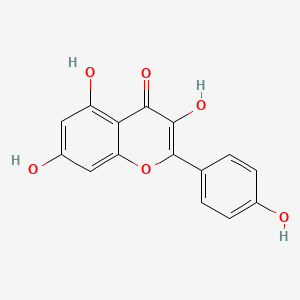
Kaempferol
Dietary flavonol in leafy greens, herbs, tea and some fruits; studied as a food constituent and as an isolated hormetic/senolytic agent.
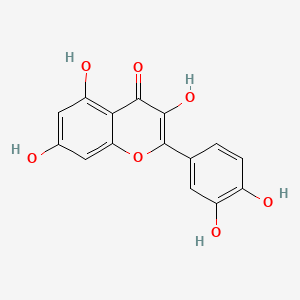
Quercetin (and Isoquercetin)
USDA’s flavonoid database identifies quercetin-derived glycosides in capers, canned. A separate amount for this page is not established. This does not establish free-aglycone content.
Sodium
USDA FoodData Central reports sodium in Capers, canned.
References
[1] Among the highest quercetin concentrations per 100 g of common foods (condiment-use portions). Boots & Haenen 2008. Health effects of quercetin: From antioxidant to nutraceutical
[2] Flavonoid-rich dietary patterns link to cognitive improvements in human trials. Neshatdoust & Saunders 2016. High-flavonoid intake induces cognitive improvements linked to changes in serum brain-derived neurotrophic factor: Two randomised, controlled trials