Turmeric Lentil Dahl
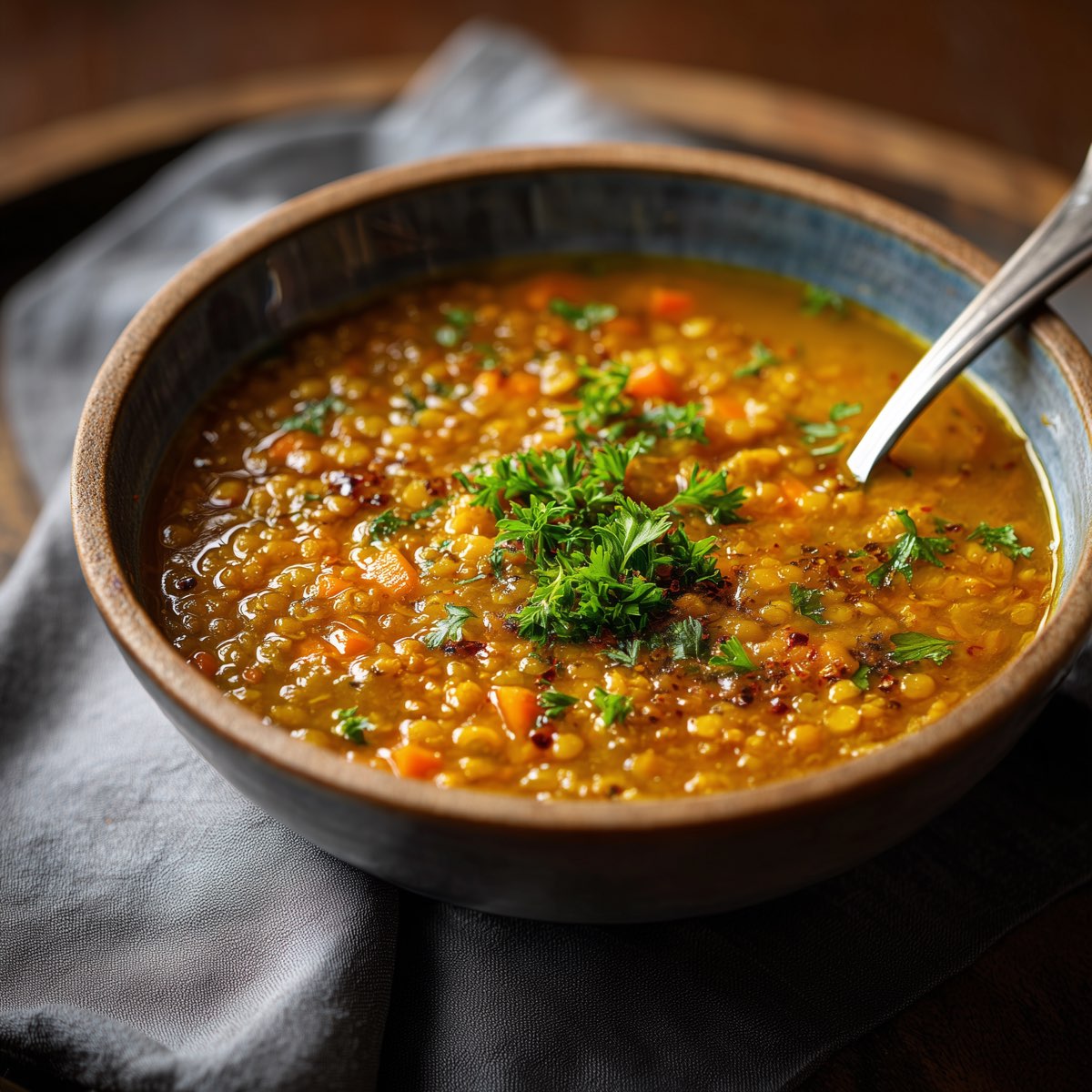
Overview
This warming dahl combines turmeric (curcumin), ginger, high-fibre lentils, and folate-rich spinach. Lentils provide fibre that feeds gut bacteria; turmeric and ginger contain compounds studied for anti-inflammatory effects; spinach provides folate, a B vitamin involved in one-carbon metabolism.
Ingredients
- 1 cup (240 ml) red lentils
- 1 tbsp grated fresh turmeric (or 1 tsp ground turmeric)
- 1 tsp (5 ml) grated ginger
- 1 tsp (5 ml) cumin
- 1 tbsp (15 ml) coconut oil
- 2 cups (480 ml) water or stock
- 1 cup (240 ml) spinach
- Salt & pepper to taste
- Optional: lemon juice, coriander
Nutrition calculation uses ground turmeric.
Method
- Rinse lentils thoroughly until the water runs clear.
- Heat coconut oil in a pot over medium heat.
- Add turmeric, ginger, and cumin; sauté for 1 minute until fragrant.
- Add lentils and water (or stock).
- Bring to a boil, then reduce heat and simmer for 15–20 minutes until soft and creamy.
- Stir in spinach and cook until wilted.
- Season with salt, pepper, and optional lemon juice.
- Serve warm.
Nutrition
Per serving, recipe serves 2. Each included ingredient is scaled from a named per-100 g composition record by edible grams. Optional ingredients are excluded. Missing analytical values are not treated as zero.
| Nutrient | Per serving |
|---|---|
| Energy | 410 kcal |
| Protein | 24 g |
| Carbohydrates | 63 g |
| Sugars | 2.1 g |
| Fibre | 11 g |
| Total fat | 8.1 g |
| Saturated fat | 5.8 g |
| Sodium | 20 mg |
Sodium excludes salt added to taste and assumes water rather than stock.
Key vitamins and minerals
| Nutrient | Per serving | Reference intake |
|---|---|---|
| Folate | 490 µg | 122% RDA |
| Copper | 0.77 mg | 86% RDA |
| Manganese | 1.8 mg | 79% AI |
| Vitamin B1 | 0.86 mg | 71% RDA |
| Vitamin K | 78 µg | 65% AI |
| Iron | 8.2 mg | 45% RDA |
| Vitamin B6 | 0.56 mg | 43% RDA |
| Vitamin B5 | 2.1 mg | 41% AI |
Vitamins and minerals supplying at least 15% of an adult reference intake, plus explicitly featured design-relevant nutrients, up to eight. RDA is a recommended dietary allowance; AI is an adequate intake, used where the evidence does not support an RDA. Nutrients below the threshold are still calculated and still count towards a daily total; a featured row is not a claim that the serving supplies a complete daily dose.
Bioactive compounds
| Compound | Per serving |
|---|---|
| Kaempferol | Present — quantity not established |
| Betaine | 110–130 mg/100 g in frozen spinach |
These compounds have no recognised intake target, so quantified amounts are shown without a percentage. A presence-only entry is carried from a supported food relationship and is not converted into an invented serving amount.
Calculation details
| Ingredient | Weight used | Composition record |
|---|---|---|
| 1 cup (192 g) dry red lentils | 192 g | USDA FDC 172420 — Lentils, raw |
| 1 tsp (3 g) ground turmeric (or 1 tbsp grated fresh) | 3 g | USDA FDC 172231 — Spices, turmeric, ground |
| 1 tsp (2 g) grated fresh ginger | 2 g | USDA FDC 169231 — Ginger root, raw |
| 1 tsp (2.1 g) cumin | 2.1 g | USDA FDC 170923 — Spices, cumin seed |
| 1 tbsp (13.6 g) coconut oil | 14 g | USDA FDC 171412 — Oil, coconut |
| 1 cup (30 g) spinach | 30 g | USDA FDC 168462 — Spinach, raw |
Mainly from:
- Energy: Lentils, Coconut Oil
- Protein: Lentils
- Carbohydrates: Lentils
- Sugars: Lentils
- Fibre: Lentils
- Total fat: Coconut Oil, Lentils
- Saturated fat: Coconut Oil
- Sodium: Spinach, Lentils
Assumptions and exclusions:
- 1 cup (192 g) dry red lentils: USDA SR Legacy FDC 172420 food_portion: 1 cup = 192 g. Dry weight is used with the dry record; simmering adds water but no nutrients.
- 1 tsp (3 g) ground turmeric (or 1 tbsp grated fresh): USDA SR Legacy FDC 172231 food_portion: 1 tsp = 3 g
- 1 tsp (2 g) grated fresh ginger: USDA SR Legacy FDC 169231 food_portion: 1 tsp = 2 g
- 1 tsp (2.1 g) cumin: USDA SR Legacy FDC 170923 food_portion: 1 tsp, whole = 2.1 g
- 1 tbsp (13.6 g) coconut oil: USDA SR Legacy FDC 171412 food_portion: 1 tbsp = 13.6 g
- 1 cup (30 g) spinach: USDA SR Legacy FDC 168462 food_portion: 1 cup = 30 g
- 2 cups (480 ml) water or stock — water is the calculated default and contributes no energy or nutrients; using stock instead would add sodium that varies by brand
- salt and pepper, to taste — added to taste, so it is not part of an exact sodium total
- optional: lemon juice, coriander — optional finishing ingredients
- The recipe declares no serving count. Two servings is used because the page's original nutrition line of ~400 kcal per serving matches the calculated whole recipe halved.
Brain Health Notes
- Turmeric contains curcumin, a polyphenol studied for anti-inflammatory effects.
- Ginger contains gingerols studied for anti-inflammatory effects.
- Lentils provide high fibre that feeds gut bacteria; fibre fermentation produces SCFAs associated with gut health.
- Spinach supplies folate, a B vitamin involved in one-carbon metabolism.
Explore the foods and substances
Show 7 foods and their substances
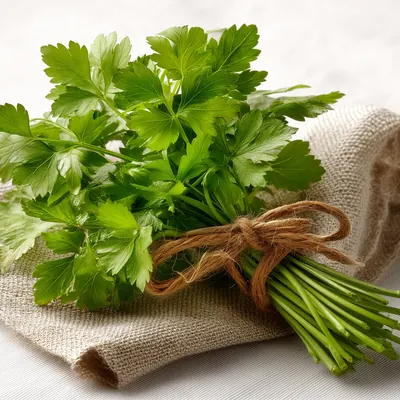
Cilantro
Herb with potential heavy metal chelation properties

Coconut Oil
MCTs for rapid brain energy and ketone production

Ginger
Gut-brain axis support and anti-inflammatory; prokinetic for SIBO

Lemon
Vitamin C for iron absorption enhancement and pH adjustment
Substances: Eriocitrin, Hesperidin, Vitamin C (Ascorbate)

Lentils
Folate-rich legume with plant protein, fibre and non-haem iron
Substances: Cysteine, Iron, Vitamin B9 (Folate), Zinc

Spinach
Leafy green rich in iron, magnesium, folate, and carotenoids
Substances: Betaine, Calcium, Copper, Iron, Kaempferol, Lutein, Magnesium, Manganese, Phosphorus (Phosphate), Potassium, Vitamin A (Retinoids; β-Carotene precursor), Vitamin B1 (Thiamine), Vitamin B2 (Riboflavin), Vitamin B6 (Pyridoxine → PLP), Vitamin B9 (Folate), Vitamin C (Ascorbate), Vitamin K (Phylloquinone), Zeaxanthin, Zinc, β-Carotene

Turmeric
Curcumin source; pair with black pepper and fat for absorption
Substances: Curcumin (Turmeric)