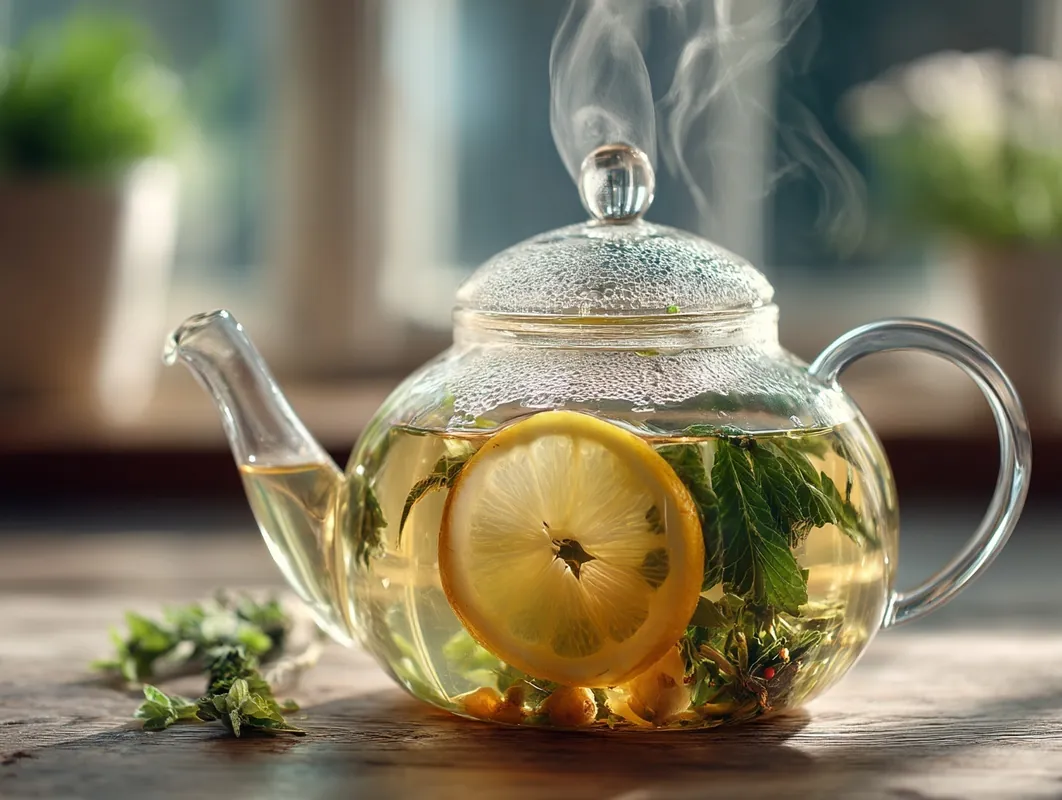
Lemon Balm Tea

Overview
Lemon balm tea is an herbal infusion that supports sleep and calm, often used in evening routines for ADHD sleep dysregulation.
Within the BRAIN Diet framework, herbal teas such as chamomile for apigenin, lemon balm tea, and tart cherry juice are recommended for evening wind-down and sleep prep [1][2].
Key Nutritional Highlights
- Melissa officinalis (lemon balm) is studied for calm and cognitive effects in herbal trials [1]
- Herbal teas contribute polyphenol bioactives with neuromodulatory relevance [2]
- Lemon balm tea is an herbal infusion that supports sleep and calm, often used in evening routines for ADHD sleep dysregulation. [1]
- Herbal teas such as chamomile for apigenin, lemon balm tea, and tart cherry juice are recommended for evening wind-down and sleep prep. [2]
- Lemon balm tea is an herbal infusion that supports sleep and calm, often used in evening routines for ADHD sleep dysregulation.
Food Context
Synergies
- Best consumed as tea in evening
- Part of sleep-supportive evening routine
Preparation
- Can be combined with chamomile and tart cherry
- Supports circadian alignment
Recipes
Nutrient Tables (per 100 g)
Core nutrients
| Nutrient | Amount per 100 g | % RDA per 100 g |
|---|---|---|
| Energy | 17 kcal | — |
| Protein | 0.5 g | — |
| Total fat | 0.1 g | — |
| Saturated fat | 0 g | — |
| Carbohydrates | 5.7 g | — |
| Fibre | 0.7 g | — |
Key micronutrients
| Nutrient | Amount per 100 g | % RDA per 100 g |
|---|---|---|
| Iron | 0.1 mg | 0.3% |
| Zinc | 0.2 mg | 2.1% |
| Magnesium | 6 mg | 1.4% |
| Calcium | 9 mg | 0.9% |
| Potassium | 109 mg | 3.2% |
| Folate | 11 µg | 2.8% |
| Vitamin B6 | 0 mg | 2.2% |
Bioactive compounds
Values below are often from specialist compositional databases or literature, not the standard USDA panel. Asterisks (*) refer to source notes at the bottom of this section.
| Compound / class | Amount per 100 g | Notes |
|---|---|---|
| ALA | 6 mg | — |
Note: Bioactive-compound values vary substantially by cultivar, species, cocoa or oil percentage, processing, and brand formulation. Show quantitative values only where a defensible source exists; otherwise prefer qualitative presence statements or ranges in source notes.
Substances
References
[1] Melissa officinalis (lemon balm) is studied for calm and cognitive effects in herbal trials. Perry et al. 2018. A randomised double-blind placebo-controlled pilot trial of a combined extract of sage, rosemary and melissa, traditional herbal medicines, on the enhancement of memory in normal healthy subjects, including influence of age
[2] Herbal teas contribute polyphenol bioactives with neuromodulatory relevance. Bruni et al. 2021. Herbal Remedies and Their Possible Effect on the GABAergic System and Sleep


