Aubergine
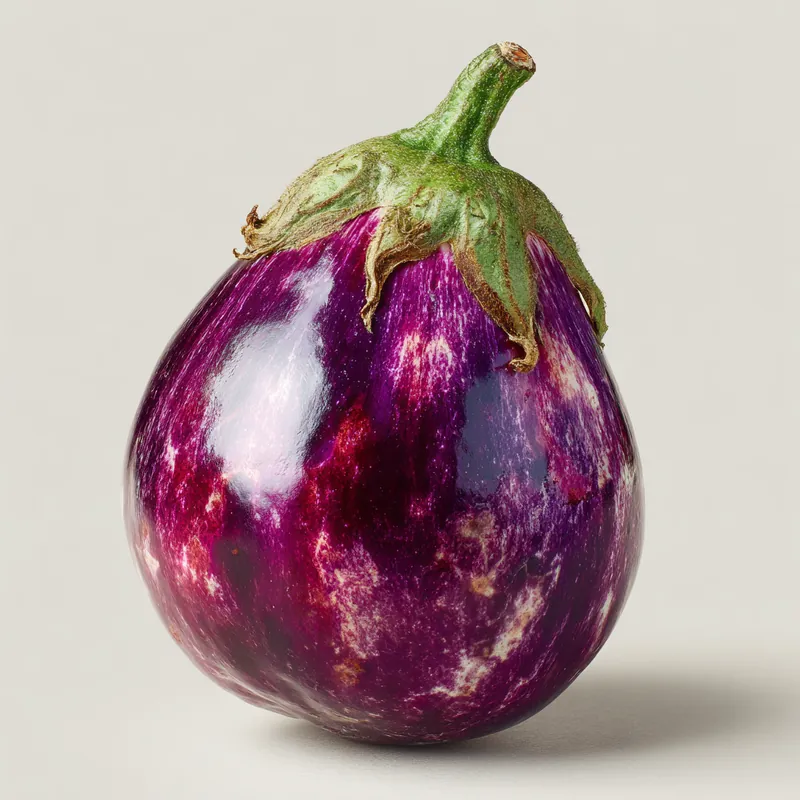
Overview
Aubergine (eggplant) is a low-calorie vegetable with two distinct polyphenol identities. Purple peel contains nasunin, an anthocyanin whose parent aglycone is Delphinidin [1]. The flesh — including white cultivars without purple pigment — is rich in chlorogenic acid [2].
Within the BRAIN Diet, aubergine adds fibre and polyphenol variety. Cultivar and cooking change how much chlorogenic acid is retained [3]. Nasunin is a peel pigment, not a fat-soluble carotenoid, and is not interchangeable with free delphinidin.
Key Nutritional Highlights
- Flesh is rich in chlorogenic acid, including white cultivars without purple peel [2].
- Purple peel contains nasunin, a delphinidin glycoside, not free delphinidin [1].
- Cooking and cultivar change how much chlorogenic acid is retained [3].
- Low-energy vegetable; typical culinary portions are smaller than table values imply.
Food Context
Synergies
- Roasting or grilling with a modest amount of olive oil is ordinary culinary practice for flavour and texture. Nasunin is an anthocyanin, not a fat-soluble carotenoid, and dietary fat is not cited here as improving nasunin extraction or absorption.
Preparation
- Salting or resting sliced aubergine is optional; modern cultivars are often less bitter than older types. Pre-processing (cutting, blanching, salting) can reduce measured antioxidant capacity, more so in some purple fruit [3].
- Wet cooking (steaming, boiling, pressure cooking) can increase chlorogenic acid extractability; hot-air and sun-drying can almost deplete it. White and purple cultivars do not retain chlorogenic acid equally [3].
- Nutrient panels here are for raw flesh as in USDA reference data.
Recipes
1 recipe containing this food
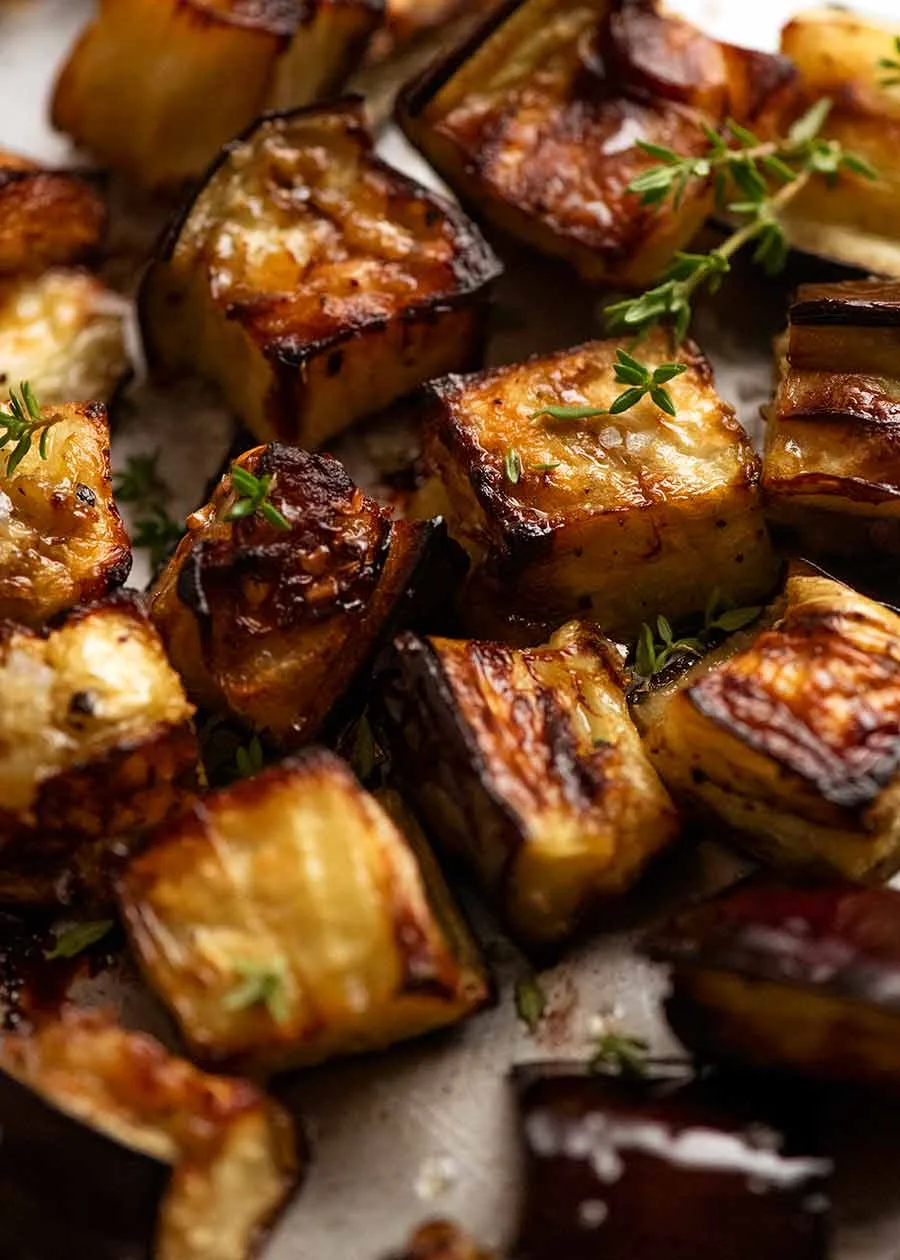
Roasted Aubergine with Herb Olive Oil
Soft roasted aubergine finished with a late-added herb oil of rosemary, thyme, chilli flakes and olive oil, served with a light balsamic drizzle.
Nutrient Tables (per 100 g)
Core nutrients
| Nutrient | Amount per 100 g | % RDA per 100 g |
|---|---|---|
| Energy | 25 kcal | — |
| Protein | 1 g | — |
| Total fat | 0.2 g | — |
| Saturated fat | 0 g | — |
| Carbohydrates | 5.9 g | — |
| Sugars | 3.5 g | — |
| Fibre | 3 g | — |
Advanced Nutrition
Other quantitative vitamins and minerals from the same composition panel. They remain available for Substance cards and later scoring; they are not headline nutrients of this food.
| Nutrient | Amount per 100 g | % RDA per 100 g |
|---|---|---|
| Iron | 0.2 mg | 1.3% |
| Zinc | 0.2 mg | 1.5% |
| Magnesium | 14 mg | 3.3% |
| Phosphorus | 24 mg | 3.4% |
| Manganese | 0.2 mg | 10.1% |
| Selenium | 0.3 µg | 0.5% |
| Calcium | 9 mg | 0.9% |
| Potassium | 229 mg | 6.7% |
| Copper | 0.1 mg | 9% |
| Sodium | 2 mg | — |
| Choline | 6.9 mg | 1.3% |
| Folate | 22 µg | 5.5% |
| Vitamin B6 | 0.1 mg | 6.5% |
| Vitamin B2 | 0 mg | 2.8% |
| Vitamin B1 | 0 mg | 3.3% |
| Vitamin B3 | 0.6 mg | 4.1% |
| Vitamin B5 | 0.3 mg | 5.6% |
| Vitamin C | 2.2 mg | 2.4% |
| Vitamin A | 1 µg | 0.1% |
| Vitamin E | 0.3 mg | 2% |
| Vitamin K | 3.5 µg | 2.9% |
Bioactive compounds
Explicitly identified compounds, including individual fatty acids, with a defensible quantity or an explicit qualitative status. Asterisks (*) identify supplementary sources below. Unquantified or trace constituents are not automatically admitted to the Substances list.
| Compound / class | Amount per 100 g | Notes |
|---|---|---|
| Delphinidin | Present as glycosides (nasunin) — quantity not established * | Parent aglycone; present principally as glycosides including nasunin. |
| Chlorogenic Acid | Present — quantity not established * | Major phenolic of the flesh, including white cultivars without nasunin. |
- * Delphinidin: Noda et al. 2000 isolated nasunin (delphinidin-3-(p-coumaroylrutinoside)-5-glucoside) as purple crystals from eggplant peels. USDA SR Legacy does not quantify nasunin or free delphinidin. The Delphinidin card is a parent/aglycone ontology link, not a claim that free delphinidin is the principal pigment. Nasunin is an anthocyanin glycoside, not a fat-soluble carotenoid.
- * Chlorogenic Acid: Plazas et al. 2013 identify chlorogenic acid (5-O-caffeoylquinic acid) as typically 80–95% of hydroxycinnamic acids in eggplant flesh. USDA SR Legacy (Eggplant, raw; FDC 169228) does not quantify chlorogenic acid. Cultivar and cooking ranges are too wide for a single per-100 g USDA-style number. This row records presence, not a Substances card.
Substances
Substances admitted through a supported nutrition-table row. Not every table row appears here. Cards are not BRS mappings.
2 substances in this food

Delphinidin
Parent aglycone; present principally as glycosides including nasunin.
References
[1] Noda et al. (2000). Antioxidant activity of nasunin, an anthocyanin in eggplant peels. Isolated nasunin (delphinidin-3-(p-coumaroylrutinoside)-5-glucoside) from eggplant peels; this is a peel anthocyanin glycoside, not a USDA per-100 g quantity and not lutein/zeaxanthin chemistry.
[2] Plazas et al. (2013). Breeding for Chlorogenic Acid Content in Eggplant: Interest and Prospects. Chlorogenic acid (5-O-caffeoylquinic acid) is typically 80–95% of hydroxycinnamic acids in eggplant flesh, including cultivars without purple-peel nasunin; not a USDA per-100 g quantity.
[3] Zaro et al. (2015). Chlorogenic acid retention in white and purple eggplant after processing and cooking. White Cloud Nine and purple Lucia fruit differed in pulp chlorogenic acid; wet cooking increased extractability, while hot-air and sun-drying almost depleted it.