Cacao Powder
Overview
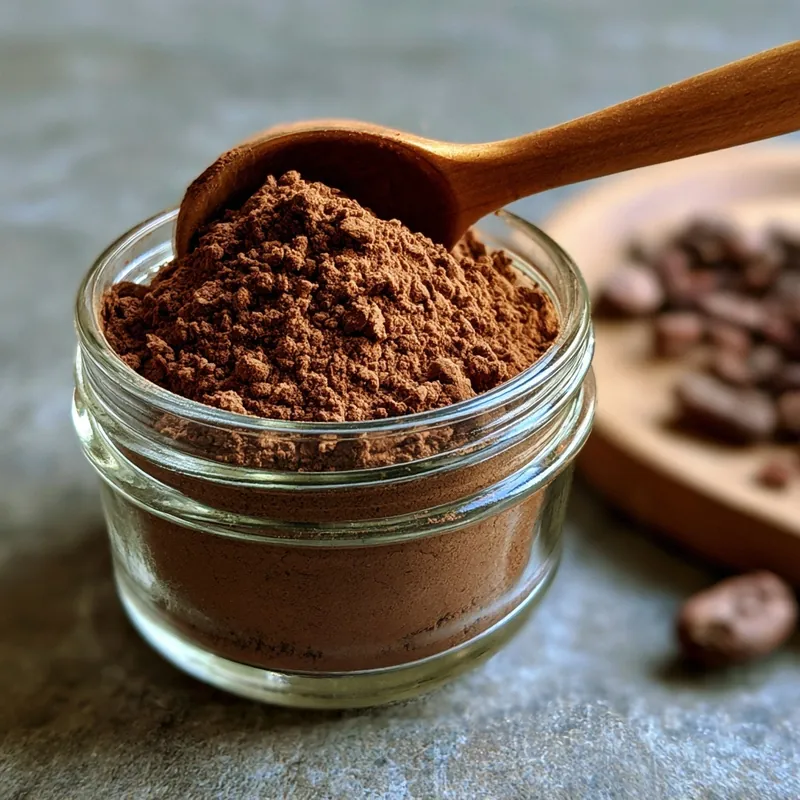
Cacao powder is the minimally processed end of the cacao-to-chocolate chain: unsweetened powder from fermented, dried, and cold-pressed or lightly processed cacao beans. It is a concentrated source of cocoa flavanols — especially epicatechin, catechin, and oligomeric procyanidins — together with magnesium, iron, zinc, and fibre. Roasting and Dutch (alkali) processing substantially reduce flavan-3-ol content and alter stereochemistry, so minimally processed cacao powder generally retains a higher native polyphenol profile than heavily processed cocoa powders [1].
Within the BRAIN Diet framework, cacao powder functions as a functional polyphenol ingredient rather than a dessert product. Typical culinary portions (roughly 5–10 g) deliver meaningful flavanol and mineral context without large sugar loads. Vascular and neurocognitive research on cocoa flavanols supports mechanistic relevance through endothelial function pathways [2,3], while product sourcing and portion control remain important because heavy-metal variability is common across cocoa supply chains [4,5].
Key Nutritional Highlights
- Minimally processed, non-alkalised cacao powder retains higher flavan-3-ol levels than roasted or Dutch-processed cocoa products [1].
- Mechanistic and clinical work links cocoa flavanol intake — particularly epicatechin — to vascular function endpoints [2].
- High-flavonoid dietary patterns have been associated with cognitive improvements in controlled feeding studies [3].
- Per 100 g, cacao powder is mineral-dense (magnesium ~499 mg; iron ~13.9 mg; fibre ~33 g), though practical servings are much smaller.
- Heavy-metal variability (cadmium, lead) and origin matter for regular intake; sourcing quality is part of the functional profile [4,5].
Food Context
Sourcing
- Prefer unsweetened, non-alkalised (non-Dutch) cacao powder with no added sugars or fillers.
- Minimally processed products processed below roasting temperatures used for conventional cocoa retain more native flavanols [1].
- Select low-Cd/Pb origins with published contaminant testing where available; Latin American origins often show higher cadmium than West African beans, mainly reflecting soil geology [5].
- Pair with calcium- and zinc-containing foods as part of a broader strategy that may help reduce cadmium uptake over time [6].
Synergies
- Pair with vitamin C–rich foods when using cacao as an iron contributor in plant-based meals.
- Combine with protein- and fibre-containing foods (yogurt, oats, seeds, legumes) to improve palatability of high-polyphenol patterns.
Preparation
- Favour no-heat or low-heat applications (smoothies, overnight oats, raw desserts) when aiming to preserve native flavanol content.
- Store airtight in a cool, dry place away from light to limit oxidation.
- If used in baked or heated recipes, expect flavour and bioactive profile to shift with temperature and process [1].
Essential Amino Acid Profile
Cacao powder is not used as a primary protein food in this framework; typical servings are too small for essential amino-acid contribution to be the main reason to include it. Per 100 g it contains substantial protein (~20 g), but relevance here is polyphenol and mineral density rather than protein quality.
Notable amino acids:
- Phenylalanine and leucine (relative strengths within the cacao protein fraction)
Limiting amino acids:
- Lysine and sulfur amino acids (methionine, cysteine) relative to legumes and animal proteins
Protein pairing strategy:
When cacao powder contributes meaningfully to protein intake in a meal, pair with grains or legumes to improve essential amino-acid balance.
Recipes
Nutrient Tables (per 100 g)
Core nutrients
| Nutrient | Amount per 100 g | % RDA per 100 g |
|---|---|---|
| Energy | 228 kcal | — |
| Protein | 19.6 g | — |
| Total fat | 13.7 g | — |
| Saturated fat | 8.1 g | — |
| Carbohydrates | 57.9 g | — |
| Sugars | 1.8 g | — |
| Fibre | 37 g | — |
Key vitamins and minerals
Vitamins and minerals supplying at least 15% of an adult reference intake per 100 g, derived from the composition panel. Tags do not decide which rows appear.
| Nutrient | Amount per 100 g | % RDA per 100 g |
|---|---|---|
| Iron | 13.9 mg | 77% |
| Zinc | 6.8 mg | 61.9% |
| Magnesium | 499 mg | 118.8% |
| Phosphorus | 734 mg | 104.9% |
| Manganese | 3.8 mg | 166.8% |
| Selenium | 14.3 µg | 26% |
| Potassium | 1524 mg | 44.8% |
| Copper | 3.8 mg | 420.9% |
| Vitamin B2 | 0.2 mg | 18.5% |
Advanced Nutrition
Other quantitative vitamins and minerals from the same composition panel. They remain available for Substance cards and later scoring; they are not headline nutrients of this food.
| Nutrient | Amount per 100 g | % RDA per 100 g |
|---|---|---|
| Calcium | 128 mg | 12.8% |
| Sodium | 21 mg | — |
| Choline | 12 mg | 2.2% |
| Folate | 32 µg | 8% |
| Vitamin B6 | 0.1 mg | 9.1% |
| Vitamin B1 | 0.1 mg | 6.5% |
| Vitamin B3 | 2.2 mg | 13.7% |
| Vitamin B5 | 0.3 mg | 5.1% |
| Vitamin E | 0.1 mg | 0.7% |
| Vitamin K | 2.5 µg | 2.1% |
Bioactive compounds
Explicitly identified compounds, including individual fatty acids, with a defensible quantity or an explicit qualitative status. Asterisks (*) identify supplementary sources below. Unquantified or trace constituents are not automatically admitted to the Substances list.
| Compound / class | Amount per 100 g | Notes |
|---|---|---|
| Epicatechin | 196 mg * | Dominant monomeric flavanol in minimally processed cacao powder; much lower in Dutch-processed cocoa. |
| Catechin | 51 mg * | Present alongside epicatechin; processing can shift stereochemistry and relative abundance. |
| Oligomeric Procyanidins | 344 mg * | Oligomeric flavanols; fraction varies with fermentation, roasting, and alkalisation. |
- * Epicatechin: Phenol-Explorer natural cocoa powder range for (-)-epicatechin: ~52–340 mg/100 g (mean ~196 mg/100 g); values fall sharply with roasting and alkalisation.
- * Catechin: Phenol-Explorer cocoa powder range for (+)-catechin: ~10–92 mg/100 g (mean ~51 mg/100 g); roasting and Dutch processing alter flavan-3-ol profiles.
- * Oligomeric Procyanidins: Proanthocyanidin oligomer fraction in natural cocoa powder reported ~52–636 mg/100 g (mean ~344 mg/100 g); strongly product- and process-dependent.
Functional metrics
| Metric | Score | Notes |
|---|---|---|
| Total polyphenols (Folin-type) | Varies by product | Minimally processed, non-alkalised powders retain more flavanols than Dutch-processed cocoa; heat during roasting reduces monomeric epicatechin. |
Note: Functional-metric values depend strongly on assay method, processing, and product formulation. Use these as contextual metrics, not strict like-for-like nutrient equivalents.
Substances
Substances admitted through a supported nutrition-table row. Not every table row appears here. Cards are not BRS mappings.
6 substances in this food

Catechin
Cocoa flavanol monomer (a catechin); part of dark chocolate flavanol fraction.
Epicatechin
Cocoa flavanol monomer (a catechin); linked to vascular and cognitive endpoints.
Iron
Oxygen transport; dopamine synthesis (tyrosine hydroxylase cofactor)
Magnesium
Enzymatic cofactor (>300 reactions); neurotransmitters; mitochondria; redox balance
Oligomeric Procyanidins
Dark chocolate procyanidin oligomer fraction (flavanol oligomers); studied as part of total cocoa flavanol profile.
Zinc
Cofactor in neurotransmission and antioxidant enzymes; dopamine modulation
References
[1] If used in baked or heated recipes, expect flavour and bioactive profile to shift with temperature and process. Payne & Hurst 2011. Impact of fermentation, drying, roasting and Dutch processing on flavan-3-ol stereochemistry in cacao beans and cocoa ingredients
[2] Mechanistic and clinical work links cocoa flavanol intake — particularly epicatechin — to vascular function endpoints. Schroeter & Heiss 2006. (-)-Epicatechin mediates beneficial effects of flavanol-rich cocoa on vascular function in humans
[3] High-flavonoid dietary patterns have been associated with cognitive improvements in controlled feeding studies. Neshatdoust & Saunders 2016. High-flavonoid intake induces cognitive improvements linked to changes in serum brain-derived neurotrophic factor: Two randomised, controlled trials
[4] Introduction Contamination of cocoa containing products, such as dark chocolate, with heavy metals including lead, cadmium and arsenic has been reported in the US. Hands & Anderson 2024. A multi-year heavy metal analysis of 72 dark chocolate and cocoa products in the USA
[5] Select low-Cd/Pb origins with published contaminant testing where available; Latin American origins often show higher cadmium than West African beans, mainly reflecting soil geology. Godebo & Stoner 2024. Occurrence of heavy metals coupled with elevated levels of essential elements in chocolates: Health risk assessment
[6] Pair with calcium- and zinc-containing foods as part of a broader strategy that may help reduce cadmium uptake over time. Zhai & Narbad 2015. Dietary Strategies for the Treatment of Cadmium and Lead Toxicity