Cacao Nibs (Raw)
Overview
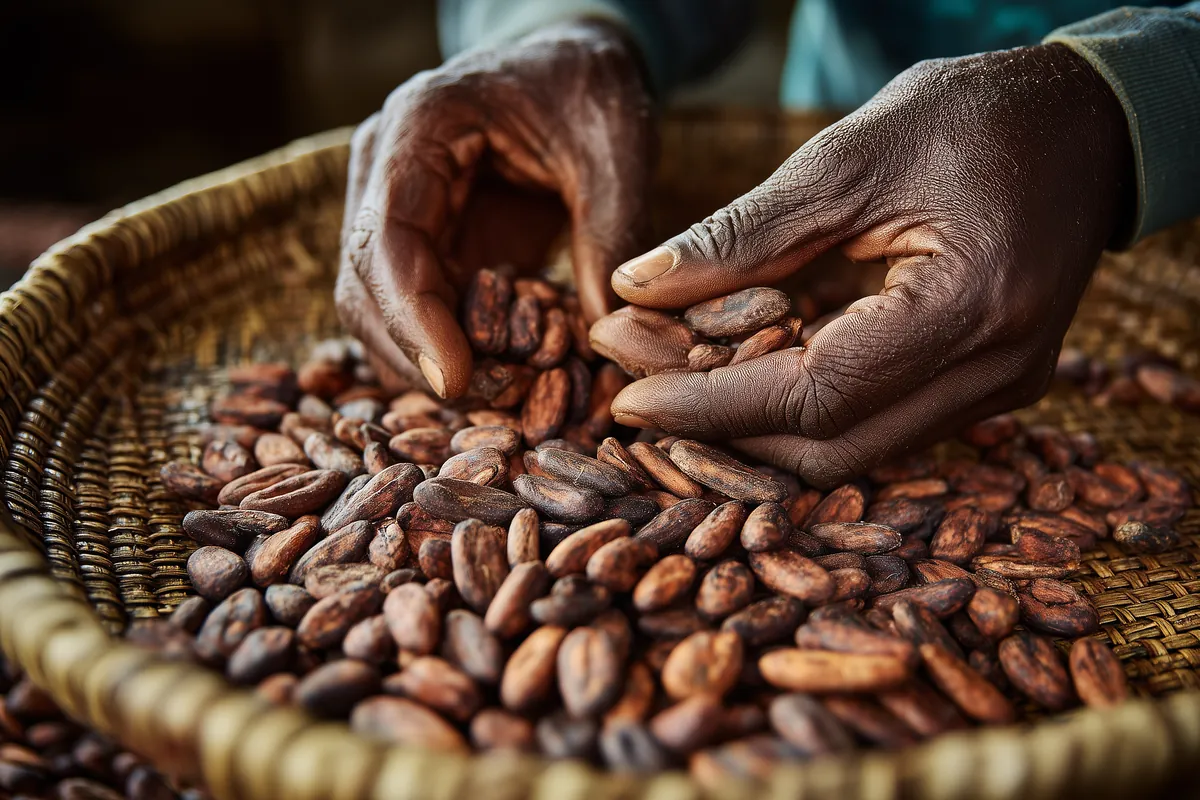
Raw cacao nibs are minimally processed cacao pieces rich in cocoa flavanols (epicatechin, catechin) and fibre, used as a bitter garnish [1]. Flavanol retention is generally higher in minimally processed cacao than heavily alkalised cocoa powders [1].
Within the BRAIN Diet framework, nibs are a polyphenol-dense ingredient in small portions; cocoa flavanols have vascular mechanistic interest [2], and heavy-metal variability across cacao products makes sourcing relevant for regular use
Key Nutritional Highlights
- Minimally processed cacao retains more native flavan-3-ols than alkalised cocoa [1].
- Epicatechin-class flavanols with vascular mechanistic human data [2].
- High fibre and mineral density per 100 g; typical use is garnish-scale portions.
- Heavy-metal (Cd/Pb) sourcing matters for frequent cacao intake [3].
Food Context
Sourcing
- Prefer minimally processed, unsweetened nibs (no added sugars or alkalisation)
- Consider brands that publish cadmium/lead testing where available (risk varies by origin and processing)
Preparation
- Add at the end (just before serving) to preserve crunch and aromatic top-notes
- Store airtight, cool, and dry to limit oxidation and flavour loss
Essential Amino Acid Profile
Cacao Nibs (Raw) is not used as a primary protein food in this framework; typical servings are too small for essential amino-acid contribution to be the main reason to include it. Relevance here is polyphenol content and mineral density rather than protein quality.
Recipes
Nutrient Tables (per 100 g)
Core nutrients
| Nutrient | Amount per 100 g | % RDA per 100 g |
|---|---|---|
| Energy | 600 kcal | — |
| Protein | 14 g | — |
| Total fat | 43 g | — |
| Saturated fat | 25 g | — |
| Carbohydrates | 33 g | — |
| Fibre | 27 g | — |
Key vitamins and minerals
Vitamins and minerals supplying at least 15% of an adult reference intake per 100 g, derived from the composition panel. Tags do not decide which rows appear.
| Nutrient | Amount per 100 g | % RDA per 100 g |
|---|---|---|
| Iron | 7 mg | 38.9% |
| Zinc | 3 mg | 27.3% |
| Magnesium | 270 mg | 64.3% |
| Calcium | 160 mg | 16% |
| Potassium | 700 mg | 20.6% |
Bioactive compounds
Explicitly identified compounds, including individual fatty acids, with a defensible quantity or an explicit qualitative status. Asterisks (*) identify supplementary sources below. Unquantified or trace constituents are not automatically admitted to the Substances list.
| Compound / class | Amount per 100 g | Notes |
|---|---|---|
| Epicatechin | Present — quantity not established * | — |
| Catechin | Present — quantity not established * | — |
| Oligomeric Procyanidins | Present — quantity not established * | — |
- * Epicatechin: Cocoa flavanol analyses report epicatechin in Cacao Nibs (Raw); USDA SR Legacy has no cacao-nibs record.
- * Catechin: Cocoa flavanol analyses report catechin in Cacao Nibs (Raw); USDA SR Legacy has no cacao-nibs record.
- * Oligomeric Procyanidins: Cacao Nibs (Raw) contain oligomeric procyanidins typical of cacao; USDA SR Legacy does not quantify OPCs for this food.
Substances
Substances admitted through a supported nutrition-table row. Not every table row appears here. Cards are not BRS mappings.
3 substances in this food

Catechin
Cocoa flavanol monomer (a catechin); part of dark chocolate flavanol fraction.
Epicatechin
Cocoa flavanol monomer (a catechin); linked to vascular and cognitive endpoints.
Oligomeric Procyanidins
Dark chocolate procyanidin oligomer fraction (flavanol oligomers); studied as part of total cocoa flavanol profile.
References
[1] Minimally processed cacao retains more native flavan-3-ols than alkalised cocoa. Payne & Hurst 2011. Impact of fermentation, drying, roasting and Dutch processing on flavan-3-ol stereochemistry in cacao beans and cocoa ingredients
[2] Cocoa flavanols have vascular mechanistic interest. Schroeter & Heiss 2006. (-)-Epicatechin mediates beneficial effects of flavanol-rich cocoa on vascular function in humans
[3] Heavy-metal (Cd/Pb) sourcing matters for frequent cacao intake. Hands & Anderson 2024. A multi-year heavy metal analysis of 72 dark chocolate and cocoa products in the USA