Neuroeshot (Roe, Lemon, Hot Sauce)

Overview
Neuroeshot is a one- or two-mouthful appetiser that makes a small serving of salmon roe feel distinctive rather than dutiful. Chilled roe pearls bring salinity, umami and a delicate pop; bright lemon acidity follows, with a brief fermented-chilli finish.
This recipe uses a small portion of cured salmon roe. The nutrition panel uses salted chum-salmon ikura. No sodium total is published, because the hot sauce varies by brand.
Ingredients (1 serving)
- 15 g (1 tbsp) salmon roe
- 7.5 ml (1 1/2 tsp) lemon juice
- 2 ml fermented hot sauce (Tabasco-style)
Method
- Add roe to a small shot glass or spoon.
- Top with lemon juice.
- Add 2 ml of fermented hot sauce.
- Serve immediately.
Nutrition
Per serving. Each included ingredient is scaled from a named per-100 g composition record by edible grams. Optional ingredients are excluded. Missing analytical values are not treated as zero.
| Nutrient | Per serving |
|---|---|
| Energy | 40 kcal |
| Protein | 4.9 g |
| Carbohydrates | 0.58 g |
| Sugars | 0.20 g |
| Fibre | 0.04 g |
| Total fat | 2.4 g |
| Saturated fat | 0.37 g |
| Sodium | Not established |
Sodium: Fermented hot sauce sodium varies by brand, so no sodium total is published for this recipe. Roe sodium is the salted chum-salmon ikura figure on the salmon roe page.
Key vitamins and minerals
| Nutrient | Per serving | Reference intake |
|---|---|---|
| Vitamin B12 | 7 µg | 294% RDA |
| Vitamin D | 6.6 µg | 44% RDA |
Vitamins and minerals supplying at least 15% of an adult reference intake, plus explicitly featured design-relevant nutrients, up to eight. RDA is a recommended dietary allowance; AI is an adequate intake, used where the evidence does not support an RDA. Nutrients below the threshold are still calculated and still count towards a daily total; a featured row is not a claim that the serving supplies a complete daily dose.
Bioactive compounds
| Compound | Per serving |
|---|---|
| EPA | 240 mg |
| DHA | 300 mg |
| Astaxanthin | Present |
| Phosphatidylcholine | Present |
These compounds have no recognised intake target, so quantified amounts are shown without a percentage. A presence-only entry is carried from a supported food relationship and is not converted into an invented serving amount.
Calculation details
| Ingredient | Weight used | Composition record |
|---|---|---|
| 15 g (1 tbsp) salmon roe | 15 g | MEXT Standard Tables of Food Composition in Japan (2023 supplement), food 10140, chum salmon (Oncorhynchus keta), salted roe (ikura), per 100 g edible portion. |
| 7.5 ml (1½ tsp) lemon juice | 7.7 g | USDA FDC 167747 — Lemon juice, raw |
| 2 ml fermented hot sauce (Tabasco-style) | 2 g | USDA FDC 174528 — Sauce, ready-to-serve, pepper, TABASCO |
Mainly from:
- Energy: Salmon Roe
- Protein: Salmon Roe
- Carbohydrates: 7.5 ml (1½ tsp) lemon juice
- Sugars: 7.5 ml (1½ tsp) lemon juice
- Fibre: 7.5 ml (1½ tsp) lemon juice, Fermented Hot Sauce
- Total fat: Salmon Roe
- Saturated fat: Salmon Roe
Assumptions and exclusions:
- 7.5 ml (1½ tsp) lemon juice: USDA SR Legacy FDC 167747 food_portion: 1 cup = 244 g, i.e. 1.031 g/ml; 7.5 ml = 7.7 g.
- 2 ml fermented hot sauce (Tabasco-style): estimated density of 1 g/ml; 2 ml approximated as 2 g
- 7.5 ml (1½ tsp) lemon juice: The Lemon food page records lemon flesh without peel, which is not lemon juice.
Biological Regulatory Systems — Ingredient Evidence Matrix
Amounts are per ingredient serving. ‘Meaningful’ and ‘minor’ describe nutritional contribution, not a demonstrated BRS effect or statistical significance. Unestablished contributions have insufficient serving-level information; they are not zero or proven biologically insignificant. Sensory action is identified separately. Scroll tables horizontally on narrow screens.
Ingredients per recipe serving: 15 g salted salmon roe; 7.5 ml raw lemon juice (7.7 g for calculation); 2 ml fermented hot sauce (Tabasco-style; approximately 2 g for calculation, using an estimated density of 1 g/ml).
Meaningful Nutritional Contributions
| Food | Substance | BRS–PM / research context | Biological role / studied effect | Source evidence | Limitation |
|---|---|---|---|---|---|
| Salmon roe | DHA — 300 mg; meaningful EPA+DHA contribution | BRS1-FM3-PM7 | Neuronal membrane phospholipid constituent. | MEXT 10140; Liu 2014: piglets | Piglet tracer evidence; roe-specific human incorporation and effects unmeasured. |
| Salmon roe | EPA — 240 mg; meaningful EPA+DHA contribution | BRS3-FM3-PM8 | Substrate for inflammatory and pro-resolving lipid mediators. | MEXT 10140; Barden 2014 | Mixed omega-3 trial; this serving’s target engagement untested. |
| Salmon roe | B12 — 7.05 µg; meaningful (294% RDA) | BRS2-FM1-PM1 — precursor | Methylcobalamin enables homocysteine remethylation. | MEXT 10140; Drennan 1994; Froese 2019 | Bacterial structural evidence; extra intake need not increase human enzyme activity. |
Minor or Unestablished Serving Contributions
| Food | Substance | BRS–PM / research context | Biological role / studied effect | Source evidence | Limitation |
|---|---|---|---|---|---|
| Salmon roe | Phosphatidylcholine — present; amount/relevance unestablished | BRS1-FM2-PM6 — Derived | Membrane structure; Derived choline provision. | Composition review 2018; Böckmann 2023 | Roe quantity/species unknown; no demonstrated increase in brain acetylcholine. |
| Salmon roe | Astaxanthin — present; amount/relevance unestablished | Research context; PM unassigned | Limits lipid peroxidation in experimental cells. | Yamaguchi 2012; Rizzardi 2022 | Algal extract in cells, not roe; serving exposure unknown. |
| Salmon roe | Folate — 15 µg; minor (3.75% RDA) | BRS2-FM1-PM1 — Derived | Supplies one-carbon metabolism and the 5-MTHF pathway. | MEXT 10140; Evans 2004; Froese 2019 | Food folate ≠ measured 5-MTHF; increased human flux unproven. |
| Lemon juice | Vitamin C — 2.98 mg; minor (3.31% reference RDA) | BRS3-FM2-PM6 | Regenerates vitamin E from its radical. | USDA FDC 167747; Packer 1979 | Chemical experiment; serving-level physiological effect unestablished. |
| Lemon juice | Eriocitrin — present; amount/relevance unestablished | Research context; PM unassigned | Potential hepatic lipid and mitochondrial modulation. | Caristi 2003; Hiramitsu 2014 | Zebrafish/cell evidence; juice dose and human response unknown. |
| Lemon juice | Hesperidin — present; amount/relevance unestablished | Research context; PM unassigned | May modulate microvascular reactivity. | Caristi 2003; Morand 2011 | Orange-juice/control-drink trial; lemon serving exposure unknown. |
| Fermented hot sauce | Capsaicin — amount unknown; documented sensory action, serving response unquantified | TRPV1 sensory signalling — PM unassigned | TRPV1 activation: heat sensation and possible autonomic responses. | Henquet 2016; Caterina 1997; Kawakami 2016 | Capsaicin dose and physiological response magnitude from 2 ml of sauce are unquantified. |
Serving interpretation — this recipe only. “Meaningful” and “minor” describe nutritional contribution, not PM efficacy or a score. Vitamin comparisons use the site’s adult reference basis: B12 2.4 µg/day, folate 400 µg dietary folate equivalents/day and vitamin C 90 mg/day (adult male value, following the site’s higher-sex-value convention; women’s RDA is 75 mg). Naturally occurring food folate converts 1:1 to dietary folate equivalents. These comparisons concern non-pregnant, non-lactating adults and intake, not the amount absorbed. The roe provides 540 mg EPA+DHA combined, compared with EFSA’s adult adequate intake of 250 mg/day; this is one combined benchmark, not separate EPA and DHA requirements or a target for brain effects. No universal percentage cutoff is applied. Capsaicin’s sensory action is supported experimentally, but this sauce serving has not been tested for perceived intensity or systemic effects. Unknown quantities remain unestablished, not zero.
Food composition establishes constituent supply, while mechanistic studies explain possible biological roles. Neither alone demonstrates that this completed recipe changes a pathway or produces a clinical benefit.
Extra Guidance
- The calculation applies to salted chum-salmon roe; another roe preparation must not inherit these nutrient quantities.
- Serve as a one- or two-mouthful appetiser, not as a meal or a supplement-style dose.
- Keep the roe chilled and mix immediately before serving so the pearls retain their texture against the lemon and chilli.
- This composition record does not report total choline. Phosphatidylcholine is reported separately as present in salmon roe.
- Fermented hot sauce is salted, and the salt varies by brand, so the recipe does not publish a sodium total. Roe sodium is the salted ikura figure on the salmon roe page.
- Fermented hot sauce contributes flavour at this quantity. Because products vary and may be pasteurised, this small serving is a flavouring, not a probiotic intervention.
Brain Health Notes
- Roe is the nutritional centre of the recipe. It combines preformed EPA and DHA, documented phosphatidylcholine occurrence, vitamin B12, astaxanthin and high-quality protein at unusually high density for such a small serving.
- The evidence has clear limits. EPA, DHA and vitamin B12 in the panel come from the salted chum-salmon ikura table. That table does not report total choline or a phospholipid-class distribution. Astaxanthin is present in salmon roe; its amount in a particular commercial product is not established without product-relevant analysis.
- Lemon and hot sauce primarily improve flavour and acceptability at these quantities. No cognitive, treatment or clinical outcome can be inferred from one serving.
Chilli and sensory neuroscience
Heston Blumenthal’s exploration of chilli and perception in In Search of Perfection provides a culinary context: in a 2016 first-person interview, he recalls filming the 2007 chilli episode and discussing how heat felt. Separately, TRPV1 receptor experiments and human oral-stimulation research explain why small capsaicin exposures can produce noticeable sensations. The human study measured blood-oxygenation signals and fingertip temperature, not dopamine or endorphin release. This is not an endorsement of Neuroeshot.
Explore the foods and substances
Show 3 foods and their substances

Fermented Hot Sauce
Fermented chilli-based condiment used in small amounts to add heat, acidity, and complexity.

Lemon
Vitamin C for iron absorption enhancement and pH adjustment
Substances: Eriocitrin, Hesperidin, Vitamin C (Ascorbate)
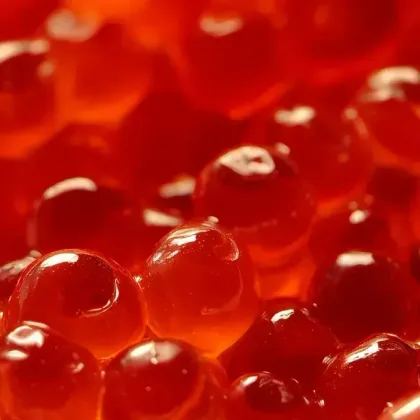
Salmon Roe
Premium salmon (ikura) eggs — phospholipid-bound EPA/DHA and choline
Substances: Astaxanthin, Choline, DHA (Docosahexaenoic Acid), EPA (Eicosapentaenoic Acid), Omega-3 Fatty Acids, Phosphatidylcholine (PC)