Mixed-Leaf Tahini Caesar Salad
Overview
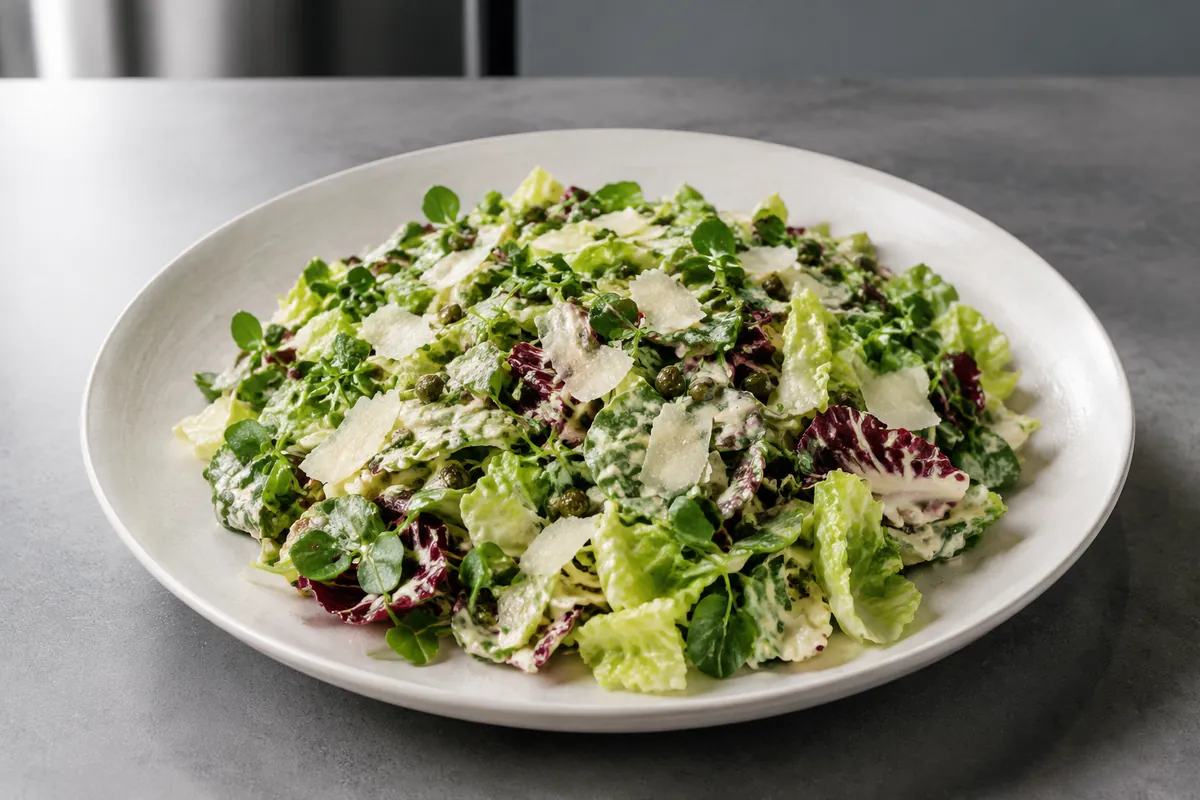
A Caesar-style salad built around romaine lettuce, watercress, baby spinach and radicchio, with a creamy dressing made from extra virgin olive oil, tahini, anchovies, capers preserved in EVOO, Parmesan, garlic, lemon and balsamic vinegars.
The mixed leaves provide contrasting textures and flavours: crisp romaine, peppery watercress, tender spinach and slightly bitter radicchio. The dressing balances savoury, salty, acidic and sweet elements while supplying enough dietary fat to support the absorption of fat-soluble compounds from the vegetables.
Ingredients (4 servings)
Leaf base
- 250 g romaine lettuce, washed, dried and roughly torn
- 80 g baby spinach, washed and thoroughly dried
- 60 g watercress, any coarse stems removed
- 80 g radicchio, finely sliced
Tahini Caesar dressing
- 1 tbsp (15 ml) extra virgin olive oil
- 1 tbsp (15 ml) extra virgin olive oil retained from the caper jar
- 2 tbsp (30 g) tahini
- 2 tbsp (30 g) good-quality mayonnaise or aioli
- 6 anchovy fillets in olive oil, drained (24 g)
- 2 tbsp (18 g) capers preserved in extra virgin olive oil, lightly drained (blend most; reserve 1 tsp to scatter)
- 25 g finely grated Parmesan
- 2 garlic cloves, crushed (6 g)
- 2 tbsp (30 ml) fresh lemon juice
- 2 tsp (10 ml) white balsamic vinegar
- 2 tsp (10 ml) dark balsamic vinegar
- 30–60 ml ice-cold water
- 2 tbsp crushed ice
- freshly ground black pepper, to taste
- salt only if required after blending
To finish
- 1 tsp of the capers, reserved
- 20 g Parmesan, finely shaved
Optional wholegrain croutons
- 100 g day-old wholegrain sourdough bread, cut into cubes
- 1 tbsp (15 ml) extra virgin olive oil (optional croutons)
- black pepper, to taste
Nutrition calculation uses mayonnaise rather than aioli, and excludes the optional wholegrain croutons.
Method
- Crush the garlic and leave it to stand for 5–10 minutes while preparing the remaining ingredients.
- Lightly drain the capers. Reserve 1 tsp to scatter over the finished salad. Place the remaining capers, the anchovies, grated Parmesan, tahini, mayonnaise, garlic, lemon juice and both balsamic vinegars in a blender or small food processor.
- Add the measured extra virgin olive oil, including the retained oil from the caper jar, and blend until the anchovies and capers are fully incorporated. The total added EVOO should remain 30 ml.
- Add the crushed ice and enough ice-cold water to produce a smooth, glossy dressing that is thick enough to coat the leaves but loose enough to toss evenly.
- Season generously with black pepper. Taste before adding any salt: the anchovies, capers, Parmesan and mayonnaise may already provide sufficient seasoning.
- If making the optional croutons, toss the bread cubes with olive oil and black pepper. Bake at 190°C for approximately 8–12 minutes, turning once, until crisp and golden. Allow them to cool.
- Combine the romaine, spinach, watercress and radicchio in a large salad bowl.
- Add approximately two-thirds of the dressing and toss gently until the leaves are lightly and evenly coated. Add more dressing only as required.
- Finish with the reserved capers, the shaved Parmesan and optional wholegrain croutons. Serve immediately.
Nutrition
Per serving, recipe serves 4. Each included ingredient is scaled from a named per-100 g composition record by edible grams. Optional ingredients are excluded. Missing analytical values are not treated as zero.
| Nutrient | Per serving |
|---|---|
| Energy | 240 kcal |
| Protein | 9.3 g |
| Carbohydrates | 8 g |
| Sugars | 2.1 g |
| Fibre | 2.9 g |
| Total fat | 20 g |
| Saturated fat | 4.2 g |
| Sodium | 550 mg |
Sodium excludes salt added to taste and will vary according to the anchovies, capers, Parmesan, tahini and mayonnaise selected.
Key vitamins and minerals
| Nutrient | Per serving | Reference intake |
|---|---|---|
| Vitamin K | 270 µg | 223% AI |
| Vitamin A | 420 µg | 46% RDA |
| Folate | 150 µg | 37% RDA |
| Copper | 0.31 mg | 34% RDA |
| Phosphorus | 200 mg | 29% RDA |
| Calcium | 250 mg | 25% RDA |
| Vitamin C | 20 mg | 22% RDA |
| Manganese | 0.49 mg | 22% AI |
Vitamins and minerals supplying at least 15% of an adult reference intake, plus explicitly featured design-relevant nutrients, up to eight. RDA is a recommended dietary allowance; AI is an adequate intake, used where the evidence does not support an RDA. Nutrients below the threshold are still calculated and still count towards a daily total; a featured row is not a claim that the serving supplies a complete daily dose.
Bioactive compounds
| Compound | Per serving |
|---|---|
| Alpha-linolenic acid (ALA; 18:3 n-3) | 400 mg |
| DHA | 78 mg |
| Kaempferol | Present — quantity not established |
| Betaine | 110–130 mg/100 g in frozen spinach |
| Sesamin | Present |
| Sesamolin | Present |
| Quercetin | Present — quantity not established |
| Vitamin K2 | Present |
| Allicin | Present |
These compounds have no recognised intake target, so quantified amounts are shown without a percentage. A presence-only entry is carried from a supported food relationship and is not converted into an invented serving amount.
Calculation details
| Ingredient | Weight used | Composition record |
|---|---|---|
| 250 g romaine lettuce, washed, dried and roughly torn | 250 g | USDA FDC 169247 — Lettuce, cos or romaine, raw |
| 80 g baby spinach, washed and thoroughly dried | 80 g | USDA FDC 168462 — Spinach, raw |
| 60 g watercress, any coarse stems removed | 60 g | USDA FDC 170068 — Watercress, raw |
| 80 g radicchio, finely sliced | 80 g | USDA FDC 168564 — Radicchio, raw |
| 1 tbsp (15 ml) extra virgin olive oil | 14 g | USDA FDC 171413 — Oil, olive, salad or cooking |
| 1 tbsp (15 ml) extra virgin olive oil retained from the caper jar | 14 g | USDA FDC 171413 — Oil, olive, salad or cooking |
| 2 tbsp (30 g) tahini | 30 g | USDA FDC 170189 — Seeds, sesame butter, tahini, from roasted and toasted kernels |
| 2 tbsp (30 g) good-quality mayonnaise or aioli | 30 g | USDA FDC 171009 — Salad dressing, mayonnaise, regular |
| 6 anchovy fillets in olive oil, drained (24 g) | 24 g | USDA FDC 174183 — Fish, anchovy, european, canned in oil, drained solids |
| 2 tbsp (18 g) capers preserved in extra virgin olive oil, lightly drained (blend most; reserve 1 tsp to scatter) | 18 g | USDA FDC 172238 — Capers, canned |
| 25 g finely grated Parmesan | 25 g | USDA FDC 170848 — Cheese, parmesan, hard |
| 2 garlic cloves, crushed (6 g) | 6 g | USDA FDC 169230 — Garlic, raw |
| 2 tbsp (30 ml) fresh lemon juice | 31 g | USDA FDC 167747 — Lemon juice, raw |
| 2 tsp (10 ml) white balsamic vinegar | 11 g | USDA FDC 172241 — Vinegar, balsamic |
| 2 tsp (10 ml) dark balsamic vinegar | 11 g | USDA FDC 172241 — Vinegar, balsamic |
| 20 g Parmesan, finely shaved | 20 g | USDA FDC 170848 — Cheese, parmesan, hard |
Mainly from:
- Energy: Extra Virgin Olive Oil, 2 tbsp (30 g) good-quality mayonnaise or aioli
- Protein: Parmesan Cheese, Anchovies
- Carbohydrates: Romaine Lettuce, Tahini
- Sugars: Romaine Lettuce, 2 tsp (10 ml) white balsamic vinegar
- Fibre: Romaine Lettuce, Tahini
- Total fat: Extra Virgin Olive Oil, 2 tbsp (30 g) good-quality mayonnaise or aioli
- Saturated fat: Parmesan Cheese, Extra Virgin Olive Oil
- Sodium: Anchovies, Parmesan Cheese
Assumptions and exclusions:
- 1 tbsp (15 ml) extra virgin olive oil: USDA SR Legacy FDC 171413 food_portion: 1 tablespoon = 13.5 g
- 1 tbsp (15 ml) extra virgin olive oil retained from the caper jar: USDA SR Legacy FDC 171413 food_portion: 1 tablespoon = 13.5 g
- 6 anchovy fillets in olive oil, drained (24 g): USDA SR Legacy FDC 174183 food_portion: 1 anchovy = 4 g; 6 fillets = 24 g, matching the recipe's provisional 24 g
- 2 garlic cloves, crushed (6 g): USDA SR Legacy FDC 169230 food_portion: 1 clove = 3 g
- 2 tbsp (30 ml) fresh lemon juice: USDA SR Legacy FDC 167747 food_portion: 1 cup = 244 g, i.e. 1.031 g/ml; 30 ml = 30.9 g.
- 2 tsp (10 ml) white balsamic vinegar: USDA SR Legacy FDC 172241 food_portion: 1 tsp = 5.3 g; 2 tsp = 10.6 g
- 2 tsp (10 ml) dark balsamic vinegar: USDA SR Legacy FDC 172241 food_portion: 1 tsp = 5.3 g; 2 tsp = 10.6 g
- 2 tbsp (30 g) good-quality mayonnaise or aioli: No food page.
- 6 anchovy fillets in olive oil, drained (24 g): . Anchovy packing oil is discarded.
- 2 tbsp (30 ml) fresh lemon juice: The Lemon food page records lemon flesh without peel, which is not lemon juice.
- 2 tsp (10 ml) white balsamic vinegar: No food page.
- 2 tsp (10 ml) dark balsamic vinegar: No food page.
- 30–60 ml ice-cold water — water contributes no material energy or nutrients
- 2 tbsp crushed ice — crushed ice contributes no material energy or nutrients
- freshly ground black pepper, to taste — added to taste, so it is not part of an exact calculation
- salt only if required after blending — added to taste, so it is not part of an exact sodium total
- 100 g day-old wholegrain sourdough bread, cut into cubes — optional croutons are excluded from the principal nutrition calculation
- 1 tbsp (15 ml) extra virgin olive oil (optional croutons) — olive oil for optional croutons is excluded from the principal nutrition calculation
- Romaine, spinach, watercress and radicchio are calculated as separate raw edible ingredients. None is treated as mixed leaves.
- The 15 ml extra virgin olive oil retained from the caper jar forms part of the stated 30 ml total EVOO, not an addition to it.
- Capers preserved in extra virgin olive oil are not assumed sodium-free. Sodium follows the USDA canned-capers record and depends on curing and brand.
- Mayonnaise and balsamic vinegar have no food-registry pages and are flagged for review. Named USDA records matching those foods are used; they are not mapped to a generic dressing or acid substitute.
- White balsamic vinegar has no separate USDA SR Legacy record; both vinegars use Vinegar, balsamic (FDC 172241).
- Capers contribute quercetin as presence only. The Capers food page does not carry a defensible per-100 g quantity, so no numerical quercetin value is published for this recipe.
- EPA and DHA are taken only from USDA canned anchovy in oil, drained solids (FDC 174183), which names both acids. They are not inferred from undrained oil or from any other ingredient.
- Extra virgin olive oil polyphenols, garlic organosulfur compounds and watercress isothiocyanates are recorded as present in the contributing foods where those pages support presence. They are not given numerical recipe values. Radicchio anthocyanins are not admitted on the Radicchio food page and are not given a recipe value.
Optional wholegrain croutons are excluded from these figures. Values for commercial mayonnaise, anchovies, capers, tahini and balsamic vinegar may differ by product.
Extra Guidance
- Dry the leaves thoroughly so the dressing adheres rather than becoming diluted.
- Add the dressing gradually; the recipe may produce slightly more than required depending on the size and condition of the leaves.
- Use capers preserved in genuine extra virgin olive oil rather than capers packed in brine, vinegar or refined oil.
- Drain the capers lightly and retain some of their EVOO for the dressing.
- Blend most of the 2 tbsp capers into the dressing. Reserve 1 tsp and scatter it over the finished salad.
- Do not rinse the oil-packed capers unless they are excessively salty, because rinsing removes the EVOO and some of their flavour.
- Taste the dressing before adding salt. The sodium content depends partly on how the capers were cured before being packed in EVOO.
- The dark balsamic should provide rounded sweetness rather than dominate the dressing. Check the label because some balsamic glazes contain substantial added sugar.
- Keep the dressing and leaves separate until serving.
- Dressing made with commercial mayonnaise can be refrigerated in a sealed container for up to 2 days.
- If using homemade aioli containing raw egg, use pasteurised egg, keep refrigerated and consume promptly.
Brain Health Notes
- Anchovies contribute marine omega-3 fatty acids, including EPA and DHA, alongside protein, vitamin B12 and selenium. The contribution is modest within a dressed salad, and quantitative values follow the drained canned-anchovy record rather than an assumed fillet.
- Capers preserved in extra virgin olive oil contribute a concentrated caper matrix containing flavonoids, including quercetin, alongside the polyphenol and monounsaturated-fat profile of EVOO. The caper serving is small, so claims stay with the mapped serving rather than concentration per 100 g, and quercetin is not given a number unless a defensible composition record supplies one.
- Extra virgin olive oil and tahini provide predominantly unsaturated fats. Dietary fat consumed with raw vegetables supports the absorption of carotenoids and other fat-soluble compounds.
- Romaine and spinach contribute folate, carotenoids and vitamin K.
- Watercress contributes vitamin C, vitamin K, carotenoids and glucosinolate-derived compounds.
- Radicchio adds bitter and red-pigmented plant compounds while increasing the diversity of the leaf matrix.
- Freshly crushed garlic provides organosulfur compounds. Allowing crushed garlic to rest briefly before blending supports their formation.
- Parmesan supplies protein and calcium but, together with the anchovies and capers, increases the sodium content.
- The dressing is energy-dense, but a measured serving can improve the palatability and nutrient absorption of a substantial mixed-leaf salad.
Explore the foods and substances
Show 11 foods and their substances
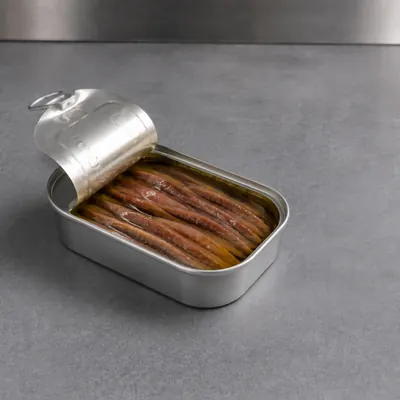
Anchovies
Small oily fish, typically canned and drained, providing EPA, DHA and niacin
Substances: Calcium, DHA (Docosahexaenoic Acid), EPA (Eicosapentaenoic Acid), Omega-3 Fatty Acids, Selenium, Sodium, Vitamin B3 (Niacin)
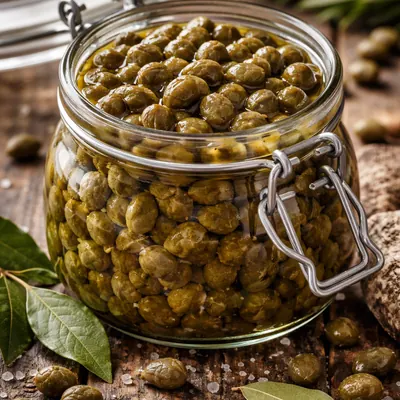
Capers
Highest quercetin content among common foods
Substances: Kaempferol, Quercetin (and Isoquercetin), Sodium
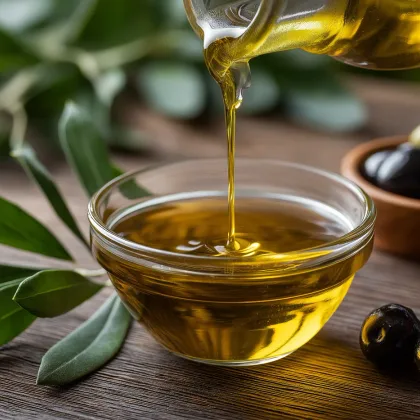
Extra Virgin Olive Oil
Polyphenol-rich oil with hydroxytyrosol and anti-inflammatory properties
Substances: Hydroxytyrosol (Olive Polyphenol), Oleacein, Oleocanthal, Tyrosol
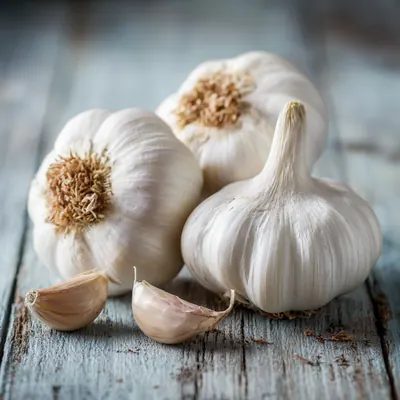

Lemon
Vitamin C for iron absorption enhancement and pH adjustment
Substances: Eriocitrin, Hesperidin, Vitamin C (Ascorbate)

Parmesan Cheese
CLA, K2, C15:0, and high protein/calcium
Substances: Calcium, Tyrosine, Vitamin K2 (MK forms)
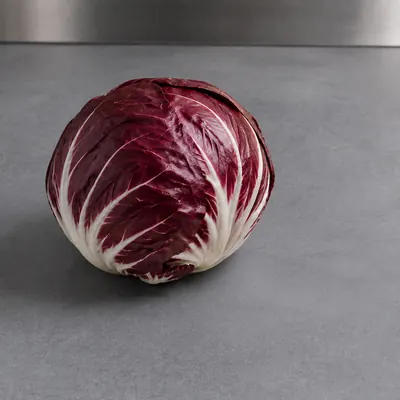
Radicchio
Bitter red chicory leaf; lutein and zeaxanthin are reported together, with vitamin K
Substances: Lutein, Vitamin K (Phylloquinone), Zeaxanthin
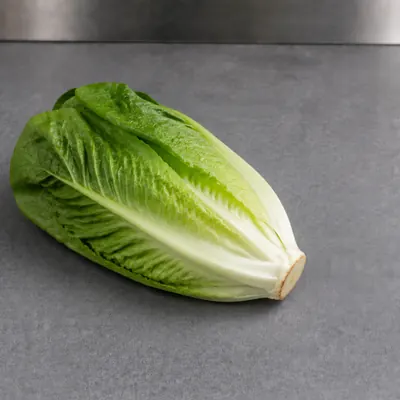
Romaine Lettuce
Crisp salad lettuce providing vitamin K, folate and carotenoids
Substances: Lutein, Vitamin A (Retinoids; β-Carotene precursor), Vitamin B9 (Folate), Vitamin K (Phylloquinone), Zeaxanthin, β-Carotene

Spinach
Leafy green rich in iron, magnesium, folate, and carotenoids
Substances: Betaine, Calcium, Copper, Iron, Kaempferol, Lutein, Magnesium, Manganese, Phosphorus (Phosphate), Potassium, Vitamin A (Retinoids; β-Carotene precursor), Vitamin B1 (Thiamine), Vitamin B2 (Riboflavin), Vitamin B6 (Pyridoxine → PLP), Vitamin B9 (Folate), Vitamin C (Ascorbate), Vitamin K (Phylloquinone), Zeaxanthin, Zinc, β-Carotene

Tahini
Ground sesame-seed paste; composition depends on hull and roast
Substances: Calcium, Linoleic Acid (LA, n-6), Oleic Acid (OA, n-9), Sesamin, Sesamolin

Watercress
Peppery brassica salad leaf providing vitamin C, vitamin K and carotenoids
Substances: Lutein, Vitamin C (Ascorbate), Vitamin K (Phylloquinone), Zeaxanthin, β-Carotene