Savoury Greens & Egg Breakfast Skillet
Overview
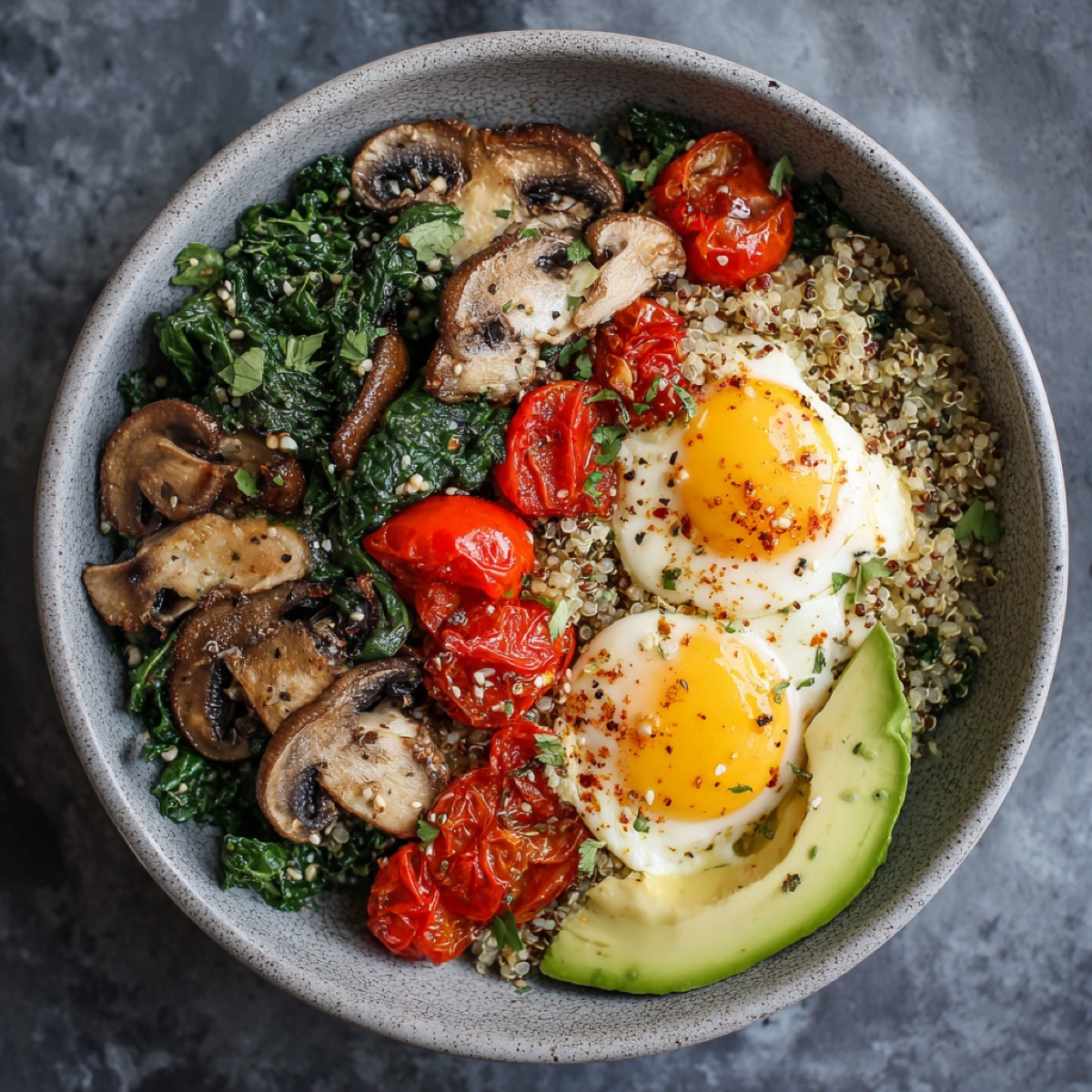
A warm, savoury breakfast built around eggs, greens, and whole-food carbohydrates. This skillet provides a balanced combination of protein, fibre, and healthy fats to support steady morning energy and satiety.
Ingredients (1 serving)
Vegetables
- 100 g mushrooms, sliced
- 60–80 g spinach or kale
- 80 g cherry tomatoes, halved
- 1 clove garlic, minced
Protein
- 2 large eggs
Healthy fats
- 10 ml extra virgin olive oil
Slow carbohydrate base (choose one)
- 120 g cooked quinoa
or - 120 g cooked buckwheat
Seasoning
- Pinch sea salt
- Pinch black pepper
- ½ tsp smoked paprika
Optional
- Slices of avocado
- Small side of sauerkraut or kimchi
Method
- Heat the olive oil in a skillet over medium heat.
- Add the sliced mushrooms and cook for 3–4 minutes until lightly browned.
- Add the garlic, cherry tomatoes, salt, pepper, and smoked paprika; cook for 1–2 minutes until fragrant.
- Add the spinach or kale and cook until just wilted.
- Push the vegetables to one side of the pan and crack in the eggs. Cook to your preference (fried, basted, or gently scrambled alongside the vegetables).
- Warm the cooked quinoa or buckwheat in a separate pan or microwave, then place in a bowl as the base.
- Top the grain base with the vegetable and egg mixture. Add avocado slices and sauerkraut or kimchi if using, then serve immediately.
Extra Guidance
- Cooking the grains in advance makes this a very fast weekday breakfast.
- You can swap spinach for kale or other leafy greens depending on what you have.
- Keep heat moderate to avoid over-browning the eggs and vegetables.
Nutrition (approximate, per serving)
Based on: 2 eggs, 120 g cooked quinoa, 100 g mushrooms, 60 g spinach, 80 g cherry tomatoes, 10 ml extra virgin olive oil.
- Energy: ~450–500 kcal
- Protein: ~22–25 g
- Carbohydrates: ~45–50 g (from quinoa/buckwheat and vegetables)
- Fat: ~18–22 g (including yolk fats and olive oil)
- Fibre: ~7–9 g
Brain Health Notes
- Eggs provide complete protein and choline, a nutrient important for phospholipid membranes and acetylcholine synthesis.
- Leafy greens (spinach or kale) supply folate, magnesium, and carotenoids studied for roles in brain and vascular health.
- Quinoa or buckwheat provide slow-digesting carbohydrates and fibre, which can help support steadier morning glucose patterns compared with refined grains.
- Extra virgin olive oil contributes monounsaturated fats and polyphenols associated with cardiovascular and brain health.
- Fermented sides such as sauerkraut or kimchi add probiotics and postbiotic compounds that complement a fibre-rich diet for gut support.
Foods/Substances
12 foods in this recipe

Avocado
MUFA-rich fruit with vitamin E, lutein, and glutathione
Substances: Lutein, Potassium, Vitamin E (Tocopherols/Tocotrienols), β-Carotene
Eggs
Complete protein with choline, B vitamins, and phospholipids
Substances: Choline, Histidine, Iron, Isoleucine, Leucine, Lutein, Lysine, Methionine, Phenylalanine, Phosphatidylcholine (PC), Phosphatidylethanolamine (PE), Selenium, Threonine, Tryptophan, Tyrosine, Valine, Vitamin A (Retinoids; β-Carotene precursor), Vitamin B1 (Thiamine), Vitamin B12 (Cobalamin), Vitamin B2 (Riboflavin), Vitamin B5 (Pantothenic Acid), Vitamin B6 (Pyridoxine → PLP), Vitamin B9 (Folate; 5-MTHF), Vitamin D, Vitamin E (Tocopherols/Tocotrienols), Vitamin K2 (MK forms), Zeaxanthin, Zinc, β-Carotene
Extra Virgin Olive Oil
Polyphenol-rich oil with hydroxytyrosol and anti-inflammatory properties
Substances: Hydroxytyrosol (Olive Polyphenol), Oleacein, Oleocanthal, Oleuropein, Tyrosol
Garlic
Allicin, sulfur compounds, and prebiotic fiber for gut and antioxidant support
Substances: Acetate, Manganese, Propionate, Short-Chain Fatty Acids (SCFAs)
Kale
Leafy green rich in iron, magnesium, zinc, quercetin, and carotenoids
Substances: Calcium, Copper, Iron, Lutein, Magnesium, Manganese, Potassium, Quercetin (and Isoquercetin), Vitamin A (Retinoids; β-Carotene precursor), Vitamin B1 (Thiamine), Vitamin B2 (Riboflavin), Vitamin B6 (Pyridoxine → PLP), Vitamin B9 (Folate; 5-MTHF), Vitamin C (Ascorbate), Vitamin K2 (MK forms), Zeaxanthin, Zinc, β-Carotene
Kimchi
Fermented vegetables providing probiotics, GABA, and postbiotic compounds
Substances: Acetate, Propionate, Short-Chain Fatty Acids (SCFAs), Vitamin K2 (MK forms)
Mushrooms
UV-exposed mushrooms provide vitamin D; niacin source for NAD+ synthesis
Substances: Selenium, Vitamin B3 (Niacin; Niacinamide), Vitamin D
Quinoa
Pseudograin with complete protein, magnesium, and GABA potential in sourdough
Substances: Choline, Histidine, Iron, Isoleucine, Leucine, Lysine, Magnesium, Manganese, Methionine, Phenylalanine, Threonine, Tryptophan, Valine, Vitamin B1 (Thiamine), Vitamin B2 (Riboflavin), Vitamin B6 (Pyridoxine → PLP), Vitamin B9 (Folate; 5-MTHF), Zinc
Sauerkraut
Fermented cabbage providing Lactobacillus probiotics
Substances: Acetate, Propionate, Short-Chain Fatty Acids (SCFAs), Vitamin K2 (MK forms)
Spinach
Leafy green rich in iron, magnesium, folate, and carotenoids
Substances: Calcium, Coenzyme Q10 (CoQ10), Copper, Iron, Lutein, Magnesium, Manganese, Potassium, Vitamin A (Retinoids; β-Carotene precursor), Vitamin B1 (Thiamine), Vitamin B2 (Riboflavin), Vitamin B6 (Pyridoxine → PLP), Vitamin B9 (Folate; 5-MTHF), Vitamin C (Ascorbate), Vitamin K2 (MK forms), Zeaxanthin, Zinc, β-Carotene
Tomatoes
Lycopene, vitamin C, and food matrix effects on absorption
Substances: Lycopene, Potassium, Vitamin C (Ascorbate)
Biological Target Matrix
Gut–Brain Axis & Enteric Nervous System (ENS)
| Substance | Foods | Mechanism of Action |
|---|---|---|
| Acetate | Byproduct of fibre fermentation; supports intestinal barrier integrity; regulates immune responses; promotes synthesis of key neurotransmitters such as dopamine and serotonin | |
| Choline | Choline is metabolised by gut bacteria; some strains (e.g. Lactobacillus) can produce acetylcholine. Microbial choline metabolism (e.g. trimethylamine) shows inter-individual variability and may influence host metabolism and gut–brain signalling. | |
| Propionate | Byproduct of fibre fermentation; supports intestinal barrier integrity; regulates immune responses | |
| Short-Chain Fatty Acids (SCFAs) | Byproducts of fibre fermentation; support intestinal barrier integrity; regulate immune responses; promote synthesis of key neurotransmitters such as dopamine and serotonin | |
| Vitamin D | Supports gut barrier integrity; nutrient deficiencies including vitamin D disrupt tight junctions, increasing permeability |
Inflammation & Oxidative Stress
| Substance | Foods | Mechanism of Action |
|---|---|---|
| Choline | Choline-derived betaine supports homocysteine remethylation; elevated homocysteine is linked to oxidative stress and inflammatory signalling. Phosphatidylcholine supports membrane integrity and cell signalling in immune and redox contexts. |
Metabolic & Neuroendocrine Stress (HPA Axis & ANS)
| Substance | Foods | Mechanism of Action |
|---|---|---|
| Choline | Choline supports hepatic VLDL assembly and lipid export; methyl donors (choline, betaine) may influence adenosine metabolism and HPA axis activity. Adequate choline status supports metabolic stability and stress physiology. |
Methylation & One-Carbon Metabolism
| Substance | Foods | Mechanism of Action |
|---|---|---|
| Choline | Precursor to trimethylglycine (TMG/betaine), a dietary methyl donor that helps recycle homocysteine to methionine via an alternative pathway; supports one-carbon metabolism alongside folate, riboflavin, and B12; influences methylation dynamics relevant to MTHFR and COMT activity | |
| Methionine | Essential amino acid that forms S-adenosylmethionine (SAMe), the universal methyl donor for neurotransmitter synthesis and membrane phospholipid methylation | |
| Vitamin B12 (Cobalamin) | Essential cofactor in remethylation of homocysteine to methionine, which is converted to S-adenosylmethionine (SAMe); works with B6, B2, and folate; contributes meaningfully to homocysteine reduction, especially in combination with omega-3 fatty acids | |
| Vitamin B2 (Riboflavin) | FAD acts as a critical cofactor for MTHFR, linking riboflavin to homocysteine recycling and methylation capacity | |
| Vitamin B6 (Pyridoxine → PLP) | Essential cofactor in remethylation of homocysteine to methionine, which is converted to S-adenosylmethionine (SAMe); works with B2, folate, and B12 | |
| Vitamin B9 (Folate; 5-MTHF) | Essential cofactor in remethylation of homocysteine to methionine, which is converted to S-adenosylmethionine (SAMe); SAMe fuels synthesis of dopamine, norepinephrine, and serotonin and drives phospholipid methylation in neuronal membranes | |
| Zinc | Deficiencies in vitamins and minerals essential for methylation, such as folate, vitamin B12, and zinc, are correlated to ADHD symptoms; supplementing these micronutrients has shown potential in supporting methylation and reducing symptom severity |
Mitochondrial Function & Bioenergetics
| Substance | Foods | Mechanism of Action |
|---|---|---|
| Choline | Phosphatidylcholine and other choline-containing phospholipids support mitochondrial membrane integrity and energy metabolism; choline-derived betaine contributes to one-carbon status that can influence mitochondrial resilience | |
| Coenzyme Q10 (CoQ10) | Electron transport chain cofactor; supports ATP production; antioxidant protection for neurons | |
| Iron | Critical for oxygen delivery to the brain via hemoglobin; supports mitochondrial function and energy production | |
| Magnesium | Supports enzymes involved in glycolysis and the Krebs cycle (processes that generate ATP from glucose); binds to ATP and all triphosphates in cells to activate them | |
| Manganese | Supports mitochondrial antioxidant defense through MnSOD activity | |
| Oleuropein | Oleuropein aglycone (the active form) supports mitophagy, SIRT1 activation, and AMPK activation; enhances mitochondrial function, autophagy, and neuroprotective effects through modulation of mitochondrial dynamics and antioxidant pathways | |
| Quercetin (and Isoquercetin) | Enhances mitochondrial baseline activity and energy production; supports mitochondrial function | |
| Selenium | Protects mitochondria from oxidative damage through antioxidant enzyme activity | |
| Short-Chain Fatty Acids (SCFAs) | Butyrate supports mitochondrial function, enhancing brain energy metabolism; aids in reducing cholesterol and neuroinflammation | |
| Vitamin B1 (Thiamine) | Essential for mitochondrial glucose metabolism in the brain leading to ATP production; supports PDH (pyruvate dehydrogenase) and α-KGDH (alpha-ketoglutarate dehydrogenase) function | |
| Vitamin B12 (Cobalamin) | Crucial role in conversion of methylmalonyl-CoA to succinyl-CoA, a key step in mitochondrial energy production; deficiency leads to buildup of methylmalonic acid and odd-chain fatty acids, which are neurotoxic | |
| Vitamin B2 (Riboflavin) | Forms FMN/FAD coenzymes, supporting oxidative metabolism and redox balance; facilitates metabolism of B12, B6, and niacin; supports antioxidant enzymes | |
| Vitamin B3 (Niacin; Niacinamide) | Replenishes NAD+, supporting oxidative phosphorylation, sirtuin signaling, and mitochondrial biogenesis; key for neuronal energy metabolism | |
| Vitamin B5 (Pantothenic Acid) | Forms CoA (coenzyme A), required for β-oxidation and TCA cycle acetyl-CoA flux; deficiency impairs ATP production impacting brain energy |
Neurotransmitter Regulation
| Substance | Foods | Mechanism of Action |
|---|---|---|
| Calcium | Essential for nerve impulse transmission and neurotransmission | |
| Choline | Essential precursor for acetylcholine synthesis, supporting memory, learning, and neuroplasticity; supports membrane phospholipid biosynthesis (PC) which is critical for membrane fluidity and neurotransmitter receptor function; phospholipid methylation (PLM) alters membrane structure, facilitating faster neuronal recovery and influencing ion channel behavior in gamma oscillations linked to attention and cognition | |
| Copper | Cofactor in dopamine β-hydroxylase, supporting catecholamine synthesis; supports norepinephrine synthesis | |
| Iron | Essential cofactor for tyrosine hydroxylase, the rate-limiting enzyme in the conversion of tyrosine to dopamine; critical for catecholamine synthesis | |
| Magnesium | Broad cofactor for neurotransmitter synthesis and receptor modulation (e.g., NMDA, GABA); functions as an NMDA receptor antagonist and GABA receptor modulator; assists enzymes involved in synthesis of dopamine and serotonin | |
| Phenylalanine | Essential amino acid that converts to tyrosine and supports catecholamine synthesis (dopamine, norepinephrine); participates in LAT1 competition at the blood-brain barrier | |
| Phosphatidylcholine (PC) | Major neuronal membrane phospholipid central to membrane fluidity, receptor function, and acetylcholine synthesis; DHA/EPA incorporated into PC are converted to lysophosphatidylcholine (LPC), a key transport form across the BBB | |
| Potassium | Critical for membrane potential, nerve signaling, and neuronal excitability; adequate intake balances sodium effects | |
| Propionate | Stimulates secretion of norepinephrine and may influence dopamine regulation; promotes synthesis of key neurotransmitters | |
| Short-Chain Fatty Acids (SCFAs) | Propionate stimulates secretion of norepinephrine and may influence dopamine regulation; SCFAs promote synthesis of dopamine and serotonin | |
| Tryptophan | Precursor for serotonin and melatonin; brain entry competes at LAT1 with other large neutral amino acids (LNAAs); carbohydrate-rich, low-protein meals raise the plasma tryptophan:LNAA ratio because insulin pushes competing LNAAs out to muscles; can feed NAD+ synthesis via the kynurenine pathway | |
| Tyrosine | Catecholamine precursor (dopamine, norepinephrine); brain transport via LAT1 competes with other LNAAs; iron is an essential cofactor for tyrosine hydroxylase, the rate-limiting enzyme in conversion of tyrosine to dopamine; cofactors include iron, B6, folate, omega-3s, and BH₄ (tetrahydrobiopterin) to support rate-limiting steps in catecholamine synthesis | |
| Tyrosol | Neuroprotective effects; contributes to brain health benefits of extra-virgin olive oil | |
| Vitamin B12 (Cobalamin) | Supports neurotransmitter production through methylation; essential for myelin synthesis | |
| Vitamin B6 (Pyridoxine → PLP) | Cofactor for synthesis of dopamine, serotonin, GABA, and glutamate; supports rate-limiting steps in catecholamine synthesis; requires PDXK activation with magnesium and ATP support | |
| Vitamin B9 (Folate; 5-MTHF) | Supports neurotransmitter synthesis through methylation; cofactor for dopamine synthesis alongside iron, B6, and omega-3s | |
| Vitamin C (Ascorbate) | Supports norepinephrine synthesis; transported in brain via SVCT2 | |
| Zinc | Important for DNA synthesis, cell division, and neurotransmitter regulation, particularly in modulating dopamine—a key neurotransmitter implicated in ADHD; acts as an allosteric modulator of the GABA receptor; supports glutamate regulation |