5-Methyltetrahydrofolate
Overview
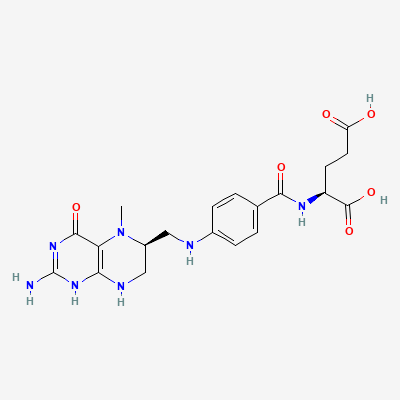
5-Methyltetrahydrofolate, also called 5-MTHF, 5-methyl-THF or L-methylfolate, is a reduced form of vitamin B9 (folate). In vegetables it is often one of the principal naturally occurring folate forms, commonly as polyglutamates rather than as folic acid, the synthetic monoglutamate used in fortification [1]. The structure shown is the (6S) isomer. This page records that form. A total-folate figure remains a family measurement.
Methionine synthase transfers the methyl group of 5-MTHF to homocysteine, forming methionine and tetrahydrofolate [2]. Other dietary folate forms can reach the same molecule through folate metabolism, including the MTHFR-dependent step [2]. That role describes the reaction. It does not show that a higher intake increases tissue enzyme flux, and an L-methylfolate supplement is a different exposure from polyglutamated 5-MTHF in a vegetable [1,2].
Dietary Context
Two dietary routes supply this molecule.
Direct supply. Some foods contain preformed 5-MTHF. In the vegetables studied, much of it is polyglutamated. Those glutamate chains are shortened during intestinal absorption before the monoglutamate circulates [1].
Endogenous conversion. Other dietary folate forms, including folic acid after reduction by dihydrofolate reductase, enter the folate cycle and can be converted to 5-MTHF. Methylenetetrahydrofolate reductase carries out that last step [2]. A food that supplies the folate family can feed this route without being recorded as a source of preformed 5-MTHF.
Food sources
Form-specific analysis identifies monoglutamyl and polyglutamyl 5-MTHF in raw spinach, broccoli, kale, Swiss chard and cauliflower [1]. Those five foods are the contains links below. The assay steamed the samples to inactivate plant enzymes before extraction, so the result is a raw-vegetable identification, and no amount from it is copied onto the food pages. Each of those pages also has a total-folate panel. That panel is a separate analyte.
Asparagus, lentils, chickpeas and liver are linked from their vitamin B9 records. Avocado's composition panel reports folate as the family total. Those family figures are not copied here as 5-MTHF amounts. Lentils and chickpeas are rich in total folate, and the share of each vitamer varies. Liver is very rich in total folate and contains more than 5-MTHF alone.
Supplement versus food
L-methylfolate supplements provide isolated 5-MTHF. A vegetable portion provides the polyglutamated food form inside a whole food [1]. Folic acid in fortified foods and supplements is a different vitamer, which the body can convert toward 5-MTHF [2].
Research Spotlights & Evidence Checks
Foods
5 foods
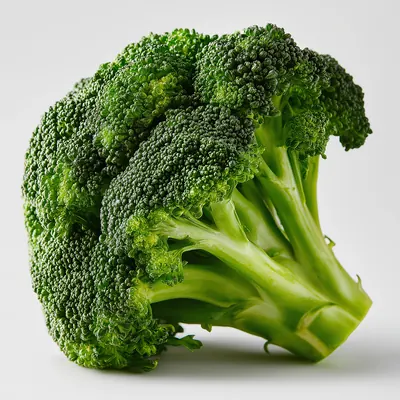
Broccoli
Cruciferous vegetable rich in sulforaphane, folate, and glutathione precursors
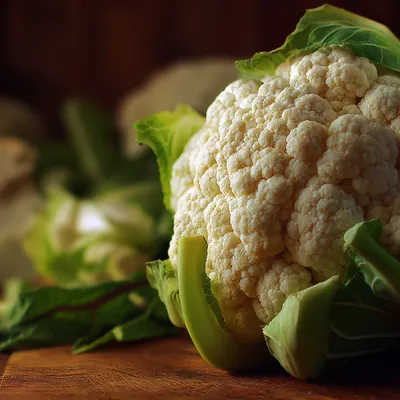
Cauliflower
Cruciferous vegetable with fiber and B vitamins

Kale
Leafy green providing vitamin C, vitamin K, calcium and carotenoids

Spinach
Leafy green rich in iron, magnesium, folate, and carotenoids

Swiss Chard
Leafy green rich in iron, magnesium, folate, and carotenoids
Recipes
Biological Regulatory Systems
| Biological Regulatory System | Evidence-qualified relationship | Evidence |
|---|---|---|
| Methylation & One-Carbon Metabolism (BRS2) | 5-MTHF is the methyl-donor substrate for methionine synthase in folate- and B12-dependent remethylation. Other dietary folates can be converted to it. Necessity of the substrate does not show that raising intake increases tissue flux. | [2] |
References
[1] Wang, Riedl and Schwartz (2010). A liquid chromatography–tandem mass spectrometric method for quantitative determination of native 5-methyltetrahydrofolate and its polyglutamyl derivatives in raw vegetables. Identifies polyglutamyl 5-MTHF as a principal native folate in the store-bought vegetables studied, including the five foods linked on this page. Source-specific calculated amounts are retained on the canonical food records, expressed as 5-MTHF equivalents; they are not total-folate values.
[2] Froese, Fowler and Baumgartner (2019). Vitamin B12, folate, and the methionine remethylation cycle—biochemistry, pathways, and regulation. Describes 5-MTHF as the methyl donor for methionine synthase, and the conversion of other dietary folate forms to that substrate through the folate cycle.