Retinoic acid
Overview
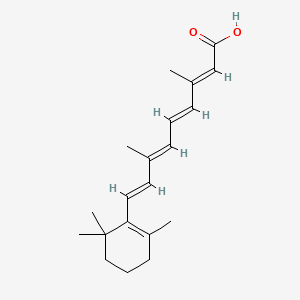
Retinoic acid on this page is all-trans-retinoic acid, the acid metabolite made from vitamin A. The structure shown is that isomer (C20H28O2). Foods are not recorded here as containing it. They supply preformed vitamin A, mainly retinol and retinyl esters, or provitamin A carotenoids such as beta-carotene. After absorption those precursors are oxidised to retinoic acid, and that last step is irreversible [1,2].
Beta-carotene can be cleaved to retinal before that oxidation [2]. The acid then acts as a local signal and is cleared by CYP26 enzymes, so a circulating vitamin A measurement is not a tissue retinoic acid measurement [1]. A serving of liver, egg yolk, butter or a carotenoid vegetable is a precursor exposure. Tretinoin is the drug name for this same molecule at a medicinal dose. The 9-cis and 13-cis isomers are different structures and are not this page.
Dietary Origin
The foods below are linked as precursors, not as foods that contain retinoic acid. Animal foods in this set are dominated by preformed vitamin A. Leafy greens, carrots and sweet potatoes are dominated by beta-carotene. Figures are the per-100 g panels already on those food pages.
Preformed vitamin A: beef liver 4,968 µg RAE; ghee (anhydrous butter oil) 840 µg RAE; unsalted butter 684 µg RAE; egg yolk 381 µg RAE. Grass-fed butter uses that same unsalted-butter panel, so it is not a separate vitamin A assay. Beta-carotene: sweet potato 8,509 µg and 709 µg RAE; carrots 8,285 µg and 835 µg RAE; spinach 5,626 µg; romaine lettuce 5,226 µg; Swiss chard 3,647 µg; kale 2,873 µg. Many other foods record a trace of vitamin A or beta-carotene. Those traces are not linked here.
Research Spotlights & Evidence Checks
Recipes
Recipes are listed when a food is tagged as containing the substance. These foods supply precursors, so they are connected under Foods.
Foods
11 food relationships
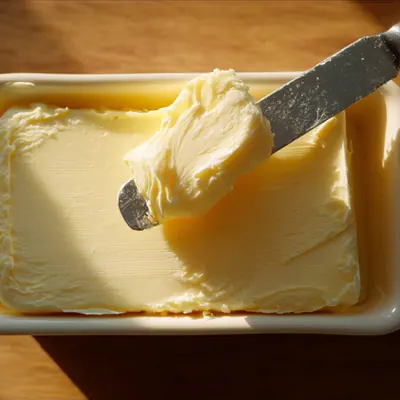
Butter
Dairy fat providing vitamin A and culinary saturated fat
Dietary precursorButter → provides Preformed vitamin A (retinol and retinyl esters) → Oxidation to retinal, then to retinoic acid → Retinoic acid
Unsalted butter records 684 µg RAE vitamin A per 100 g and 158 µg beta-carotene. The dominant precursor is preformed vitamin A. The food is not recorded as containing retinoic acid.
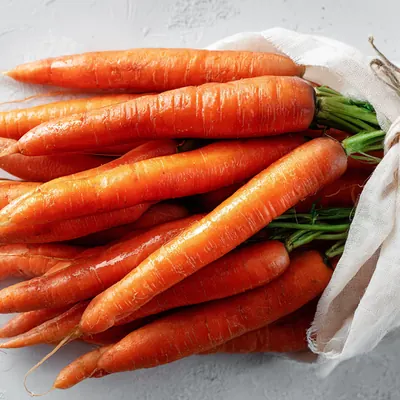
Carrots
Beta-carotene source with food matrix effects on absorption
Dietary precursorCarrots → provides Beta-carotene → Cleavage to retinal, then oxidation to retinoic acid → Retinoic acid
Raw carrots record 8,285 µg beta-carotene and 835 µg RAE vitamin A per 100 g. The dominant precursor is beta-carotene. The food is not recorded as containing retinoic acid.
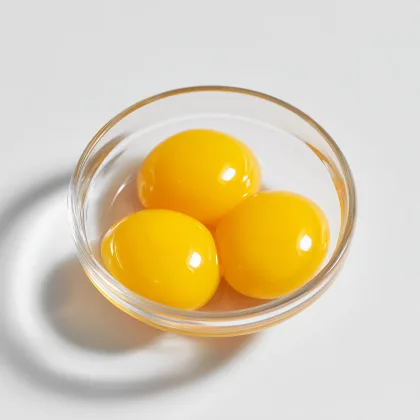
Egg Yolks
Nutrient-dense part of eggs with choline, lutein, and fat-soluble vitamins
Dietary precursorEgg Yolks → provides Preformed vitamin A (retinol and retinyl esters) → Oxidation to retinal, then to retinoic acid → Retinoic acid
Raw egg yolk records 381 µg RAE vitamin A per 100 g and 88 µg beta-carotene. The dominant precursor is preformed vitamin A. The food is not recorded as containing retinoic acid.
Ghee
Heat-stable clarified butter with butyrate and fat-soluble vitamins
Dietary precursorGhee → provides Preformed vitamin A (retinol and retinyl esters) → Oxidation to retinal, then to retinoic acid → Retinoic acid
Anhydrous butter oil records 840 µg RAE vitamin A per 100 g. That is a retinol precursor. The food is not recorded as containing retinoic acid.
Grass-Fed Butter
Butyrate, CLA, vitamins A/D/K2, selenium, and C15:0
Dietary precursorGrass-Fed Butter → provides Preformed vitamin A (retinol and retinyl esters) → Oxidation to retinal, then to retinoic acid → Retinoic acid
This page uses the unsalted-butter panel, 684 µg RAE vitamin A per 100 g, not a separate grass-fed vitamin A assay. The dominant precursor is preformed vitamin A. The food is not recorded as containing retinoic acid.
Kale
Leafy green rich in iron, magnesium, zinc, quercetin, and carotenoids
Dietary precursorKale → provides Beta-carotene → Cleavage to retinal, then oxidation to retinoic acid → Retinoic acid
Raw kale records 2,873 µg beta-carotene and 241 µg RAE vitamin A per 100 g. The dominant precursor is beta-carotene. The food is not recorded as containing retinoic acid.
Liver
Nutrient-dense organ meat with bioavailable B12, retinol, iron, and CoQ10
Dietary precursorLiver → provides Preformed vitamin A (retinol and retinyl esters) → Oxidation to retinal, then to retinoic acid → Retinoic acid
Beef liver records 4,968 µg RAE vitamin A per 100 g, with 232 µg beta-carotene. The dominant precursor is preformed vitamin A. The food is not recorded as containing retinoic acid.
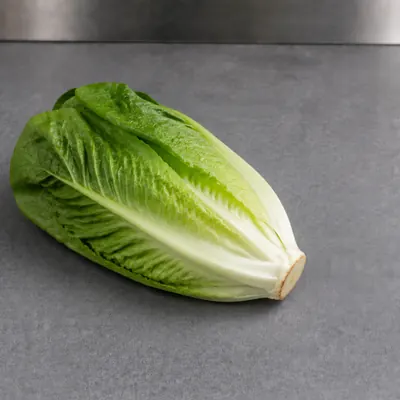
Romaine Lettuce
Crisp salad lettuce providing vitamin K, folate and carotenoids
Dietary precursorRomaine Lettuce → provides Beta-carotene → Cleavage to retinal, then oxidation to retinoic acid → Retinoic acid
Raw romaine records 5,226 µg beta-carotene and 436 µg RAE vitamin A per 100 g. The dominant precursor is beta-carotene. The food is not recorded as containing retinoic acid.
Spinach
Leafy green rich in iron, magnesium, folate, and carotenoids
Dietary precursorSpinach → provides Beta-carotene → Cleavage to retinal, then oxidation to retinoic acid → Retinoic acid
Raw spinach records 5,626 µg beta-carotene and 469 µg RAE vitamin A per 100 g. The dominant precursor is beta-carotene. The food is not recorded as containing retinoic acid.
Sweet Potatoes
Root vegetable rich in beta-carotene, fibre, and potassium
Dietary precursorSweet Potatoes → provides Beta-carotene → Cleavage to retinal, then oxidation to retinoic acid → Retinoic acid
Raw sweet potato records 8,509 µg beta-carotene and 709 µg RAE vitamin A per 100 g. The dominant precursor is beta-carotene. The food is not recorded as containing retinoic acid.
Swiss Chard
Leafy green rich in iron, magnesium, folate, and carotenoids
Dietary precursorSwiss Chard → provides Beta-carotene → Cleavage to retinal, then oxidation to retinoic acid → Retinoic acid
Raw Swiss chard records 3,647 µg beta-carotene and 306 µg RAE vitamin A per 100 g. The dominant precursor is beta-carotene. The food is not recorded as containing retinoic acid.
References
[1] Duester (2008). Retinoic acid synthesis and signaling during early organogenesis. Retinol is oxidised to retinaldehyde and then to retinoic acid; the second step is irreversible, and CYP26 enzymes clear the acid. Tissue signalling is local, not a circulating vitamin A result.
[2] Harrison (2012). Mechanisms involved in the intestinal absorption of dietary vitamin A and provitamin A carotenoids. Dietary vitamin A is absorbed as retinol and retinyl esters. Provitamin A carotenoids such as beta-carotene can be cleaved to retinal. The review is about absorption and cleavage, not a measurement of retinoic acid in food.