Nicotinamide mononucleotide
Overview
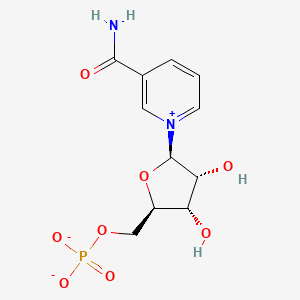
Oxidised beta-NMN is the phosphorylated intermediate connecting NRK activity with NMN adenylyltransferase in a supported NAD-salvage route [1,2]. It is distinct from reduced NMNH.
Dietary Context
This record resolves an endogenous conversion intermediate. It creates no oral NMN admission, food-content relationship or effective dietary dose.
Foods
Recipes
Biological Regulatory Systems
See the evidence-qualified precursor pathways connected to NAD metabolism. An intermediate or target identity does not create a dietary admission.
References
[1] UniProt Consortium (2026). Human NRK1, Q9NWW6. Entry version 170, retrieved 26 October 2026. Rhea 14017 includes oxidised beta-NMN (CHEBI:14649).
[2] UniProt Consortium (2026). Human NMNAT1, Q9HAN9. Entry version 202, Rhea 21360, retrieved 26 October 2026. Reaction provenance.
Foods supply the named dietary input. They are not shown as containing the downstream metabolite. Conversion evidence does not establish a new downstream PM admission, effective dose or equivalent food intervention.
Nicotinamide riboside → Human NRK1 phosphorylates beta-NR to beta-NMN using ATP. → Nicotinamide mononucleotide
BRS4-FM1-PM2: Maintain NAD⁺ availability so redox reactions and mitochondrial signalling stay adequately powered.
Existing admission: Type A / derived; versioned-assessment. Production context for an already admitted substrate; no new metabolite-to-PM relationship is admitted.
Supplemental NR chloride at 100–1000 mg is not an effective milk dose. Blood responses do not establish neuronal or mitochondrial NAD delivery, redox flux, superiority to adequate niacin or clinical benefit. Intestinal metabolism and tissue salvage can differ from the displayed intracellular NRK route; other NAD precursors remain alternatives.
- Milk — supplies Nicotinamide riboside; verified; form not known. Raw cow milk from individual cows and commercial cow-milk samples, including skim milk
Composition provenance
An established intracellular route is not proof that all oral NR reaches each tissue intact; parallel degradation/salvage can contribute.
Dependencies: Functional NRK activity; ATP and divalent-metal availability; Tissue access to intact NR