L-Carnitine
Overview
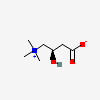
L-carnitine is the naturally relevant carnitine stereoisomer. It accepts and releases fatty-acyl groups in the shuttle that moves long-chain fatty-acid substrates into mitochondria for oxidation. Human carnitine palmitoyltransferase 1A (CPT1A) functional experiments support this transport machinery's role [1]. Reaction annotation independently identifies the L/(R)-carnitine substrate: UniProt P50416, P23786 and Rhea 12661, retrieved 23 October 2026.
This identity is distinct from D-carnitine, acetyl-L-carnitine and the L-carnitine-L-tartrate experimental formulation. It does not establish a need to increase intake, nor a brain-health or ADHD benefit.
Dietary Context
Endogenous synthesis and dietary supply both contribute to carnitine availability. Radioisotopic food analysis measured free L-carnitine in meat samples, including beef and lamb [2]. Those qualitative composition observations support dietary supply of the same substrate; no serving quantity or effect on muscle transport is inferred. The precise cuts and preparations remain unresolved in the retrieved publisher text.
A separate 24-week human trial used L-carnitine-L-tartrate plus carbohydrate and measured muscle carnitine and exercise metabolism [3]. Its formulation and co-exposure cannot be treated as an effect of ordinary meat or dairy foods. Food-composition candidates await independent structured-relationship verification.
Foods
Recipes
Biological Regulatory Systems
| Biological Regulatory System | Evidence-qualified relationship | Evidence |
|---|---|---|
| Mitochondrial Function & Bioenergetics | Supports the substrate capacity of the long-chain fatty-acyl shuttle. Dietary delivery is distinct from an intervention effect or clinical benefit. | Human CPT1A functional experiments [1]; food-composition study [2]; formulation-specific human trial [3]. |
References
[1] Gobin et al. (2003). Functional and structural basis of carnitine palmitoyltransferase 1A deficiency. Journal of Biological Chemistry. https://doi.org/10.1074/jbc.M310130200
[2] Demarquoy et al. (2004). Radioisotopic determination of l-carnitine content in foods commonly eaten in Western countries. Food Chemistry 86:137–142. https://doi.org/10.1016/j.foodchem.2003.09.023
[3] Wall et al. (2011). Chronic oral ingestion of L-carnitine and carbohydrate increases muscle carnitine content and alters muscle fuel metabolism during exercise in humans. Journal of Physiology. https://doi.org/10.1113/jphysiol.2010.201343