Chocolate Quinoa Crisp Clusters
Overview
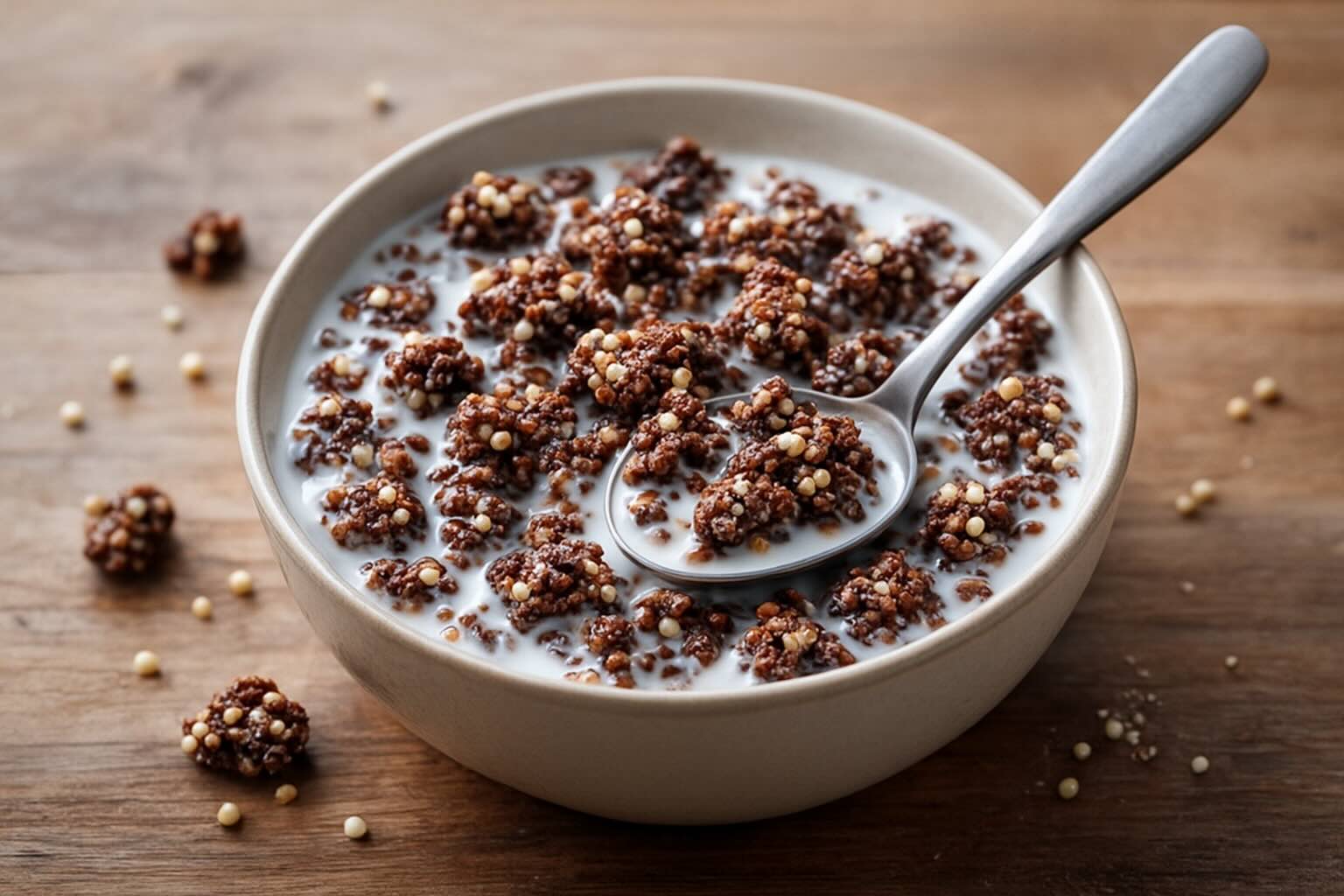
A delicious cereal-to-snack hybrid that delivers satisfying crunch and steady energy. Made with whole quinoa grains, ground flaxseed, and a touch of coconut oil, these clusters offer a low glycemic profile perfect for sustained focus and energy. Enjoy them as a breakfast cereal with milk, or grab a handful for a wholesome snack anytime.
Ingredients
Core
- 2 cups (480 ml) cooked quinoa, cooled & surface-dried
- 2 tbsp homemade oat flour (finely blended rolled oats)
- 1 tbsp (15 ml) ground flaxseed
- 2–3 tbsp unsweetened cocoa or cacao powder
- ¼ tsp fine sea salt
Wet binder
- 1–2 tbsp refined coconut oil, melted (35–45 °C)
- 2–2.5 tbsp maple syrup or date syrup
- 1 tsp (5 ml) vanilla extract
Optional texture boosters
- 2–3 tbsp puffed quinoa, for surface coating
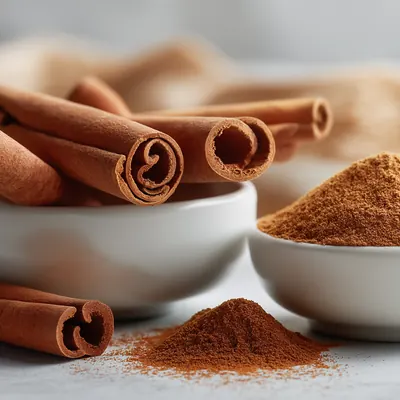
- ½ tsp cinnamon
- 1–2 tbsp hemp hearts (protein upgrade)
Method
-
Cook & cool the quinoa: Rinse quinoa thoroughly. Cook using 2:1 water : quinoa ratio until tender. Drain well. Spread quinoa onto a tray and let it air-dry 10–20 minutes. This reduces surface moisture and preserves the grain's outer wall, which is key for cluster crunch.
-
Mix the dry ingredients: In a large bowl, combine quinoa (whole, not blended), oat flour, ground flax, cocoa/cacao, and salt. Fold gently until distributed. Avoid mashing — intact grains provide microstructure and aeration.
-
Add the wet binder: Melt coconut oil (35–45 °C — not smoking). Stir maple/date syrup + vanilla into the oil. Pour into the bowl and fold until coated. The coconut oil coats the surface of the clusters and crystallises as it cools, forming a thin lipid shell that reduces moisture absorption and helps maintain the cereal-style crunch.
-
Form clusters: Scoop ½ tbsp (6–8 g) portions. Lightly compress into loose clusters — not spheres. Place on a parchment-lined tray with 2 cm spacing. Small clusters offer a higher surface-to-volume ratio, leading to stronger cereal-type crunch.
-
Bake low + slow: 165 °C (325 °F) — 45–55 min. Rotate tray halfway. They should smell like chocolate cereal, not brownies. The aim is dehydration, not caramelisation.
-
Cool fully: Rest 20–30 minutes. As the clusters cool, the lipid shell sets and the internal structure stabilises.
-
Puffed quinoa finish (optional): Place puffed quinoa in a bowl. Roll or pat the cooled clusters over the surface. This preserves the identity of puffed grains and prevents them from softening during baking.
Extra Guidance
⚠️ Do not blend cooked quinoa: Blending destroys grain walls resulting in a fudge texture. You lose aeration and crunch.
Storage: Airtight container: 7–10 days room temp. Refrigerated: max crunch retention.
Serving: Dry as a snack, as cereal with milk / oat milk / coconut milk, or mixed into granola or yogurt bowls.
Nutrition
~180–220 kcal per 30g serving · 6–8g protein · high fiber · low glycemic · moderate polyphenols
Brain Health Notes
- Quinoa provides complete plant protein with all essential amino acids.
- Flax seeds contribute ALA omega-3, soluble fibre (mucilage), and lignans — nutrients and compounds associated with gut health.
- Cocoa/cacao provides polyphenols (flavanols) studied for antioxidant and vascular effects.
- Coconut oil provides medium-chain triglycerides; its crystallisation on cooling helps create the cluster texture.
- Whole grains and minimal added sugars give a lower glycemic profile than refined cereals.
Foods/Substances
6 foods in this recipe


Coconut Oil
MCTs for rapid brain energy and ketone production
Substances: Capric Triglyceride (Tridecanoin), Caproic Triglyceride (Tricaproin), Caprylic Triglyceride (Trioctanoin), MCT (Medium-Chain Triglycerides)

Flax Seeds
ALA omega-3 and soluble fiber source
Substances: ALA (Alpha-Linolenic Acid), Linoleic Acid (LA, n-6), Magnesium, Manganese


Quinoa
Pseudograin with magnesium, iron, and balanced plant protein
Substances: Choline, Histidine, Iron, Isoleucine, Leucine, Lysine, Magnesium, Manganese, Methionine, Phenylalanine, Threonine, Tryptophan, Valine, Vitamin B1 (Thiamine), Vitamin B2 (Riboflavin), Vitamin B6 (Pyridoxine → PLP), Vitamin B9 (Folate; 5-MTHF), Zinc
Recipe nutrition
Figures are still calculated from USDA-based nutrient data on each food page (per 100 g). For this recipe we have not yet added ingredient weights, so the table adds one full “100 g” slice of each linked food, not the grams actually used (which would misrepresent small amounts like herbs, spices, or oil). When portion sizes are added for the recipe, the same panels are multiplied by the real amounts—so the maths can be precise for every ingredient.
| Nutrient / class | Foods in recipe | Total (100 g per linked food) | % RDA aggregate |
|---|---|---|---|
| Core nutrition | |||
| Energy | Cinnamon, Cocoa, Coconut Oil, Flax Seeds, Oats, Quinoa | 3291 kcal | — |
| Protein* | Cinnamon, Cocoa, Coconut Oil, Flax Seeds, Oats, Quinoa | 53.7 g | 44.7-89.4%* |
| Total fat | Cinnamon, Cocoa, Coconut Oil, Flax Seeds, Oats, Quinoa | 260.3 g | — |
| Saturated fat | Cinnamon, Cocoa, Coconut Oil, Flax Seeds, Oats, Quinoa | 158.1 g | — |
| Carbohydrates | Cinnamon, Cocoa, Coconut Oil, Flax Seeds, Oats, Quinoa | 207.2 g | — |
| Sugars | Oats | 1.0 g | — |
| Fibre | Cinnamon, Cocoa, Coconut Oil, Flax Seeds, Oats, Quinoa | 48.9 g | — |
| Key micronutrients | |||
| Iron | Cinnamon, Cocoa, Flax Seeds, Oats, Quinoa | 17.3 mg | 96.4% |
| Zinc | Cinnamon, Cocoa, Flax Seeds, Oats, Quinoa | 10.8 mg | 98.5% |
| Magnesium | Cinnamon, Cocoa, Flax Seeds, Oats, Quinoa | 738.3 mg | 175.8% |
| Selenium | Cinnamon, Cocoa, Flax Seeds, Oats, Quinoa | 72.2 µg | 131.2% |
| Calcium | Cinnamon, Cocoa, Flax Seeds, Oats, Quinoa | 426.5 mg | 42.7% |
| Potassium | Cinnamon, Cocoa, Flax Seeds, Oats, Quinoa | 1824.1 mg | 53.6% |
| Copper | Oats | 0.4 mg | 44.4% |
| Choline | Cinnamon, Cocoa, Flax Seeds, Oats, Quinoa | 194.6 mg | 35.4% |
| Folate | Cinnamon, Cocoa, Flax Seeds, Oats, Quinoa | 362.0 µg | 90.5% |
| Vitamin B12 | Cinnamon, Cocoa, Quinoa | 0.0 µg | 0.0% |
| Vitamin B6 | Cinnamon, Cocoa, Oats, Quinoa | 0.6 mg | 38.2% |
| Vitamin E | Flax Seeds, Oats | 0.7 mg | 4.8% |
| Vitamin K | Flax Seeds, Oats | 6.9 µg | 5.8% |
| Bioactive compounds | |||
| ALA | Cocoa, Flax Seeds, Oats, Quinoa | 25488.0 mg | — |
| EPA | Cinnamon, Cocoa, Oats, Quinoa | 0.0 mg | — |
| DHA | Cinnamon, Cocoa, Oats, Quinoa | 47.0 mg | — |
| Total omega-3 | Cinnamon, Cocoa, Oats, Quinoa | 2035.0 mg | — |
| Polyphenols (proxy) | — | — | — |
Aggregate %RDA uses adult reference intakes and the summed food-level values shown above.
* Protein is shown as a range, benchmarked to 1.2 g/kg/day using a 50-100 kg reference adult range.
Biological Target Matrix
Gut–Brain Axis & Enteric Nervous System (ENS)
| Substance | Contribution Level | Foods | Mechanism of Action |
|---|---|---|---|
| Choline | Contextual / minor contributor | Choline is metabolised by gut bacteria; some strains (e.g. Lactobacillus) can produce acetylcholine. Microbial choline metabolism (e.g. trimethylamine) shows inter-individual variability and may influence host metabolism and gut–brain signalling. |
Inflammation & Oxidative Stress
| Substance | Contribution Level | Foods | Mechanism of Action |
|---|---|---|---|
| Choline | Contextual / minor contributor | Choline-derived betaine supports homocysteine remethylation; elevated homocysteine is linked to oxidative stress and inflammatory signalling. Phosphatidylcholine supports membrane integrity and cell signalling in immune and redox contexts. |
Insulin Response
| Substance | Contribution Level | Foods | Mechanism of Action |
|---|---|---|---|
| Cinnamaldehyde | Contextual / minor contributor | Supports glycemic control and improves insulin sensitivity; contributes to cinnamon's glucose regulation effects | |
| Magnesium | Contextual / minor contributor | Supports insulin sensitivity and glucose metabolism; magnesium deficiency is associated with insulin resistance; supports enzymes involved in glucose metabolism | |
| Vitamin B1 (Thiamine) | Contextual / minor contributor | Supports glucose metabolism and insulin sensitivity through mitochondrial function |
Metabolic & Neuroendocrine Stress (HPA Axis & ANS)
| Substance | Contribution Level | Foods | Mechanism of Action |
|---|---|---|---|
| Choline | Contextual / minor contributor | Choline supports hepatic VLDL assembly and lipid export; methyl donors (choline, betaine) may influence adenosine metabolism and HPA axis activity. Adequate choline status supports metabolic stability and stress physiology. |
Methylation & One-Carbon Metabolism
| Substance | Contribution Level | Foods | Mechanism of Action |
|---|---|---|---|
| Choline | Contextual / minor contributor | Precursor to trimethylglycine (TMG/betaine), a dietary methyl donor that helps recycle homocysteine to methionine via an alternative pathway; supports one-carbon metabolism alongside folate, riboflavin, and B12; influences methylation dynamics relevant to MTHFR and COMT activity |
Mitochondrial Function & Bioenergetics
| Substance | Contribution Level | Foods | Mechanism of Action |
|---|---|---|---|
| Choline | Contextual / minor contributor | Phosphatidylcholine and other choline-containing phospholipids support mitochondrial membrane integrity and energy metabolism; choline-derived betaine contributes to one-carbon status that can influence mitochondrial resilience |
Neurotransmitter Regulation
| Substance | Contribution Level | Foods | Mechanism of Action |
|---|---|---|---|
| Capric Triglyceride (Tridecanoin) | Contextual / minor contributor | Ketones produced from capric triglyceride provide ATP through mitochondrial metabolism; ATP is essential for neurotransmitter synthesis, release, and reuptake, indirectly supporting neurochemical balance by ensuring adequate energy for neuronal function | |
| Caproic Triglyceride (Tricaproin) | Contextual / minor contributor | Ketones produced from caproic triglyceride provide ATP through mitochondrial metabolism; ATP is essential for neurotransmitter synthesis, release, and reuptake, indirectly supporting neurochemical balance by ensuring adequate energy for neuronal function | |
| Caprylic Triglyceride (Trioctanoin) | Contextual / minor contributor | Ketones produced from caprylic triglyceride provide ATP through mitochondrial metabolism; ATP is essential for neurotransmitter synthesis, release, and reuptake, indirectly supporting neurochemical balance by ensuring adequate energy for neuronal function | |
| Choline | Contextual / minor contributor | Essential precursor for acetylcholine synthesis, supporting memory, learning, and neuroplasticity; supports membrane phospholipid biosynthesis (PC) which is critical for membrane fluidity and neurotransmitter receptor function; phospholipid methylation (PLM) alters membrane structure, facilitating faster neuronal recovery and influencing ion channel behavior in gamma oscillations linked to attention and cognition | |
| Copper | Contextual / minor contributor | Cofactor in dopamine β-hydroxylase, supporting catecholamine synthesis; supports norepinephrine synthesis | |
| Iron | Contextual / minor contributor | Essential cofactor for tyrosine hydroxylase, the rate-limiting enzyme in the conversion of tyrosine to dopamine; critical for catecholamine synthesis | |
| Magnesium | Contextual / minor contributor | Broad cofactor for neurotransmitter synthesis and receptor modulation (e.g., NMDA, GABA); functions as an NMDA receptor antagonist and GABA receptor modulator; assists enzymes involved in synthesis of dopamine and serotonin | |
| MCT (Medium-Chain Triglycerides) | Contextual / minor contributor | Ketones produced from MCTs provide ATP through mitochondrial metabolism; ATP is essential for neurotransmitter synthesis, release, and reuptake, indirectly supporting neurochemical balance by ensuring adequate energy for neuronal function | |
| Phenylalanine | Contextual / minor contributor | Essential amino acid that converts to tyrosine and supports catecholamine synthesis (dopamine, norepinephrine); participates in LAT1 competition at the blood-brain barrier | |
| Tryptophan | Contextual / minor contributor | Precursor for serotonin and melatonin; brain entry competes at LAT1 with other large neutral amino acids (LNAAs); carbohydrate-rich, low-protein meals raise the plasma tryptophan:LNAA ratio because insulin pushes competing LNAAs out to muscles; can feed NAD+ synthesis via the kynurenine pathway | |
| Vitamin B6 (Pyridoxine → PLP) | Contextual / minor contributor | Cofactor for synthesis of dopamine, serotonin, GABA, and glutamate; supports rate-limiting steps in catecholamine synthesis; requires PDXK activation with magnesium and ATP support | |
| Vitamin B9 (Folate; 5-MTHF) | Contextual / minor contributor | Supports neurotransmitter synthesis through methylation; cofactor for dopamine synthesis alongside iron, B6, and omega-3s | |
| Zinc | Contextual / minor contributor | Important for DNA synthesis, cell division, and neurotransmitter regulation, particularly in modulating dopamine—a key neurotransmitter implicated in ADHD; acts as an allosteric modulator of the GABA receptor; supports glutamate regulation |
Oxidative Stress
| Substance | Contribution Level | Foods | Mechanism of Action |
|---|---|---|---|
| ALA (Alpha-Linolenic Acid) | Contextual / minor contributor | Essential omega-3 fatty acid; contributes to antioxidant and membrane support | |
| Copper | Contextual / minor contributor | Included in antioxidant enzyme networks; interacts with iron metabolism affecting oxidative stress | |
| Linoleic Acid (LA, n-6) | Contextual / minor contributor | Essential fatty acid; balance with omega-3s is emphasized for optimal inflammatory tone | |
| Manganese | Contextual / minor contributor | Essential cofactor for MnSOD (SOD2), supporting detoxification of superoxide within the mitochondrial matrix | |
| Selenium | Contextual / minor contributor | Supports glutathione peroxidase (GPx) and other antioxidant systems, protecting membranes and mitochondria from oxidative damage | |
| Zinc | Contextual / minor contributor | Essential mineral that serves as a cofactor for antioxidant enzymes; works synergistically with other antioxidants; heavy metals are detoxified by metallothionein (MT) metal carrier proteins that must bind with zinc and copper |