Phenylalanine
Overview
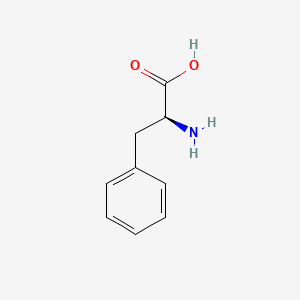
Phenylalanine is an essential amino acid in dietary protein. Phenylalanine hydroxylase converts it to tyrosine, and tyrosine hydroxylase converts tyrosine to L-DOPA upstream of dopamine [1]. A separate decarboxylation can form the trace amine β-phenylethylamine. Phenylalanine also competes with other large neutral amino acids at LAT1 [2]. Transport is assessed on BRS1-FM1-PM2 — LAT1 Competitive Transport Modulation, and the tyrosine route on BRS1-FM1-PM3 — Dopaminergic Signalling Regulation.
Sets out the hydroxylase, phenylethylamine and LAT1 reactions, and separates direct enzyme cofactors from folate and omega-3 fatty acids.
Collects the ADHD evidence: small studies reported lower urinary phenylethylamine [3], a larger study found no general aromatic amino-acid difference [4], and supplemental DL-phenylalanine did not give a sustained benefit [5].
Dietary Context
Food sources
Phenylalanine is an indispensable amino acid supplied in dietary protein. The Foods list records foods that carry a phenylalanine relationship.
Supplement versus food
Protein supplies L-phenylalanine. DL-phenylalanine tablets are a separate, concentrated exposure. The adult crossover and the later L-phenylalanine trial are in Therapeutic Area Research.
Synergies and interactions
At LAT1, phenylalanine competes with tyrosine, tryptophan and the other large neutral amino acids. Brain uptake follows the plasma ratio [2].
Research Spotlights & Evidence Checks
Foods
Recipes
Biological Regulatory Systems
| Biological Regulatory System | Evidence-qualified relationship | Evidence |
|---|---|---|
| Neurotransmitter Regulation (BRS1) | Peripheral phenylalanine-to-tyrosine conversion replenishes circulating tyrosine for LAT1 and dopamine synthesis. The accepted limit is that this conversion does not establish higher neuronal dopamine output or a benefit from extra phenylalanine. | [1,2] |
References
[1] Møller et al. (2000). The kidney is an important site for in vivo phenylalanine-to-tyrosine conversion in adult humans: A metabolic role of the kidney. Human phenylalanine-to-tyrosine conversion supporting the conversion Spotlight and the BRS1 precursor relationship. Extra phenylalanine is outside the claim.
[2] Fernstrom (2013). Large neutral amino acids: dietary effects on brain neurochemistry and function. Large-neutral-amino-acid competition at brain transport, including phenylalanine. A plasma ratio is not an ADHD treatment result.
[3] Baker et al. (1991). Phenylethylaminergic mechanisms in attention-deficit disorder. Observational comparison of 26 children with ADHD and 18 controls: lower urinary phenylethylamine and lower plasma phenylalanine and tyrosine. Supports the ADHD Evidence Check without showing a nutritional deficiency.
[4] Bergwerff et al. (2016). No tryptophan, tyrosine and phenylalanine abnormalities in children with attention-deficit/hyperactivity disorder. Larger null comparison of blood-spot and urinary aromatic amino acids, used in the ADHD Evidence Check.
[5] Wood, Reimherr and Wender (1985). Treatment of attention deficit disorder with DL-phenylalanine. Short adult crossover of supplemental DL-phenylalanine supporting the Evidence Check: benefits were not sustained, and open L-phenylalanine had no clinical effect.
Advanced Nutrition
Curated reaction records identify participants and cofactors. They are not bibliography papers, and they do not establish a dietary dose, a limiting intake in ordinary humans, or a clinical effect.
Phenylalanine to tyrosine and the catecholamines
Human phenylalanine hydroxylase (UniProtKB P00439; EC 1.14.16.1) hydroxylates L-phenylalanine to L-tyrosine. The curated reaction uses (6R)-L-erythro-5,6,7,8-tetrahydrobiopterin and molecular oxygen and releases L-tyrosine plus 4a-hydroxy-tetrahydrobiopterin (Rhea RHEA:20273). Ferrous iron is the curated cofactor. Fanet et al. review the same tetrahydrobiopterin chemistry [1].
Human tyrosine hydroxylase (UniProtKB P07101; EC 1.14.16.2) then converts L-tyrosine to L-DOPA, the rate-limiting step toward dopamine, noradrenaline and adrenaline (Rhea RHEA:18201, physiological direction RHEA:18202). Ferrous iron is again the curated cofactor, and tetrahydrobiopterin is the pterin substrate of the reaction. Aromatic L-amino acid decarboxylase (UniProtKB P20711; EC 4.1.1.28) decarboxylates L-DOPA to dopamine (Rhea RHEA:12272). Its curated cofactor is pyridoxal 5′-phosphate.
Vitamin B6 is the dietary source of that pyridoxal 5′-phosphate cofactor. Folate stays in upstream one-carbon and pterin context, outside the cofactor set of phenylalanine hydroxylase, tyrosine hydroxylase and aromatic L-amino acid decarboxylase. Folate does not synthesise tetrahydrobiopterin. Omega-3 fatty acids stay in membrane and signalling context, outside the substrate and cofactor set of these enzymes.
Phenylalanine to β-phenylethylamine
L-phenylalanine can be decarboxylated to 2-phenylethylamine and carbon dioxide. Rhea records that reaction as RHEA:19718 under phenylalanine decarboxylase, EC 4.1.1.53. Mammalian accounts place the same conversion on aromatic L-amino acid decarboxylase, the pyridoxal 5′-phosphate enzyme above. The curated human decarboxylase entry lists L-DOPA and 5-hydroxytryptophan (Rhea RHEA:18533) as its catalytic substrates. It does not list phenylalanine among those catalytic activities. The phenylethylamine route is a curated reaction. Assigning it specifically to human aromatic L-amino acid decarboxylase remains the usual mammalian account, rather than a catalytic line on UniProtKB P20711.
β-Phenylethylamine is a trace amine. Human trace amine-associated receptor 1 (UniProtKB Q96RJ0) recognises it among endogenous amine metabolites. That recognition comes from experimental and structural work. It does not show that a meal, or a higher phenylalanine intake, changes phenylethylamine signalling in the human brain.
Human monoamine oxidase B (UniProtKB P27338) preferentially degrades benzylamine and phenylethylamine. The curated reaction oxidises 2-phenylethylamine with oxygen and water to 2-phenylacetaldehyde, hydrogen peroxide and ammonium (Rhea RHEA:25265). FAD is the cofactor. Phenylethylamine formed from phenylalanine is cleared by this preferred route. Precursor supply and a change in brain phenylethylamine signalling remain separate claims.
LAT1 competition
Human LAT1 (SLC7A5; UniProtKB Q01650) forms a heterodimer with SLC3A2 and exchanges large neutral amino acids across the membrane, including phenylalanine, tyrosine, tryptophan, leucine, isoleucine, valine, histidine and methionine. Phenylalanine competes with the other members of that pool, including the tyrosine it helps to replenish. The accepted transport account, and its limit, remain on the LAT1 primary mechanism. This page adds no dietary lever.
Curated reaction records
- UniProtKB P00439; Rhea RHEA:20273. Human phenylalanine hydroxylase; tetrahydrobiopterin- and iron-dependent formation of tyrosine.
- UniProtKB P07101; Rhea RHEA:18201 and RHEA:18202. Human tyrosine hydroxylase; tetrahydrobiopterin- and iron-dependent formation of L-DOPA.
- UniProtKB P20711; Rhea RHEA:12272 and RHEA:18533. Human aromatic L-amino acid decarboxylase; pyridoxal 5′-phosphate-dependent formation of dopamine and serotonin. Phenylalanine is not a listed catalytic substrate.
- Rhea RHEA:19718. Curated decarboxylation of L-phenylalanine to 2-phenylethylamine; EC 4.1.1.53.
- UniProtKB P27338; Rhea RHEA:25265. Human monoamine oxidase B oxidation of 2-phenylethylamine.
- UniProtKB Q96RJ0. Trace amine-associated receptor 1 recognition of β-phenylethylamine.
- UniProtKB Q01650. Human LAT1 large-neutral-amino-acid exchange, including phenylalanine.
Papers
[1] Fanet et al. (2021). Tetrahydrobiopterin (BH4) Pathway: From Metabolism to Neuropsychiatry. Tetrahydrobiopterin as the cofactor for aromatic amino-acid hydroxylases. This is cofactor biochemistry, not an ADHD trial.
Therapeutic Area Research
This panel is the condition evidence for phenylalanine and β-phenylethylamine. It is not a treatment protocol, a dietary admission, or a new primary mechanism. Therapeutic-area pages are not linked from here.
ADHD evidence matrix
| Therapeutic area | Observational evidence | Mechanistic relevance | Intervention evidence | Framework status |
|---|---|---|---|---|
| ADHD | Baker 1991: lower urinary phenylethylamine and lower plasma phenylalanine and tyrosine in 26 children with ADHD than in 18 controls. Urinary phenylalanine and tyrosine were not lower (1). Bergwerff 2016: no significant blood-spot or urinary aromatic amino-acid difference in 83 children with ADHD and 72 controls, and no symptom association (2). Kusaga 2002: lower urinary phenylethylamine in 37 children with ADHD than in 21 controls (4). | Phenylalanine is a tyrosine precursor and a biochemical phenylethylamine precursor. Urinary phenylethylamine is a peripheral measure. | Wood 1985: short adult crossover of DL-phenylalanine was mixed and unsustained; open L-phenylalanine had no clinical effect (3). Kusaga 2002: urinary phenylethylamine rose after methylphenidate in 18 responders and did not rise in 4 nonresponders. That change is not evidence of causal mediation (4). | Scassellati 2012: phenylethylamine was not a Bonferroni-significant diagnostic comparison. Urinary phenylethylamine is not an individual diagnostic test (5). |
Lower peripheral measures in a small comparison
Baker and colleagues measured 24-hour urinary β-phenylethylamine, phenylacetic acid, phenylalanine and tyrosine, and plasma phenylacetic acid, phenylalanine and tyrosine, in 18 children without ADHD and 26 children with attention-deficit hyperactivity disorder ([1]). Participants were drug-free and followed a low-amine diet around collection. Urinary free and total phenylethylamine, expressed per gram of creatinine, were lower in the ADHD group. Urinary phenylalanine, tyrosine and phenylacetic acid were not significantly different. Plasma phenylalanine and tyrosine were lower in the ADHD group. Plasma phenylacetic acid was not.
This is a small observational comparison of peripheral specimens. A lower plasma concentration is not a demonstrated nutritional deficiency, and urinary phenylethylamine is not a measure of brain phenylethylamine signalling.
No general aromatic amino-acid difference in a larger sample
Bergwerff and colleagues compared 83 children with ADHD, aged 6–13 years, with 72 typically developing children ([2]). They measured tryptophan, tyrosine and phenylalanine in dried blood spots and in an 18-hour urine collection, and estimated protein intake from a three-day diary. Blood-spot and urinary concentrations did not differ significantly between groups. The amino acids were not significantly associated with ADHD symptom ratings or with symptoms of oppositional defiant disorder, conduct disorder or autism spectrum disorder. Protein intake did not differ.
One exploratory threshold is separate from that null group result. A blood-spot phenylalanine concentration below the 16th percentile had an odds ratio of 2.22 for an ADHD diagnosis (95% CI 0.92–5.73, p = 0.07). That result was not statistically significant. The authors also noted that the study could miss a small effect, and they suggested, without testing it, that children with severe executive-function deficits might differ. The untested suggestion does not overturn the null group finding.
DL-phenylalanine supplementation is a different exposure
Wood, Reimherr and Wender enrolled 19 adults with residual-type attention deficit disorder in a two-week double-blind crossover of DL-phenylalanine against placebo. Thirteen completed it ([3]). The mean global rating of improvement approached significance. Mood and mood lability improved significantly. Responders who continued on open DL-phenylalanine lost those benefits within three months. A later open trial of L-phenylalanine produced no clinical effect. The authors interpreted the short signal as a property of the D-isomer.
DL-phenylalanine in a supplement is not ordinary dietary L-phenylalanine from protein. The trial does not show that raising dietary phenylalanine corrects ADHD symptoms.
Urinary phenylethylamine, medication response, and biomarker review
Kusaga and colleagues found lower urinary β-phenylethylamine in 37 children with ADHD than in 21 controls ([4]). Twenty-two of the children were then treated with methylphenidate: urinary phenylethylamine rose in the 18 responders and did not rise in the 4 nonresponders. A change after a stimulant is not evidence that phenylethylamine mediated the clinical response, and it is not evidence that dietary phenylalanine would reproduce it.
Scassellati and colleagues systematically reviewed peripheral ADHD biomarkers and meta-analysed eligible drug-naive or drug-free case-control comparisons ([5]). After Bonferroni correction, the comparisons that differentiated ADHD from controls were norepinephrine, MHPG, monoamine oxidase, zinc and cortisol. β-Phenylethylamine was not in that diagnostic set. It was among the markers the authors judged to have support in medication-response studies. The review concluded that further work would be needed before any of these markers was precise enough for clinical use. Urinary phenylethylamine is not a validated test for diagnosing ADHD in an individual.
Reading the evidence together
Phenylalanine is an essential biochemical precursor of tyrosine and a biochemical precursor of β-phenylethylamine. Phenylethylamine metabolism is relevant to monoaminergic biology because monoamine oxidase B clears it and trace amine-associated receptor 1 can recognise it. Some small ADHD studies found lower peripheral phenylethylamine or lower plasma aromatic amino acids. A larger later study did not reproduce a general phenylalanine, tyrosine or tryptophan difference, and it found no association with symptom severity. Increasing dietary phenylalanine has not been shown to correct ADHD symptoms. A difference in blood or urine is not, by itself, evidence of nutritional deficiency.
References
[1] Baker et al. (1991). Phenylethylaminergic mechanisms in attention-deficit disorder. Observational comparison of 26 children with ADHD and 18 controls: lower urinary phenylethylamine and lower plasma phenylalanine and tyrosine. Urinary phenylalanine and tyrosine were not lower.
[2] Bergwerff et al. (2016). No tryptophan, tyrosine and phenylalanine abnormalities in children with attention-deficit/hyperactivity disorder. Null group comparison of blood-spot and urinary aromatic amino acids in 83 children with ADHD and 72 controls, with one non-significant exploratory threshold.
[3] Wood, Reimherr and Wender (1985). Treatment of attention deficit disorder with DL-phenylalanine. Small adult crossover of supplemental DL-phenylalanine. Benefits were not sustained, and open L-phenylalanine had no clinical effect.
[4] Kusaga et al. (2002). Increased urine phenylethylamine after methylphenidate treatment in children with ADHD. Lower urinary phenylethylamine in 37 children with ADHD than in 21 controls, then a rise after methylphenidate in 18 responders and not in 4 nonresponders. Not evidence of causal mediation.
[5] Scassellati et al. (2012). Biomarkers and attention-deficit/hyperactivity disorder: a systematic review and meta-analyses. Phenylethylamine was not one of the five Bonferroni-significant diagnostic comparisons. Medication-response support does not make it an individual diagnostic test.
BRS matrix — individual KC inputs
| BRS / PM | Relationship | Biological role and limitation |
|---|---|---|
| BRS1 · BRS1-FM1-PM3 BRS1(KC1) | Supported upstream supply | Phenylalanine is hydroxylated to tyrosine in peripheral tissues, replenishing the circulating tyrosine available to LAT1 transport upstream of dopamine synthesis. Limitation: Human peripheral conversion supplies circulating tyrosine; neuronal delivery uses the separately supported transport chain. This does not establish increased dopamine/noradrenaline output, a limiting intake or benefit from extra phenylalanine. Hydroxylation, renal/hepatic function and LNAA competition matter; high phenylalanine is not interchangeable with tyrosine. Møller et al. (2000) [31] Wurtman et al. (1974) [32] Fernstrom (2013) [30] |
| BRS1 · BRS1-FM1-PM4 BRS1(KC1) | Supported upstream supply | Phenylalanine is hydroxylated to tyrosine in peripheral tissues, replenishing the circulating tyrosine available to LAT1 transport upstream of noradrenaline synthesis. Limitation: Human peripheral conversion supplies circulating tyrosine; neuronal delivery uses the separately supported transport chain. This does not establish increased dopamine/noradrenaline output, a limiting intake or benefit from extra phenylalanine. Hydroxylation, renal/hepatic function and LNAA competition matter; high phenylalanine is not interchangeable with tyrosine. Møller et al. (2000) [25] Wurtman et al. (1974) [26] Fernstrom (2013) [2] |