Pelargonidin
Overview
Pelargonidin is one of the principal anthocyanidin structures found within dietary anthocyanins and occurs predominantly in foods as glycosylated derivatives rather than as free pelargonidin.
It is the dominant anthocyanidin backbone in strawberries and also appears in raspberries and pomegranate. Strawberry, raspberry, and pomegranate interventions are not evidence of an isolated-pelargonidin effect.
No single glycoside is treated here as a general preferred research form across all pelargonidin-containing foods.
Recipes
2 recipes containing this substance

Roast Duck Breast with Berry Sauce
A rich main dish built around crisp-skinned duck breast with a bright blueberry and raspberry sauce, designed to balance richness with acidity and aromatic depth.
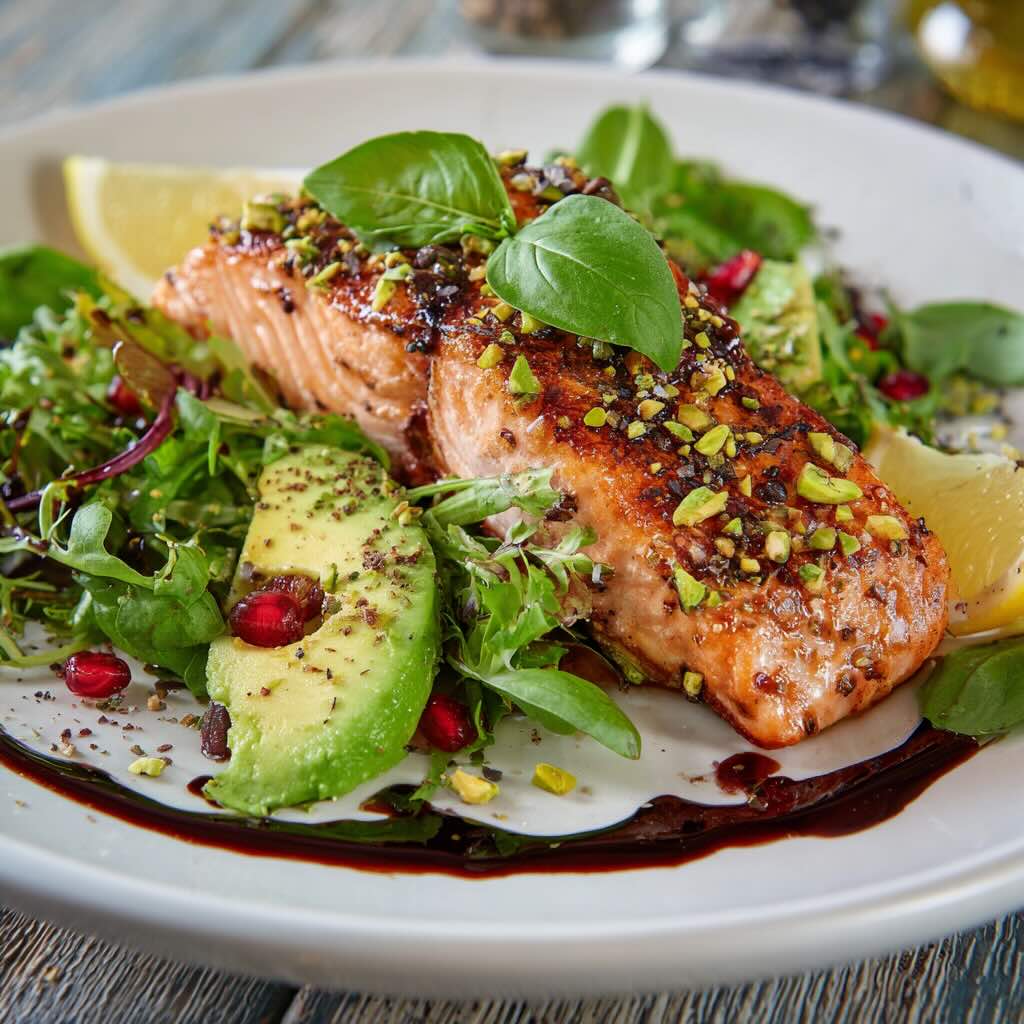
Salmon Bowl-pistachio-cacao-nibs
A Mediterranean-style bowl combining salmon, avocado, pistachios, cacao nibs, and early harvest olive oil — rich in omega-3 fats, polyphenols, and fibre.
Foods
3 food relationships

Pomegranates
Ellagitannins for urolithin A production and polyphenol support
Legacy food association · relationship unreviewedPomegranates → legacy tag association → Pelargonidin

Raspberries
Polyphenol-rich berries with fiber
Legacy food association · relationship unreviewedRaspberries → legacy tag association → Pelargonidin

Strawberries
Polyphenol-rich berries supporting cognitive function
Legacy food association · relationship unreviewedStrawberries → legacy tag association → Pelargonidin
Biological Mechanisms and Implications
No BRS mapping is assigned to pelargonidin as an isolated parent compound. Evidence from strawberries or other pelargonidin-containing foods, or from mixed anthocyanin extracts, is not treated as a pelargonidin effect. Class-level evidence is recorded on the Anthocyanins family page.
References
Class-level citations previously listed here (blueberry interventions; high-flavonoid intake trials) do not study isolated pelargonidin and have been moved to the Anthocyanins family page.