Turkey Wing Stew
Overview
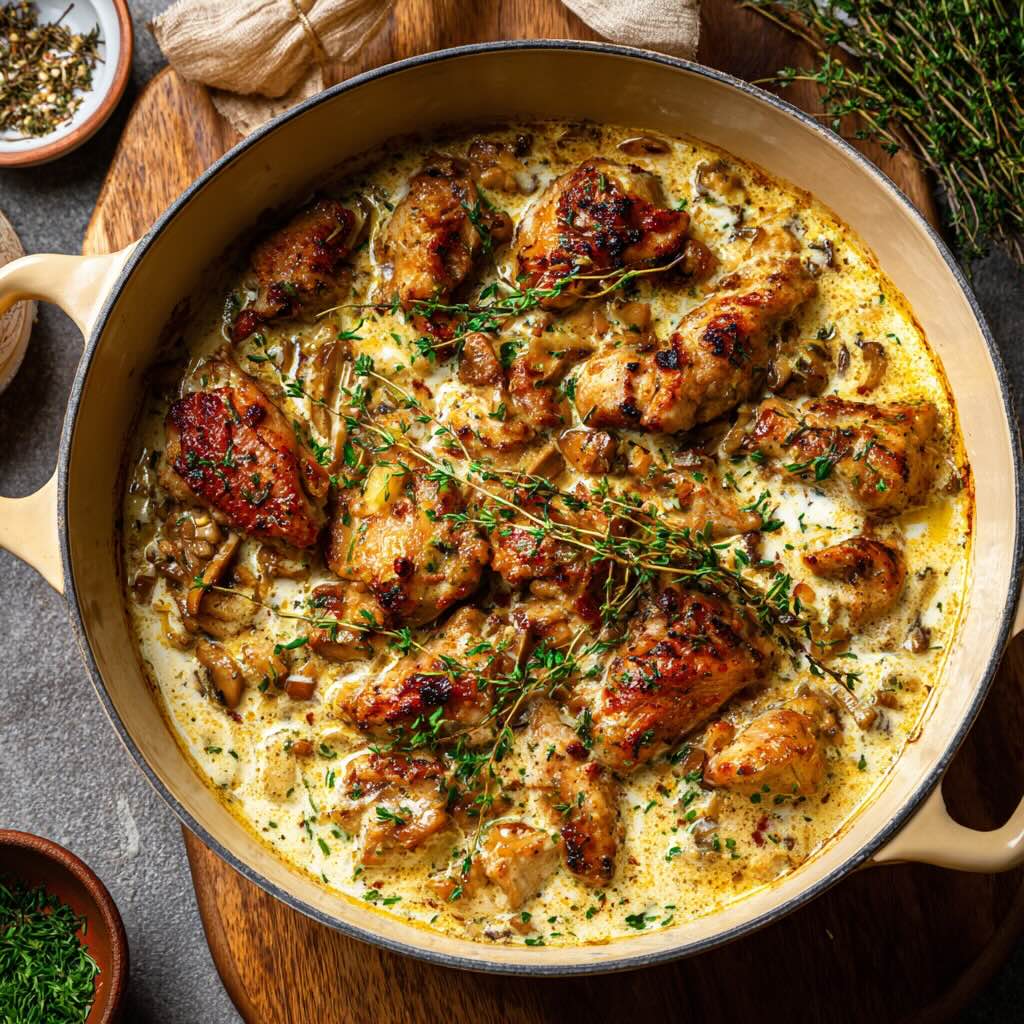
This deeply nourishing stew is made from slow-cooked turkey wings, releasing gelatin and glycine-rich collagen into the broth. It's a budget-friendly meal. Turkey wings provide tryptophan (an amino acid precursor to serotonin), selenium, and B vitamins — nutrients involved in various body processes including mood regulation.
Ingredients
- 2 large turkey wings (around 1 kg)
- 1 onion, chopped
- 2 carrots, diced
- 2 celery sticks, chopped
- 3 cloves garlic, minced
- 1 tbsp apple cider vinegar (helps extract minerals from bones)
- 2 tbsp olive oil
- 1 tsp turmeric (optional)
- 1 tsp thyme or rosemary
- Salt and pepper to taste
- Water to cover (~1.5 L)
Method
-
In a large pot or Dutch oven, sauté onions, garlic, carrots, and celery in olive oil until soft (5–7 min).
-
Add the turkey wings and brown lightly on all sides.
-
Add turmeric and herbs; stir to coat.
-
Pour in enough water to fully submerge wings; add apple cider vinegar.
-
Bring to boil, then reduce to low simmer and cook for 3–4 hours, skimming any foam.
-
Remove turkey wings, separate meat from bones and cartilage.
-
Return shredded meat to broth; discard bones or reserve for stock.
-
Taste and season. Serve hot with optional leafy greens or fermented vegetables.
Nutrition
~450 kcal · 35 g protein (~50% RDA) · 3–5 g glycine (est.) · 350 mg tryptophan (~125% RDA) · 40 mcg selenium (~73% RDA) · 0.7 mg B6 (~50% RDA) · 1.5 mcg B12 (~60% RDA)
Note: Glycine and gelatin amounts depend on simmer time and whether skin/cartilage is included.
Foods/Substances
8 foods in this recipe
Garlic
Allicin, sulfur compounds, and prebiotic fiber for gut and antioxidant support
Substances: Acetate, Manganese, Propionate, Short-Chain Fatty Acids (SCFAs)
Olive Oil
See extra virgin olive oil for detailed information
Onions
Inulin prebiotic, quercetin, and glutathione precursors
Substances: Butyrate, Quercetin (and Isoquercetin), Short-Chain Fatty Acids (SCFAs), Vitamin C (Ascorbate)
Rosemary
Focus, antioxidant, and neuroprotective effects
Turkey
High tryptophan and niacin for serotonin synthesis and NAD+ production
Substances: Glycine, Selenium, Tryptophan, Tyrosine, Vitamin B12 (Cobalamin), Vitamin B3 (Niacin; Niacinamide), Vitamin B6 (Pyridoxine → PLP)
Turmeric
Curcumin source; pair with black pepper and fat for absorption
Substances: Curcumin (Turmeric)
Vinegar
Apple cider vinegar for glucose regulation and bean soaking pH optimization
Biological Target Matrix
Gut–Brain Axis & Enteric Nervous System (ENS)
| Substance | Foods | Mechanism of Action |
|---|---|---|
| Acetate | Byproduct of fibre fermentation; supports intestinal barrier integrity; regulates immune responses; promotes synthesis of key neurotransmitters such as dopamine and serotonin | |
| Butyrate | Byproduct of fibre fermentation; supports intestinal barrier integrity; regulates immune responses; promotes synthesis of key neurotransmitters such as dopamine and serotonin | |
| Glycine | Supports gut barrier integrity through collagen and gelatin synthesis; helps seal gut lining and reduce permeability; affects inflammation and gut-brain communication | |
| Propionate | Byproduct of fibre fermentation; supports intestinal barrier integrity; regulates immune responses | |
| Short-Chain Fatty Acids (SCFAs) | Byproducts of fibre fermentation; support intestinal barrier integrity; regulate immune responses; promote synthesis of key neurotransmitters such as dopamine and serotonin |
Metabolic & Neuroendocrine Stress (HPA Axis & ANS)
| Substance | Foods | Mechanism of Action |
|---|---|---|
| Glycine | Improves sleep latency and quality; supports stress resilience through improved sleep regulation | |
| Quercetin (and Isoquercetin) | Contributes to LPS and immune defense; supports stress response modulation | |
| Vitamin C (Ascorbate) | Supports stress response through antioxidant and neurochemical effects |
Methylation & One-Carbon Metabolism
| Substance | Foods | Mechanism of Action |
|---|---|---|
| Vitamin B12 (Cobalamin) | Essential cofactor in remethylation of homocysteine to methionine, which is converted to S-adenosylmethionine (SAMe); works with B6, B2, and folate; contributes meaningfully to homocysteine reduction, especially in combination with omega-3 fatty acids | |
| Vitamin B6 (Pyridoxine → PLP) | Essential cofactor in remethylation of homocysteine to methionine, which is converted to S-adenosylmethionine (SAMe); works with B2, folate, and B12 |
Neurotransmitter Regulation
| Substance | Foods | Mechanism of Action |
|---|---|---|
| Glycine | Acts as an inhibitory neurotransmitter; improves sleep latency and quality; supports GABA pathways and neurotransmitter balance | |
| Potassium | Critical for membrane potential, nerve signaling, and neuronal excitability; adequate intake balances sodium effects | |
| Propionate | Stimulates secretion of norepinephrine and may influence dopamine regulation; promotes synthesis of key neurotransmitters | |
| Short-Chain Fatty Acids (SCFAs) | Propionate stimulates secretion of norepinephrine and may influence dopamine regulation; SCFAs promote synthesis of dopamine and serotonin | |
| Tryptophan | Precursor for serotonin and melatonin; brain entry competes at LAT1 with other large neutral amino acids (LNAAs); carbohydrate-rich, low-protein meals raise the plasma tryptophan:LNAA ratio because insulin pushes competing LNAAs out to muscles; can feed NAD+ synthesis via the kynurenine pathway | |
| Tyrosine | Catecholamine precursor (dopamine, norepinephrine); brain transport via LAT1 competes with other LNAAs; iron is an essential cofactor for tyrosine hydroxylase, the rate-limiting enzyme in conversion of tyrosine to dopamine; cofactors include iron, B6, folate, omega-3s, and BH₄ (tetrahydrobiopterin) to support rate-limiting steps in catecholamine synthesis | |
| Vitamin B12 (Cobalamin) | Supports neurotransmitter production through methylation; essential for myelin synthesis | |
| Vitamin B6 (Pyridoxine → PLP) | Cofactor for synthesis of dopamine, serotonin, GABA, and glutamate; supports rate-limiting steps in catecholamine synthesis; requires PDXK activation with magnesium and ATP support | |
| Vitamin C (Ascorbate) | Supports norepinephrine synthesis; transported in brain via SVCT2 |