Butyrate
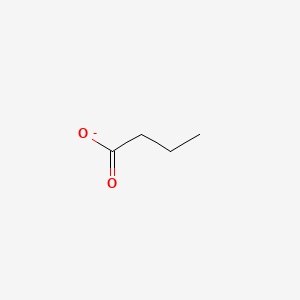
Overview
Butyrate is a short-chain fatty acid produced principally in the colon when microbes ferment suitable dietary substrates. It is an important colonocyte energy source and can influence epithelial barrier, immune and metabolic signalling. Within BRAIN, Butyrate is represented both as a biological input where direct evidence supports it and as a downstream target of fermentable-dietary-input relationships; those are not the same edge [1,2].
Evidence spans cell systems, animal models, human observational work and direct administration, with different doses and routes. Associations between altered SCFA profiles and neurological conditions do not establish deficiency, causality or a dietary treatment effect [3]. Claims about mitochondrial, inflammatory or brain outcomes therefore retain the exposure and model actually studied [3–5].
Dietary Context
Most butyrate that reaches the colon is produced when gut microbes ferment suitable dietary substrates. Direct food content and that upstream route are different relationships [2].
Foods supply the named dietary input. They are not shown as containing the downstream metabolite. Conversion evidence does not establish a new downstream PM admission, effective dose or equivalent food intervention.
Resistant starch (RS2/RS3) → Microbial resistant-starch utilisation and community cross-feeding can contribute to butyrate formation → Butyrate
BRS5-FM2-PM4: Adjust community substrate-processing capacity through resource competition and changes in microbial function.
Existing admission: Type not separately assessed / direct; historical-decision-pending-reconciliation. Production context for an already admitted substrate; no new metabolite-to-PM relationship is admitted.
Cultures and one donor’s faecal rescue do not establish oral R. bromii efficacy, uniform human processing, equivalence to RS4 or clinical benefit.
- Bananas — supplies Resistant starch (RS2/RS3); verified; Green/unripe; cultivar and ripening state matter. Cavendish and plantain bananas
Composition provenance
Gao et al., Postharvest Biology and Technology 2016
Direct starch analyses examined resistant-starch decline during ripening in two cultivars.
- Black Beans — supplies Resistant starch (RS2/RS3); verified; Cooked; cooking duration and cooling protocol remain study-specific. Cooked black beans
Composition provenance
Fabbri et al., NFS Journal 2016
The study directly assayed resistant starch in cooked black beans, pinto beans and chickpeas.
- Chickpeas — supplies Resistant starch (RS2/RS3); verified; Cooked; cooking duration and cooling protocol remain study-specific. Cooked chickpeas
Composition provenance
Fabbri et al., NFS Journal 2016
The study directly assayed resistant starch in cooked black beans, pinto beans and chickpeas.
- Potatoes — supplies Resistant starch (RS2/RS3); verified; Baked or boiled, then chilled to 4°C; distinguish reheated material. Yukon Gold, Dark Red Norland and Russet Burbank potatoes
Composition provenance
Raatz et al., Food Chemistry 2016
Resistant starch was measured by cooking method and service temperature.
Defined starch preparations and microbial contexts; no conversion yield, guaranteed butyrate response from bananas, potatoes or legumes, or established PM1 tight-junction mediation. Ruminococcus bromii degradation is not itself proof of butyrate production.
Dependencies: Accessible resistant-starch preparation reaching the colon; Capable primary degraders and butyrate-producing community members; Suitable anaerobic fermentation environment
Resistant starch → Microbial resistant-starch utilisation and community cross-feeding can contribute to butyrate formation → Butyrate
BRS5-FM2-PM5: Maintain short-chain fatty acid production and signalling that supports gut barrier and brain communication.
Existing admission: Type A / direct; versioned-assessment. Production context for an already admitted substrate; no new metabolite-to-PM relationship is admitted.
Utilisation and product distribution depend on starch structure, processing, accessibility, primary degraders and cross-feeding partners. Evidence for one formulation does not establish an equivalent butyrate response from another preparation or whole food. No predictable yield, intake target or brain benefit is established.
- Bananas — supplies Resistant starch; verified; Green/unripe; cultivar and ripening state matter. Cavendish and plantain bananas
Composition provenance
Gao et al., Postharvest Biology and Technology 2016
Direct starch analyses examined resistant-starch decline during ripening in two cultivars.
- Black Beans — supplies Resistant starch; verified; Cooked; cooking duration and cooling protocol remain study-specific. Cooked black beans
Composition provenance
Fabbri et al., NFS Journal 2016
The study directly assayed resistant starch in cooked black beans, pinto beans and chickpeas.
- Chickpeas — supplies Resistant starch; verified; Cooked; cooking duration and cooling protocol remain study-specific. Cooked chickpeas
Composition provenance
Fabbri et al., NFS Journal 2016
The study directly assayed resistant starch in cooked black beans, pinto beans and chickpeas.
- Potatoes — supplies Resistant starch; verified; Baked or boiled, then chilled to 4°C; distinguish reheated material. Yukon Gold, Dark Red Norland and Russet Burbank potatoes
Composition provenance
Raatz et al., Food Chemistry 2016
Resistant starch was measured by cooking method and service temperature.
Defined starch preparations and microbial contexts; no conversion yield, guaranteed butyrate response from bananas, potatoes or legumes, or established PM1 tight-junction mediation. Ruminococcus bromii degradation is not itself proof of butyrate production.
Dependencies: Accessible resistant-starch preparation reaching the colon; Capable primary degraders and butyrate-producing community members; Suitable anaerobic fermentation environment
Resistant starch → Microbial resistant-starch utilisation and community cross-feeding can contribute to butyrate formation → Butyrate
BRS6-FM1-PM3: Sustain insulin-sensitive glucose disposal so post-meal glucose clears efficiently without prolonged metabolic strain.
Existing admission: Type B / direct; versioned-assessment. Production context for an already admitted substrate; no new metabolite-to-PM relationship is admitted.
Preparation-, dose- and population-specific. The positive study used 30 g/day for four weeks in ten healthy participants; this is not an effective whole-food dose. Preserve the later 40 g/day type-2-diabetes null. SCFA mediation and universal benefit are unestablished; no brain or ADHD inference.
- Bananas — supplies Resistant starch; verified; Green/unripe; cultivar and ripening state matter. Cavendish and plantain bananas
Composition provenance
Gao et al., Postharvest Biology and Technology 2016
Direct starch analyses examined resistant-starch decline during ripening in two cultivars.
- Black Beans — supplies Resistant starch; verified; Cooked; cooking duration and cooling protocol remain study-specific. Cooked black beans
Composition provenance
Fabbri et al., NFS Journal 2016
The study directly assayed resistant starch in cooked black beans, pinto beans and chickpeas.
- Chickpeas — supplies Resistant starch; verified; Cooked; cooking duration and cooling protocol remain study-specific. Cooked chickpeas
Composition provenance
Fabbri et al., NFS Journal 2016
The study directly assayed resistant starch in cooked black beans, pinto beans and chickpeas.
- Potatoes — supplies Resistant starch; verified; Baked or boiled, then chilled to 4°C; distinguish reheated material. Yukon Gold, Dark Red Norland and Russet Burbank potatoes
Composition provenance
Raatz et al., Food Chemistry 2016
Resistant starch was measured by cooking method and service temperature.
Defined starch preparations and microbial contexts; no conversion yield, guaranteed butyrate response from bananas, potatoes or legumes, or established PM1 tight-junction mediation. Ruminococcus bromii degradation is not itself proof of butyrate production.
Dependencies: Accessible resistant-starch preparation reaching the colon; Capable primary degraders and butyrate-producing community members; Suitable anaerobic fermentation environment
PM1 Hypothesis-1 remains Unestablished. Resistant-starch production, local epithelial exposure and paracellular tight-junction engagement are separate links. FOS/GOS remains unresolved and is excluded from active production routes.
Research Spotlights & Evidence Checks
Foods
Upstream substrate foods are displayed separately under Dietary pathways; they do not establish direct Butyrate content.
Recipes
Biological Regulatory Systems
| Biological Regulatory System | Evidence-qualified relationship | Evidence |
|---|---|---|
| Gut-Brain Axis & Enteric Nervous System (BRS5) | PM1 retains the biological substrate and historical fibre records; its joined dietary resistant-starch–butyrate–tight-junction hypothesis remains unestablished | [1,2] |
| Inflammation & Oxidative Stress (BRS3) | Anti-inflammatory and redox findings are model- and route-dependent; altered SCFA profiles do not establish causality | [3–5] |
| Mitochondrial Function & Bioenergetics (BRS4) | Mitochondrial effects are supported principally by mechanistic and model evidence rather than ordinary food interventions | [4,5] |
References
[1] Peng et al. (2009). Butyrate enhances the intestinal barrier by facilitating tight junction assembly via activation of AMP-activated protein kinase. Supports the direct epithelial-substrate relationship while remaining an experimental model rather than a dietary intake trial.
[2] Silva et al. (2020). The role of short-chain fatty acids from gut microbiota in gut-brain communication. Supports microbial formation from fermentable substrates and the distinction between upstream dietary provision and downstream Butyrate exposure.
[3] Fan et al. (2019). Short-chain fatty acids as potential regulators of brain and neurological diseases. Reviews neurological associations and mechanisms without establishing a universal Butyrate deficiency or food-treatment claim.
[4] Rose et al. (2018). Butyrate enhances mitochondrial function during oxidative stress in cell lines from boys with autism. Cell-model evidence relevant to mitochondrial mechanism, not a whole-food or clinical intervention.
[5] Cavaliere et al. (2022). Butyrate and its role in the gut-brain axis. Reviews route-dependent intestinal, immune and neurological mechanisms used to qualify BRS mappings.