Glycine
Overview
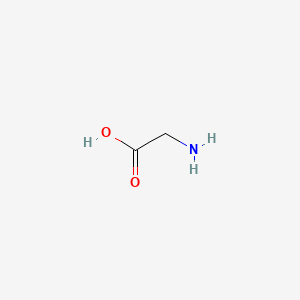
Glycine is a nonessential amino acid in food protein, including collagen and gelatin from cartilage, skin, and slow-cooked bone-in meats. The body can also make it. This page keeps that food constituent separate from glycine taken alone as a powder, tablet, or solution.
Glycine taken alone has its clearest nervous-system results in psychiatric illness, after weeks of high oral doses, and small high-bias trials reported better sleep after 3 g before bed [1]. A single much larger dose worsened sensorimotor gating and cognitive performance [1]. Glycine is also the amino acid added in the second step of glutathione assembly [2]. In older adults, glycine given with a cysteine precursor raised red-cell glutathione synthesis. That trial does not isolate glycine, and it did not measure the brain [3].
Dietary Origin
Foods supply glycine inside protein. Collagen and gelatin are rich in it, which is why cartilage, skin, and broths from bone-in cuts are grouped here as dietary sources. The human trials gave glycine by itself. In the psychiatric studies that was about 0.2–0.8 g per kilogram of body weight per day for 6–12 weeks. In the healthy sleep studies it was 3 g, taken 30–60 minutes before bed, for two to four days [1]. The glutathione result used glycine together with a cysteine precursor, not a serving of collagen-rich food [3].
Research Spotlights & Evidence Checks
Recipes
Foods
Biological Regulatory Systems
| Biological Regulatory System | Evidence-qualified relationship | Evidence |
|---|---|---|
| Methylation & One-Carbon Metabolism (BRS2) | Glycine is the amino acid added by glutathione synthetase in glutathione assembly. In older adults, glycine given with a cysteine precursor raised red-cell synthesis. A formula that removed methionine and cysteine slowed synthesis while glycine intake was increased, so that slowdown is not a glycine shortage. | [2,3,4] |
| Inflammation & Oxidative Stress (BRS3) | Glutathione precursor sufficiency treats glycine as able to co-limit glutathione synthesis with cysteine when synthesis is already low in older adults. The evidence is that same combined supplement. | [3] |
References
[1] Soh et al. (2024). The effect of glycine administration on the characteristics of physiological systems in human adults: A systematic review. Review of glycine given by itself to adults. Nervous-system changes were clearest in psychiatric illness at high oral doses for several weeks. Healthy-adult sleep findings used 3 g before bed for a few nights and were small studies at high risk of bias. A large single dose worsened sensorimotor gating and cognitive performance. Combined supplements were outside the review.
[2] Polekhina et al. (1999). Molecular basis of glutathione synthetase deficiency and a rare gene permutation event. Human glutathione synthetase adds glycine in the second step of glutathione assembly and binds one magnesium ion per subunit. Enzyme structure, not a food trial.
[3] Sekhar et al. (2011). Deficient synthesis of glutathione underlies oxidative stress in aging and can be corrected by dietary cysteine and glycine supplementation. Older adults had lower red-cell glutathione synthesis than younger adults. Two weeks of N-acetylcysteine together with glycine raised that synthesis. The trial does not isolate glycine, does not measure the brain, and is not an ordinary-food result.
[4] Lyons et al. (2000). Blood glutathione synthesis rates in healthy adults receiving a sulfur amino acid-free diet. A diet containing neither methionine nor cysteine slowed whole-blood glutathione synthesis in healthy young men. Glycine in that formula was increased, so the slowdown is not a glycine deficit. Whole blood, not brain.
BRS matrix — individual KC inputs
| BRS / PM | Relationship | Biological role and limitation |
|---|---|---|
| BRS3 · BRS3-FM1-PM1 BRS3(KC1) | Supported upstream supply | Glycine supplies a constituent of glutathione. Glutathione participates in the redox regulation of NF-κB kinase activity and DNA binding; this is upstream resource supply, not a direct NF-κB reaction substrate. Limitation: This is supported upstream supply, not a demonstrated dietary constraint on NF-κB. Human precursor supplementation measured red-cell glutathione, not NF-κB; cysteine was supplied as N-acetylcysteine together with glycine. Cellular redox studies show context-dependent effects, including inhibition after glutathione depletion or increased extracellular cysteine. Neither individual dietary limitation, brain transfer nor benefit from additional intake is established. Reynaert et al. (2006) [11] Mihm et al. (1995) [12] Sekhar et al. (2011) [13] |
| BRS3 · BRS3-FM1-PM2 BRS3(KC1) | Supported upstream supply | Glycine supplies a constituent of glutathione used in epithelial redox protection. Glutathione prevented oxidant-induced paracellular permeability in a cell model; this supports upstream supply to a barrier-protection route, not a proven dietary reduction in endotoxin spillover. Limitation: Supported upstream supply through glutathione-dependent epithelial redox protection, not an established dietary constraint on endotoxin spillover. Human precursor tracing measured red-cell glutathione after combined glycine and N-acetylcysteine; epithelial experiments measured oxidant-induced paracellular permeability. In Salmonella-infected rats, glutathione depletion did not increase permeability or bacterial translocation. Neither intestinal precursor inadequacy, individual constituent limitation, human LPS reduction nor benefit from additional intake is established. Sekhar et al. (2011) [11] Rao et al. (2000) [12] van Ampting et al. (2009) [13] |
Foods supply the named dietary input. They are not shown as containing the downstream metabolite. Conversion evidence does not establish a new downstream PM admission, effective dose or equivalent food intervention.
Glycine → Human AGAT transfers the amidino group of arginine to glycine, yielding guanidinoacetate and ornithine. → Guanidinoacetate
BRS4-FM1-PM3: Enable rapid ATP buffering so high-energy-demand tissues can meet sudden metabolic spikes.
Existing admission: Type A / derived; versioned-assessment. Production context for an already admitted substrate; no new metabolite-to-PM relationship is admitted.
Capacity of the endogenous synthesis route is distinct from a claim that extra amino-acid intake raises cerebral creatine, phosphocreatine buffering or cognition. AGAT feedback, GAMT methyl supply, organ exchange and SLC6A8-mediated tissue transport constrain delivery. Human renal GAA production is not a measurement of brain synthesis flux; rat arginine infusion and glycine null responses are not oral human efficacy experiments.
Input identity/conversion is recorded; usable food-composition mapping remains unresolved.
Both co-substrates are required; this is not a fixed dietary yield or an assertion that extra intake is rate-limiting.
Dependencies: Functional AGAT; arginine co-substrate availability; Tissue access and feedback regulation
Glycine → Human AGAT transfers the amidino group of arginine to glycine, yielding guanidinoacetate and ornithine. → GAMT methylates guanidinoacetate using S-adenosylmethionine to form creatine. → Creatine
BRS4-FM1-PM3: Enable rapid ATP buffering so high-energy-demand tissues can meet sudden metabolic spikes.
Existing admission: Type A / derived; versioned-assessment. The complete derived relationship is admitted for this PM.
Capacity of the endogenous synthesis route is distinct from a claim that extra amino-acid intake raises cerebral creatine, phosphocreatine buffering or cognition. AGAT feedback, GAMT methyl supply, organ exchange and SLC6A8-mediated tissue transport constrain delivery. Human renal GAA production is not a measurement of brain synthesis flux; rat arginine infusion and glycine null responses are not oral human efficacy experiments.
Input identity/conversion is recorded; usable food-composition mapping remains unresolved.
Both co-substrates are required; this is not a fixed dietary yield or an assertion that extra intake is rate-limiting.
Dependencies: Functional AGAT; arginine co-substrate availability; Tissue access and feedback regulation
Reaction identity does not prove dietary precursor limitation or cerebral delivery; SAM participation creates no independent methionine admission.
Dependencies: Functional GAMT; S-adenosylmethionine methyl supply; Interorgan exchange and receiving-tissue creatine transport