Tetrahydrobiopterin (BH4)
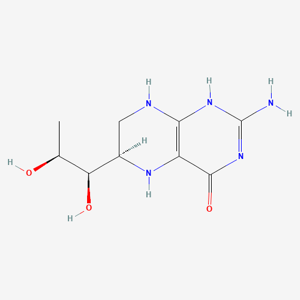
Overview
Tetrahydrobiopterin (BH4) is an endogenously produced cofactor required for several hydroxylase enzymes involved in amino-acid metabolism, monoamine synthesis and nitric-oxide signalling [1,2]. It is not an essential dietary nutrient, not a vitamin, and not an ordinary food-derived bioactive. It is not ordinarily obtained from foods in a nutritionally meaningful way. Its relevance to nutrition lies instead in the metabolic and redox environment supporting its synthesis, recycling and preservation. Sapropterin dihydrochloride is the pharmaceutical form of tetrahydrobiopterin; it is a prescription medicine for authorised metabolic indications, not a consumer supplement.
BH4 is a redox-sensitive node connecting aromatic amino-acid hydroxylation, nitric-oxide synthase function, endogenous synthesis and recycling, oxidative and inflammatory conditions, genetic variation in pathway enzymes, rare recognised metabolic disorders, and emerging but unproven neuropsychiatric hypotheses [1,2,5]. Established biochemistry and authorised sapropterin use should not be converted into clinical advice for ADHD or into a food-first supplementation protocol. BH4 deficiency has not been established across general ADHD populations, and no controlled ADHD supplementation evidence establishes efficacy.
Key Compound Highlights
- Cofactor for phenylalanine hydroxylase, converting phenylalanine to tyrosine [1,2].
- Cofactor for tyrosine hydroxylase, converting tyrosine to L-DOPA upstream of dopamine and noradrenaline; increasing dietary tyrosine does not necessarily increase brain catecholamine production [1,2].
- Cofactor for tryptophan hydroxylase, converting tryptophan to 5-hydroxytryptophan upstream of serotonin; the same dietary caveat applies [1,2].
- Helps maintain coupled nitric-oxide synthase function; oxidation can shift the BH4/BH2 balance and favour superoxide rather than nitric oxide [1,3].
- Synthesised and recycled endogenously; no established dietary intake, deficiency sign-set or upper limit comparable with an essential micronutrient [1,5].
- Sapropterin (Kuvan) is a specialist prescription medicine for authorised BH4-responsive metabolic indications, not an ADHD treatment or supplement protocol [5].
Dietary Context
Food sources
BH4 has no established food-source strategy comparable with an essential vitamin or mineral. Foods should not be ranked by presumed BH4 content, and the pharmaceutical product sapropterin should not be represented as a dietary supplement.
Synergies
Nutrition may affect the surrounding biochemical conditions rather than supply BH4 directly. Relevant contexts may include adequate protein and amino-acid availability, folate and one-carbon status, cellular redox balance, antioxidant defence, and inflammation or metabolic stress [1,4]. These are contextual relationships, not evidence that a named food or nutrient corrects BH4 availability or treats ADHD.
Supplement versus food
Sapropterin dihydrochloride (Kuvan) is a prescription medicine used under specialist supervision for authorised metabolic indications [5]. It should not be recommended for self-treatment, off-label ADHD use or inclusion in a consumer supplement protocol. No BH4 dosage is given here. Dietary intake values, deficiency signs and upper limits for BH4 as a nutrient are not established.
Recipes
Foods
Biological Regulatory Systems
Compact BRS mapping for Nutritional Highlights. Deeper synthesis, recycling, genetics and measurement caveats are in Advanced Nutrition; condition-specific evidence is in Therapeutic Area Research. BH4 is not mapped to BRS5.
| Biological Regulatory System | BH4 mapping | Evidence |
|---|---|---|
| Neurotransmitter Regulation (BRS1) | Strongest direct relationship: cofactor for tyrosine and tryptophan hydroxylases and therefore for catecholamine and serotonin synthesis. Biochemical requirement does not establish BH4 limitation in ordinary ADHD. | [1,2] |
| Inflammation & Oxidative Stress (BRS3) | Strong mechanistic relationship: BH4 is oxidation-sensitive; reduced functional BH4 can uncouple nitric-oxide synthases toward superoxide. Dietary antioxidants have not been shown to normalise BH4 in ADHD. | [1,3] |
| Metabolic & Neuroendocrine Regulation (BRS6) | Hypothesis-generating: metabolic, inflammatory and stress-related conditions may influence the redox environment in which BH4 is maintained. Allostatic load has not been shown to cause BH4 deficiency in ADHD. | [1,2] |
| Methylation & One-Carbon Metabolism (BRS2) | Indirect and qualified: folate and related conditions have reported interactions with endothelial BH4 biology. BH4 is not synthesised by the folate or methionine cycles and is not a BRS2 resource pool. The BRS2-to-BRS1 dependency page does not treat BH4 as a one-carbon output. | [4] |
| Mitochondrial Function & Bioenergetics (BRS4) | Contextual or emerging: mitochondrial and cellular redox conditions may influence BH4 stability and recycling. A validated linear BRS4-to-BH4 pathway is not presented here. | [1,3] |
References
[1] Authoritative review of BH4 biochemistry, de novo synthesis, recycling and pathophysiology, including aromatic-amino-acid hydroxylases and nitric-oxide synthases. Werner, Blau and Thöny 2011. Tetrahydrobiopterin: biochemistry and pathophysiology
[2] Review of BH4 metabolism and proposed relevance to neuropsychiatric biology, including GCH1-centred synthesis and redox sensitivity. Fanet et al. 2021. Tetrahydrobiopterin (BH4) Pathway: From Metabolism to Neuropsychiatry
[3] Review of BH4 synthesis, oxidation to BH2, dihydrofolate-reductase salvage and nitric-oxide synthase coupling versus uncoupling. Crabtree and Channon 2011. Synthesis and recycling of tetrahydrobiopterin in endothelial function and vascular disease
[4] Human-vessel study: 5-methyltetrahydrofolate improved endothelial function and BH4-related nitric-oxide synthase coupling. This is endothelial biology, not evidence that folate restores brain BH4 or treats ADHD. Antoniades et al. 2006. 5-Methyltetrahydrofolate Rapidly Improves Endothelial Function and Decreases Superoxide Production in Human Vessels
[5] Consensus guideline for recognised BH4 synthesis and recycling disorders; these rare conditions are clinically distinct from common ADHD. Opladen et al. 2020. Consensus guideline for the diagnosis and treatment of tetrahydrobiopterin (BH4) deficiencies
Advanced Nutrition
Synthesis and recycling
BH4 is produced endogenously from guanosine triphosphate (GTP) through a de novo pathway [1,2]. GCH1 encodes GTP cyclohydrolase I, the rate-limiting first enzyme. PTS encodes 6-pyruvoyl-tetrahydropterin synthase and SPR encodes sepiapterin reductase, which complete subsequent biosynthetic steps [1,2]. After aromatic-amino-acid hydroxylation, oxidised pterin intermediates are recycled through pathways involving QDPR (dihydropteridine reductase) and related enzymes; PCBD1 (pterin-4a-carbinolamine dehydratase) contributes to regeneration of the quinonoid intermediate [1,5]. Salvage of 7,8-dihydrobiopterin (BH2) back to BH4 may involve DHFR, particularly in peripheral endothelial cells, but this contribution should not be overstated for every tissue, and brain DHFR capacity is limited relative to some peripheral tissues [1,3].
These enzymes describe endogenous capacity. They do not define a dietary BH4 intake target, and they do not imply that folate-cycle activity synthesises BH4.
Functional coupling and oxidation
BH4 is consumed or oxidised during relevant enzymatic activity [1,6]. Adequate BH4 helps keep nitric-oxide synthases coupled, so that the enzymes produce nitric oxide rather than superoxide [3,6]. Oxidation can shift the BH4/BH2 balance; total biopterin measurement and functional BH4 availability are not necessarily equivalent [3,6]. Peripheral measurements, including endothelial or plasma findings, should not automatically be treated as direct measures of brain BH4 status [1,2].
Cross-system cascade
The cascade is conditional, not universal or necessarily linear. Different arrows have different evidential strength: the BH4 cofactor requirement and oxidation chemistry are established, whereas the full sequence from psychosocial stress to ADHD-related phenomes has not been demonstrated. Genetic context may modify susceptibility, but common variants are not equivalent to rare pathogenic disorders. The diagram is included as a traceable, hypothesis-generating model, not as a treatment map.
Genetics and individual variation
Pathway genes of interest include GCH1, PTS, SPR, QDPR, PCBD1 and, with the salvage qualification above, DHFR [1,5]. Rare pathogenic variants affecting BH4 synthesis or recycling can cause clinically recognised neurological and neurotransmitter disorders [5]. Common polymorphisms may exert smaller effects. Psychiatric associations for common variants remain investigational. Commercial SNP interpretations lack clinical validation for ADHD diagnosis or treatment selection.
GCH1 rs841 is discussed only as an investigational variant. It is not an ADHD biomarker, diagnostic variant, actionable nutrigenetic result or indication for sapropterin.
Rare pathogenic variants affecting BH4 synthesis or recycling can have substantial neurological consequences, but these disorders should not be generalised to common ADHD. Evidence concerning common variants such as GCH1 rs841 remains preliminary and does not currently support ADHD diagnosis, treatment selection or consumer nutrigenetic recommendations.
Genetic testing is not recommended here as a consumer or nutrigenetic protocol.
Precision-nutrition interpretation
BH4 illustrates how genetic capacity, endogenous synthesis, recycling, oxidative exposure and the surrounding nutritional environment may converge on a shared biochemical constraint. Precision reasoning therefore concerns the conditions affecting BH4 biology and the identification of exceptional clinical disorders, rather than recommending universal BH4 supplementation.
References
- Werner, Blau and Thöny 2011. BH4 biochemistry, synthesis, recycling and pathophysiology.
- Fanet et al. 2021. BH4 pathway from metabolism to proposed neuropsychiatric relevance.
- Crabtree and Channon 2011. BH4/BH2 balance, DHFR salvage and nitric-oxide synthase coupling.
- Vásquez-Vivar 2009. BH4 oxidation chemistry, superoxide and uncoupled nitric-oxide synthase function.
- Opladen et al. 2020. Consensus diagnosis and management of recognised BH4 deficiencies.
- Eichwald et al. 2023. Review of BH4 beyond classical cofactor chemistry, including emerging mitochondrial and redox hypotheses that remain preclinical in several settings.
Therapeutic Area Research
This panel collects condition-specific evidence. It is not a treatment protocol. Established biochemistry, authorised sapropterin use, rare genetic disease and investigational ADHD hypotheses are listed separately. Therapeutic-area pages are not currently published; the names below are labels, not links.
Condition evidence matrix
| Therapeutic area | Observational evidence | Mechanistic relevance | Intervention evidence | Framework status |
|---|---|---|---|---|
| ADHD | BH4 deficiency not established in general ADHD populations (1, 2) | Cofactor for tyrosine and tryptophan hydroxylases; oxidation-sensitive nitric-oxide biology | No controlled BH4 or sapropterin efficacy evidence in primary ADHD (1) | Hypothesis-generating |
| Phenylketonuria and authorised BH4-responsive indications | BH4-responsive PKU is a recognised metabolic subset (3, 4) | Phenylalanine hydroxylase cofactor; phenylalanine lowering under specialist care | Sapropterin authorised with a phenylalanine-restricted diet in selected patients (3, 4) | Clinically established in authorised indications |
| Rare BH4 synthesis and recycling disorders | Pathogenic variants cause recognised neurotransmitter disorders (5) | Impaired de novo synthesis or recycling of BH4 | Specialist metabolic and neurological management; not transferable to common ADHD (5) | Clinically established, rare |
| Other neuropsychiatric settings | Mixed reports in depression, autism and neurodegeneration (2, 6) | Shared monoamine and redox plausibility | No transdiagnostic BH4 treatment established (2, 6) | Investigational |
| GCH1-associated mental-health case series | Five observational cases using a commercial genomics tool (7) | Investigational rs841 interpretation | Uncontrolled; does not validate nutrigenetic testing or sapropterin for ADHD (7) | Preliminary / case-based |
ADHD
Wilson SK, Thomas J. BH4 as a Therapeutic Target for ADHD: Relevance to Neurotransmitters and Stress-Driven Symptoms. Journal of Attention Disorders. 2024;28(2):161–167. DOI: 10.1177/10870547231204012. PMID: 37942650 (1).
This is a narrative, hypothesis-generating review. It proposes links among BH4, dopamine, oxidative stress and ADHD, but explicitly reports that previous BH4 supplementation studies in ADHD were absent.
Wilson and Thomas proposed BH4 as a potential therapeutic target in ADHD by connecting monoamine synthesis with oxidative and stress-related biology. The paper is hypothesis-generating rather than evidence of efficacy: it did not identify prior BH4 supplementation studies in ADHD, and direct evidence that BH4 is systematically deficient in general ADHD populations remains limited.
Do not read this literature as showing that BH4 deficiency causes ADHD, that ADHD is a hypodopaminergic BH4 disorder, that sapropterin treats ADHD, that BH4 crosses the blood–brain barrier sufficiently to guarantee a therapeutic effect, or that antioxidant foods restore BH4 and improve ADHD.
Phenylketonuria and recognised BH4 disorders
Sapropterin has an established clinical role in appropriately selected BH4-responsive phenylketonuria, used with a phenylalanine-restricted diet under specialist supervision [3,4]. European authorisation also covers hyperphenylalaninaemia in BH4 deficiency in responsive patients [4]. Attention and executive difficulties can occur in PKU; a sapropterin trial in sapropterin-responsive PKU assessed ADHD symptoms and executive function in that metabolic population, not in primary ADHD (8). Treatment evidence in PKU cannot be transferred directly to primary ADHD. Rare BH4 synthesis and recycling disorders are clinically distinct from common ADHD [5]. Readers should not obtain or use Kuvan off-label.
Other neuropsychiatric research
Reviews have discussed BH4 in depression, autism-spectrum and neurodegenerative settings, largely through shared monoamine, inflammatory and redox hypotheses [2,6]. This work is secondary here. Mixed or early evidence should not be presented as proof of a transdiagnostic BH4 treatment.
Williams et al. 2025 report five observational cases linking GCH1 interpretation, including rs841, to mental-health presentations and using a commercial genomics clinical-decision tool [7]. The evidence is preliminary and case-based. It does not establish BH4 deficiency as a common cause of treatment-resistant psychiatric illness, does not validate consumer nutrigenetic testing, and is not an indication for sapropterin.
Evidence conclusion
- Biochemical role: established
- Rare-disorder relevance: established
- Prescription use in authorised metabolic indications: established
- General ADHD deficiency: unestablished
- ADHD biomarker utility: unestablished
- BH4/sapropterin efficacy for ADHD: unestablished
- Nutritional strategies specifically modifying brain BH4 in ADHD: unestablished
References
[1] ADHD matrix row. Narrative review proposing BH4 as an ADHD therapeutic target; reports an absence of prior ADHD supplementation studies. Wilson and Thomas 2024. BH4 as a Therapeutic Target for ADHD: Relevance to Neurotransmitters and Stress-Driven Symptoms
[2] ADHD and other neuropsychiatric rows. Review of BH4 metabolism and proposed neuropsychiatric relevance, not ADHD trial evidence. Fanet et al. 2021. Tetrahydrobiopterin (BH4) Pathway: From Metabolism to Neuropsychiatry
[3] PKU matrix row. FDA labelling: sapropterin dihydrochloride is indicated to reduce blood phenylalanine in BH4-responsive PKU used with a phenylalanine-restricted diet; not an ADHD indication. U.S. Food and Drug Administration 2024. KUVAN (sapropterin dihydrochloride) prescribing information
[4] PKU matrix row. EMA product information: authorised for hyperphenylalaninaemia in BH4-responsive PKU and in tetrahydrobiopterin deficiency, used with a phenylalanine-restricted diet. European Medicines Agency 2024. Kuvan (sapropterin dihydrochloride): EPAR
[5] Rare-disorder matrix row. Consensus guideline for recognised BH4 synthesis and recycling disorders. Opladen et al. 2020. Consensus guideline for the diagnosis and treatment of tetrahydrobiopterin (BH4) deficiencies
[6] Other neuropsychiatric row. Review of BH4 beyond classical cofactor chemistry, including emerging mitochondrial and redox hypotheses. Eichwald et al. 2023. Tetrahydrobiopterin: Beyond Its Traditional Role as a Cofactor
[7] GCH1 case-series row. Five observational cases plus a commercial genomics tool; preliminary only, not a nutrigenetic protocol. Williams et al. 2025. The Role of GCH1 Deficiency and Tetrahydrobiopterin in Mental Health
[8] PKU discussion, not primary ADHD. Randomised trial of sapropterin for ADHD symptoms and executive function in sapropterin-responsive phenylketonuria. Burton et al. 2015. A randomized, placebo-controlled, double-blind study of sapropterin to treat ADHD symptoms and executive function impairment in children and adults with sapropterin-responsive phenylketonuria