Roasted Aubergine with Herb Olive Oil
Overview
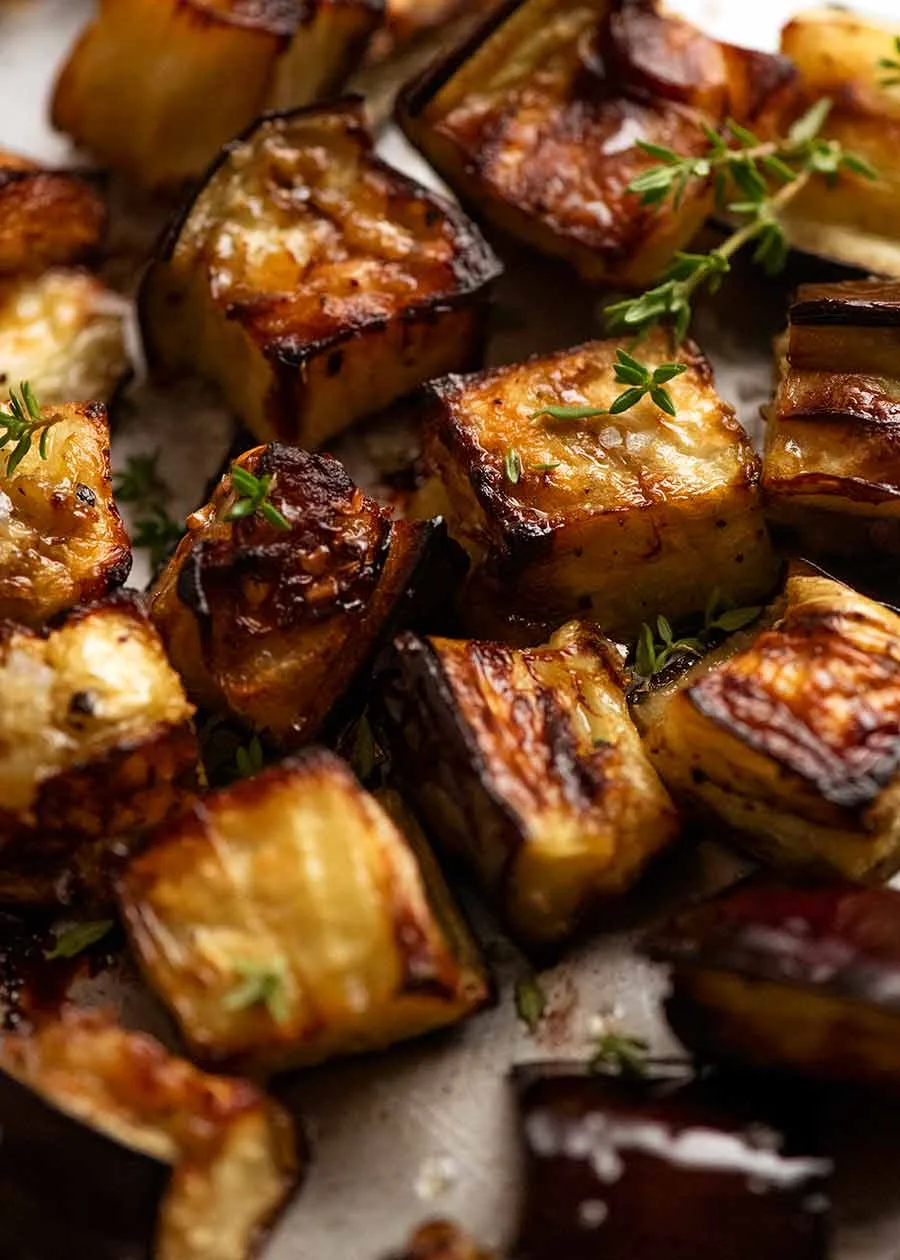
This aubergine dish is built around a two-stage roasting method: first to soften and caramelise the flesh, then to absorb a late-added herb oil that carries garlic, thyme, rosemary, and chilli. Adding the oil toward the end prevents scorching while allowing the aubergine to soak up flavour and develop a glossy finish.
A small drizzle of balsamic vinegar at serving sharpens the dish and balances the richness of the olive oil.
Ingredients (serves 4)
- 1 large aubergine (~450 g / 1 lb, approx)
- 30 ml (2 tbsp) olive oil (for initial roasting)
- salt
Herb olive oil
- ~1 g (1 tsp chopped rosemary leaves, approx)
- ~1 g (1 tsp chopped thyme leaves, approx)
- pinch chilli flakes
- pinch salt
- 30–45 ml (2–3 tbsp) extra-virgin olive oil
To serve
- small drizzle good balsamic vinegar
Method
1. Prepare the aubergine
- Cut the aubergine into large cubes or thick slices.
- Toss lightly with olive oil and salt.
2. Start roasting
- Heat oven to 220 °C (200 °C fan).
- Spread aubergine on a tray in a single layer.
- Roast 20–25 minutes until softening and beginning to brown.
3. Prepare the herb oil
- Grind rosemary, thyme, chilli flakes and salt together
(use a grinder or mortar). - Stir the mixture into the olive oil.
4. Finish the aubergine
- About 15 minutes before the end, spoon the herb oil over the aubergine.
- Toss gently to coat.
- Return to the oven and roast until soft, caramelised and glossy.
5. Serve
Transfer to a plate and drizzle lightly with balsamic vinegar just before serving.
Nutrition
Per serving, recipe serves 4. Each included ingredient is scaled from a named per-100 g composition record by edible grams. Optional ingredients are excluded. Missing analytical values are not treated as zero.
| Nutrient | Per serving |
|---|---|
| Energy | 160 kcal |
| Protein | 1.1 g |
| Carbohydrates | 6.7 g |
| Sugars | 4 g |
| Fibre | 3.4 g |
| Total fat | 15 g |
| Saturated fat | 2.1 g |
| Sodium | 2.6 mg |
Sodium excludes salt added to taste.
Key vitamins and minerals
| Nutrient | Per serving | Reference intake |
|---|---|---|
| Vitamin E | 2.5 mg | 17% RDA |
Vitamins and minerals supplying at least 15% of an adult reference intake, plus explicitly featured design-relevant nutrients, up to eight. RDA is a recommended dietary allowance; AI is an adequate intake, used where the evidence does not support an RDA. Nutrients below the threshold are still calculated and still count towards a daily total; a featured row is not a claim that the serving supplies a complete daily dose.
Bioactive compounds
| Compound | Per serving |
|---|---|
| Delphinidin | Present as glycosides (nasunin) |
These compounds have no recognised intake target, so quantified amounts are shown without a percentage. A presence-only entry is carried from a supported food relationship and is not converted into an invented serving amount.
Calculation details
| Ingredient | Weight used | Composition record |
|---|---|---|
| 1 large aubergine (~450 g) | 450 g | USDA FDC 169228 — Eggplant, raw |
| 30 ml (2 tbsp) olive oil, for initial roasting | 27 g | USDA FDC 171413 — Oil, olive, salad or cooking |
| 30–45 ml (2–3 tbsp) extra-virgin olive oil, for the herb oil | 34 g | USDA FDC 171413 — Oil, olive, salad or cooking |
| ~1 g (1 tsp) chopped rosemary leaves | 1 g | USDA FDC 173473 — Rosemary, fresh |
| ~1 g (1 tsp) chopped thyme leaves | 1 g | USDA FDC 173470 — Thyme, fresh |
Mainly from:
- Energy: Extra Virgin Olive Oil, Aubergine
- Protein: Aubergine
- Carbohydrates: Aubergine
- Sugars: Aubergine
- Fibre: Aubergine
- Total fat: Extra Virgin Olive Oil
- Saturated fat: Extra Virgin Olive Oil
- Sodium: Aubergine, Extra Virgin Olive Oil
Assumptions and exclusions:
- 30 ml (2 tbsp) olive oil, for initial roasting: USDA SR Legacy FDC 171413 food_portion: 1 tablespoon = 13.5 g; 2 tbsp = 27 g
- 30–45 ml (2–3 tbsp) extra-virgin olive oil, for the herb oil: Midpoint 2.5 tbsp at USDA SR Legacy FDC 171413 food_portion 1 tablespoon = 13.5 g. The previous entry recorded 62 g for both oils; the sourced total is 60.8 g.
- ~1 g (1 tsp) chopped rosemary leaves: USDA SR Legacy FDC 173473 food_portion: 1 tsp = 0.7 g; recipe states ~1 g
- ~1 g (1 tsp) chopped thyme leaves: The Thyme food page records dried thyme, which is roughly three times as concentrated.
- pinch chilli flakes — no stated quantity; a pinch contributes under 1 kcal
- salt (roasting and herb oil) — added to taste, so it is not part of an exact sodium total
- small drizzle balsamic vinegar, to serve — no stated quantity
- Aubergine is calculated at its raw weight; roasting removes water but does not add or remove nutrients.
Serving Suggestions
Serve alongside roasted meats, poultry, or grain-based dishes.
Pairs especially well with:
Notes
- Aubergine absorbs oil readily; adding the herb oil late prevents it becoming greasy.
- Grinding the herbs releases aroma and helps them disperse evenly.
- Balsamic vinegar adds acidity and contrast without masking the herb flavours.
Brain Health Notes
- Aubergine provides fibre and polyphenols that support gut microbiome diversity and contribute to antioxidant networks.
- Rosemary and thyme are rich in polyphenols and terpene compounds that have been studied for antioxidant and anti-inflammatory effects.
- Extra-virgin olive oil contributes monounsaturated fats and phenolic compounds associated with cardiometabolic and brain health.
Explore the foods and substances
Show 3 foods and their substances
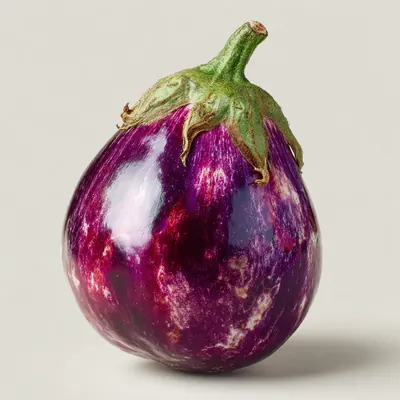
Aubergine
Fibre-containing vegetable with chlorogenic acid and nasunin in its purple skin
Substances: Delphinidin
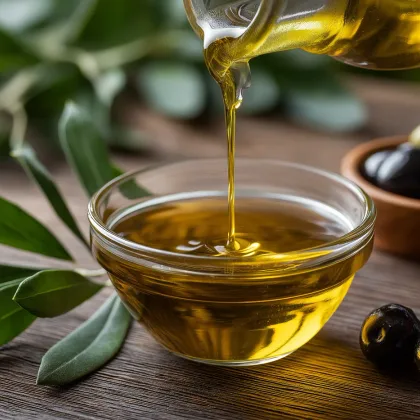
Extra Virgin Olive Oil
Polyphenol-rich oil with hydroxytyrosol and anti-inflammatory properties
Substances: Hydroxytyrosol (Olive Polyphenol), Oleacein, Oleocanthal, Tyrosol