Saffron Roast Potatoes
Overview
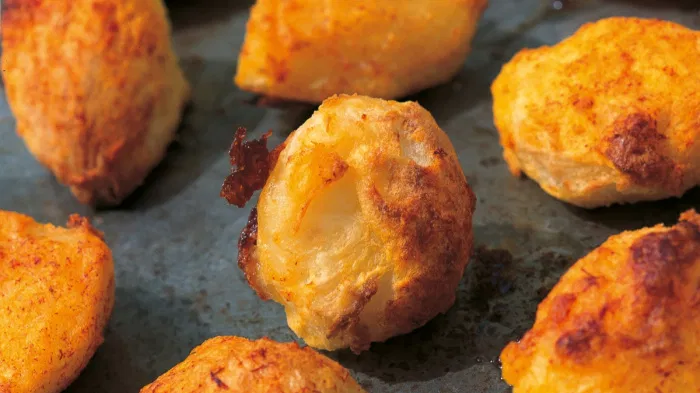
These roast potatoes are designed to deliver crisp edges, soft centres, and a warm saffron aroma without overpowering the dishes they accompany. The method separates the structural roasting fat from the aromatic finishing oil, allowing the potatoes to develop a proper crust while preserving the colour and fragrance of the saffron.
Keeping the saffron oil simple helps maintain a clear golden tone, allowing the potatoes to contribute both texture and visual contrast to the plate.
Proviso
These potatoes are primarily included as a classic structural side rather than a nutrient-dense component of the meal. Roast potatoes are starch-forward and do not rank highly for metabolic resilience on their own. However, they can still contribute flavour, satisfaction, and visual balance when used in moderation within a broader meal.
In this preparation, a relatively generous quantity of saffron is used across the meal (approximately 0.35 g split between two servings). Saffron contains compounds that have been studied in relation to oxidative stress, mood regulation, and neurochemical signalling. While culinary use does not replicate the controlled dosing of supplementation, quantities of this scale fall within — and in some cases exceed — the range investigated in human studies. When prepared carefully and used regularly in cooking, saffron may therefore contribute to therapeutic effects.
The herb oil used alongside the roasted aubergine side dish also contains roughly one gram of rosemary leaves blended into olive oil. Rosemary is naturally rich in polyphenols and terpene compounds that have been studied for their roles in antioxidant activity. Drizzling a small amount of this oil over the potatoes after roasting adds aromatic depth while introducing additional herb-derived compounds without compromising the saffron's colour or flavour.
Together, these elements illustrate how even traditional starch-based sides can be paired with herbs, spices, and high-quality fats to increase flavour complexity and ingredient diversity.
Ingredients (serves 4)
- 1.2–1.5 kg floury potatoes (Maris Piper, King Edward, or similar like Binte)
- 3–4 tbsp roasting fat
(duck fat for richness, or olive oil for a lighter version) - salt
Saffron finishing oil
- generous pinch saffron threads
- 2–3 tbsp extra-virgin olive oil
- 1 tsp (5 ml) warm water
- pinch salt (optional)
Method
1. Prepare the potatoes
- Peel and cut into large chunks.
- Place in cold salted water and bring to a boil.
- Simmer 12–14 minutes until the edges soften. Drain and let dry for 20 minutes.
- Shake in a pan with the lid on, turn the pan upside down, shake again to roughen the surfaces.
- Leave to dry another 5–10 minutes.
2. Start roasting
- Heat oven to 220 °C (200 °C fan).
- Heat the roasting fat in a tray for 5 minutes. (Use the fat depending upon what you are serving with; if duck, render the duck fat and use that; if not, olive oil is good.)
- Add the potatoes and turn to coat well.
- Roast 35–45 minutes, turning once or twice, until deeply golden and crisp.
3. Prepare the saffron oil
- Crush saffron threads.
- Add 1 tsp warm water and leave 5–10 minutes to bloom.
- Stir into olive oil.
4. Finish the potatoes
- About 10 minutes before the end, spoon the saffron oil over the potatoes.
- Turn gently to coat.
- Return to the oven to finish crisping and allow the saffron aroma to bloom.
Nutrition
Per serving, recipe serves 4. Each included ingredient is scaled from a named per-100 g composition record by edible grams. Optional ingredients are excluded. Missing analytical values are not treated as zero.
| Nutrient | Per serving |
|---|---|
| Energy | 440 kcal |
| Protein | 6.9 g |
| Carbohydrates | 59 g |
| Sugars | 2.8 g |
| Fibre | 7.1 g |
| Total fat | 21 g |
| Saturated fat | 2.9 g |
| Sodium | 21 mg |
Sodium excludes salt added to taste and salt absorbed during parboiling.
Key vitamins and minerals
| Nutrient | Per serving | Reference intake |
|---|---|---|
| Vitamin B6 | 1 mg | 77% RDA |
| Vitamin C | 66 mg | 74% RDA |
| Potassium | 1440 mg | 42% AI |
| Copper | 0.37 mg | 41% RDA |
| Phosphorus | 190 mg | 27% RDA |
| Vitamin B1 | 0.27 mg | 23% RDA |
| Manganese | 0.52 mg | 22% AI |
| Vitamin B3 | 3.6 mg | 22% RDA |
Vitamins and minerals supplying at least 15% of an adult reference intake, plus explicitly featured design-relevant nutrients, up to eight. RDA is a recommended dietary allowance; AI is an adequate intake, used where the evidence does not support an RDA. Nutrients below the threshold are still calculated and still count towards a daily total; a featured row is not a claim that the serving supplies a complete daily dose.
Bioactive compounds
No bioactive compound has a defensible quantitative value for this serving. Values reported only as presence, traces or ranges are not summed into a number.
Calculation details
| Ingredient | Weight used | Composition record |
|---|---|---|
| 1.2–1.5 kg floury potatoes | 1350 g | USDA FDC 170026 — Potatoes, flesh and skin, raw |
| 3–4 tbsp roasting fat (olive oil) | 47 g | USDA FDC 171413 — Oil, olive, salad or cooking |
| 2–3 tbsp extra-virgin olive oil, for the saffron finishing oil | 34 g | USDA FDC 171413 — Oil, olive, salad or cooking |
| generous pinch saffron threads (~0.35 g) | 0.35 g | USDA FDC 170934 — Spices, saffron |
Mainly from:
- Energy: Potatoes, Extra Virgin Olive Oil
- Protein: Potatoes
- Carbohydrates: Potatoes
- Sugars: Potatoes
- Fibre: Potatoes
- Total fat: Extra Virgin Olive Oil
- Saturated fat: Extra Virgin Olive Oil, Potatoes
- Sodium: Potatoes
Assumptions and exclusions:
- 1.2–1.5 kg floury potatoes: midpoint of the stated 1.2–1.5 kg
- 3–4 tbsp roasting fat (olive oil): Midpoint 3.5 tbsp at USDA SR Legacy FDC 171413 food_portion 1 tablespoon = 13.5 g.
- 2–3 tbsp extra-virgin olive oil, for the saffron finishing oil: midpoint 2.5 tbsp at 13.5 g per tablespoon
- generous pinch saffron threads (~0.35 g): The page's own proviso states approximately 0.35 g of saffron is used across the meal.
- salt (boiling water, roasting, finishing oil) — salting is to taste and the amount absorbed from the boiling water is not established, so it is not part of an exact sodium total
- 1 tsp warm water for blooming the saffron — water contributes no energy or nutrients
- Olive oil is the calculated roasting fat. Potatoes absorb only part of the roasting fat in practice; the full stated amount is counted, which overstates fat and energy somewhat.
Serving Suggestions
Serve alongside roasted meats, poultry, or vegetable mains.
Pairs especially well with:
Notes
- Floury potatoes give the best texture.
- Blooming saffron first ensures even colour and flavour.
- Keeping the saffron oil simple preserves the bright golden tone.
Explore the foods and substances
Show 2 foods and their substances

Potatoes
Starchy vegetable providing resistant starch when cooled
Substances: Potassium, Vitamin B6 (Pyridoxine → PLP), Vitamin C (Ascorbate)

Saffron
Culinary spice rich in crocin and safranal; gentle preparation preserves colour and aroma