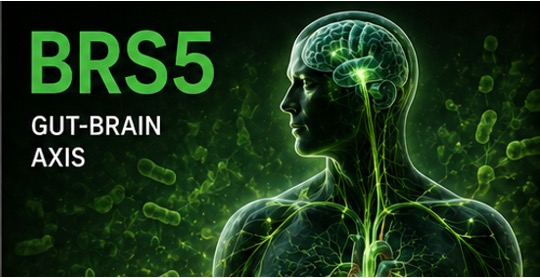
BRS5(FM3) - Gut-Vagal Neuromodulation & ENS Signalling
1. Definition
Diet-actionable control point regulating vagal and enteric signalling through microbial activity, barrier state, and metabolite/neurochemical cues.
2. Intervention Breakdown
Food-State Leaning
3. Functional Role
↑ vagal signalling; ↑ ENS-brain communication; ↑ mood/attentional regulation support
4. Mechanistic Basis (Implementation of PMs)
Integrated control of gut-brain neuromodulation through vagal signalling, precursor-handling context, and beneficial ecological support.
PM5 governs Vagal / ENS Signalling Modulation. PM6 governs Neurotransmitter Precursor Biotransformation & Availability. PM7 governs Keystone Taxa Support.
Together, these PMs operationalise BRS5(FM3) as coordinated gut-vagal neuromodulation and ENS signalling.
At the integrated FM level, this is the gut-side communication layer through which ecology, barrier state, and microbial/neuroactive cues may influence attentional, mood, and regulatory context without collapsing BRS5 into BRS1 neurotransmitter biology [1][2][3].
5. Underlying Mechanisms and Requirements
5.1 Cofactors and Substrates
| PM | Cofactors | KC substrates |
|---|---|---|
| BRS5(PM5) | magnesium, GABA-supportive cofactors, polyphenols | fermentable fibres and resistant starch (KC1) |
| BRS5(PM6) | protein sufficiency, B6, magnesium, iron | fermentable fibres and resistant starch (KC1); barrier-supportive nutrients (KC3) |
| BRS5(PM7) | fermentable fibre, polyphenols | fermentable fibres and resistant starch (KC1); microbiome-active polyphenols and plant diversity (KC2) |
5.2 PMs (Primary Mechanisms)
- BRS5(PM5) - Vagal / ENS Signalling Modulation
- BRS5(PM6) - Neurotransmitter Precursor Biotransformation & Availability
- BRS5(PM7) - Keystone Taxa Support
5.3 KCs (Key Constraints)
5.4 Cross-BRS Links
6. Dietary Levers
Diet
- Fermented foods ← vagal-relevant microbial activity support
- Fibre-rich meals ← SCFA and ENS support context
- Protein-rich whole foods with ecological support ← precursor-handling context
7. Lifestyle Levers
Lifestyle
- Regular meal timing may support ENS rhythm and reduce signalling volatility.
- Repeated exposure and rhythm matter more than single probiotic or fermented-food additions.
8. Scoreable Inputs & Modulation Signals
These inputs are used within the BRAIN Diet ontology to generate evidence-constrained estimates of plausible BRS5 support. They are not direct measures of clinical efficacy.
Scoreable Input Categories
| Input Category | Example Inputs | Functional Relevance |
|---|---|---|
| Functional Property Potentials | fermented_food_pattern; meal_rhythm_support; precursor_support | May support gut-vagal neuromodulation and ENS signalling. |
| Realised Functional States | fermented_food_inclusion; regular_meal_pattern; protein_plus_fibre_pattern | Represent practical gut-neuromodulation states. |
| Substance / Nutrient Signals | magnesium; B6; iron; polyphenols | Supportive nutrient signals linked to this FM cluster. |
| Preparation Transformations | live_fermented_food_use; minimally_processed_matrix | May preserve neuroactive microbial and precursor context. |