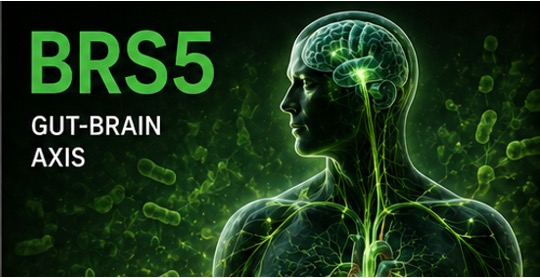
BRS5(PM5) - Vagal / ENS Signalling Modulation
1. Definition
Modulation of vagal and enteric nervous system signalling through microbial activity and gut-derived neuroactive cues.
This PM captures one of the main gut-to-brain communication routes within BRS5(FM3) - Gut-Vagal Neuromodulation & ENS Signalling, where microbial and gut-state cues are transduced into vagal and enteric signalling context [1][2].
2. Intervention Breakdown
Food-State Leaning
3. Functional Role
↑ vagal tone signalling; ↑ gut-brain neuromodulatory input
4. Mechanistic Basis
Summary
BRS5(PM5) links fermented foods, fibre-supported microbial activity, and rhythmic eating patterns to vagal and enteric neuromodulatory signalling [1][2].
Vagal signalling and gut-derived neuromodulation
(Vagal route of communication)
The vagus nerve and ENS provide a route by which gut state can influence central regulatory context without requiring direct neurotransmitter transfer across the blood-brain barrier.
(Dietary support context)
Fermented foods, fibre diversity, and ecological stability may influence the microbial and neuroactive signals entering this route, while meal regularity helps shape enteric rhythm context.
(Cross-system context)
Because neuromodulatory interpretation depends partly on membrane and glycaemic state, this PM links outward to BRS1 and BRS6 support layers.
5. Underlying Mechanisms and Requirements
5.1 Co-factors
- GABA-supportive cofactors
- magnesium
- polyphenols
5.2 KCs (Key Constraints)
5.3 Cross-BRS Links
6. Dietary Levers
Diet
- Fermented foods ← yogurt, kefir, fermented vegetables
- Fibre diversity ← varied plant foods
- Regular meals ← ENS rhythm support
7. Lifestyle Levers
Lifestyle
- Repeated daily patterning matters more than one-off vagal-support ideas.
- Meal regularity may be especially relevant where enteric rhythm is unstable.
8. Scoreable Inputs & Modulation Signals
This PM is scoreable through fermented-food, fibre-diversity, and meal-rhythm signals.
Scoreable Input Categories
| Input Category | Example Inputs | PM5 Relevance |
|---|---|---|
| Functional Property Potentials | fermented_food_pattern; fibre_diversity; meal_rhythm_support | May support vagal / ENS signalling modulation. |
| Realised Functional States | fermented_food_inclusion; regular_meal_pattern | Reflect practical gut-neuromodulation states. |
| Substance / Nutrient Signals | magnesium; polyphenols | Supportive signals relevant to this PM. |
| Preparation Transformations | live_fermented_food_use; minimally_processed_matrix | May preserve neuroactive microbial context. |