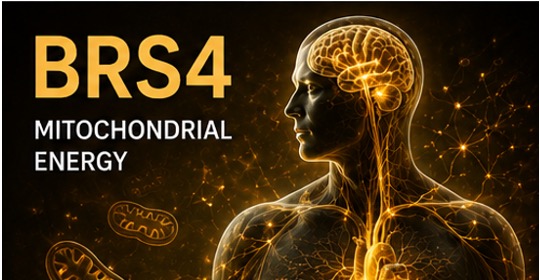
BRS4(PM5) - Mitochondrial Protection (Redox Integrity)
1. Definition
Protection of mitochondrial membranes, enzymes, and redox systems from oxidative damage.
Within BRS4, this PM captures structural and redox protection at the organelle level, helping preserve mitochondrial function within BRS4(FM2) - Mitochondrial Resilience & Redox Stability [1][2][3].
2. Intervention Breakdown
Food-State Dominant
3. Functional Role
↑ mitochondrial resilience; ↓ oxidative burden
4. Mechanistic Basis
Summary
BRS4(PM5) links antioxidant-rich, sulfur-supportive, and membrane-protective food patterns to greater resistance against oxidative damage to mitochondrial structures and redox systems [1][2][3].
Mitochondrial membrane protection and redox integrity
(Organelle-level protection)
Mitochondria rely on intact membranes, enzymes, and redox systems to maintain efficient energy production; oxidative damage to these structures undermines resilience and output.
(Dietary support logic)
Vitamin E, CoQ10, sulfur-containing foods, and related antioxidant-supportive patterns may help preserve mitochondrial membrane integrity and protect redox function from cumulative oxidative load [1][2].
(Cross-BRS context)
This PM overlaps conceptually with broader systemic oxidative stress, but remains focused on mitochondrial protection; the wider redox environment is represented by BRS3(PM3) - ROS Generation vs Clearance Balance.
5. Underlying Mechanisms and Requirements
5.1 Co-factors
- CoQ10
- magnesium
- selenium
- vitamin E
5.2 KCs (Key Constraints)
5.3 Cross-BRS Links
6. Dietary Levers
Diet
- CoQ10 ← oily fish, meat
- Vitamin E ← nuts, seeds, extra virgin olive oil
- Sulfur-supportive foods ← alliums, crucifers
7. Lifestyle Levers
Lifestyle
- Lower oxidant exposure and gentler cooking support the protective role of this PM.
- Recovery and sleep quality may influence how much oxidative burden mitochondria must absorb over time.
8. Scoreable Inputs & Modulation Signals
This PM is scoreable through membrane-protective and mitochondrial antioxidant-support signals.
Scoreable Input Categories
| Input Category | Example Inputs | PM5 Relevance |
|---|---|---|
| Functional Property Potentials | membrane_protection_pattern; sulfur_support; mitochondrial_antioxidant_support | May support mitochondrial redox integrity. |
| Realised Functional States | antioxidant_paired_fat_quality_meal; sulfur_rich_pattern | Reflect practical protective states. |
| Substance / Nutrient Signals | CoQ10; vitamin E; selenium; magnesium | Direct nutrient signals relevant to this PM. |
| Preparation Transformations | gentle_cooking; lower_reused_oil_exposure | May reduce damage pressure on mitochondrial membranes. |