BRS-X - Cross-System Regulation
Overview
Biological Regulatory Systems (BRSs) describe the primary domains of biological regulation targeted by the BRAIN Framework. However, some biological systems operate across multiple BRSs simultaneously and cannot be accurately represented within a single domain.
BRS-X systems capture these cross-system regulatory networks. They function as higher-order signalling architectures that influence multiple BRSs concurrently and provide important integration layers within the wider framework.
Rationale for inclusion as a distinct BRS
BRS-X systems were defined as a separate regulatory class because some signalling architectures — notably the endocannabinoid system, hormone signalling, and circadian timing — operate across several primary BRSs at once and cannot be located inside a single domain without distortion. They can modify neurotransmission, inflammation, metabolism, mitochondrial function and gut–brain communication concurrently. BRS-X is therefore represented as a cross-system overlay, not as a seventh primary BRS and not as a substitute for BRS1–BRS6. It is not presented as a universal hormonal or endocannabinoid explanation for brain-related conditions, but as a coherent set of diet- and life-stage-responsive networks with biologically traceable dependencies across the wider framework.
BRS-X Systems
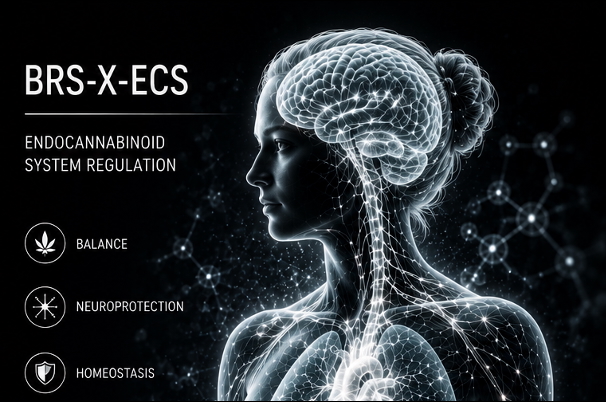
BRS-X(ECS) — Endocannabinoid System
Cross-system signalling network involved in neurotransmission, inflammation, metabolism, mitochondrial regulation, gut–brain communication, appetite regulation, stress adaptation, and neuroplasticity.
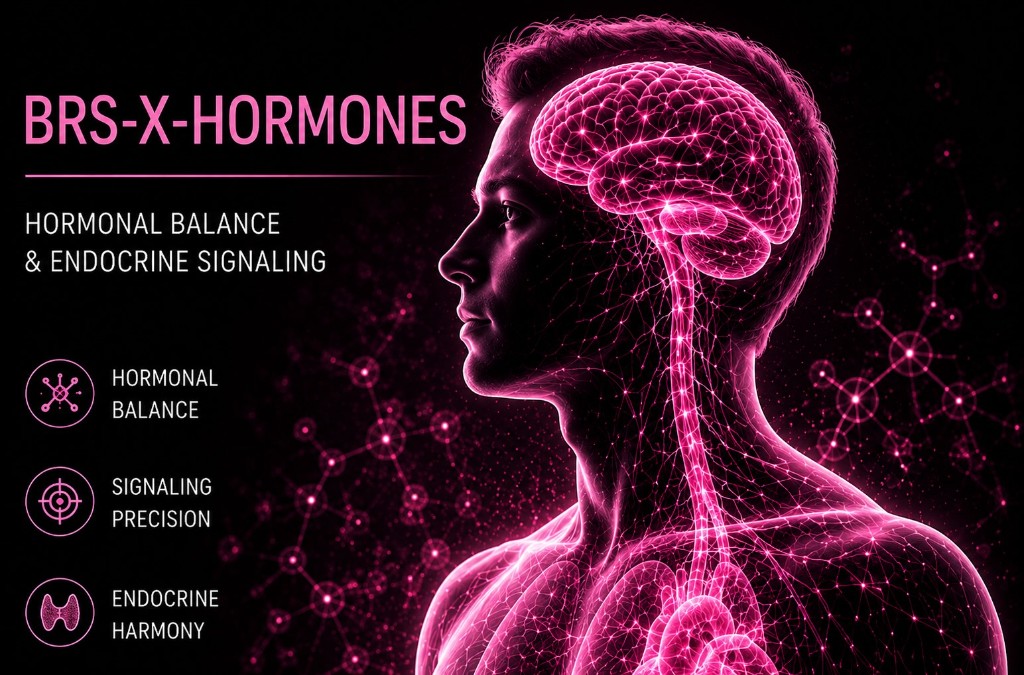
BRS-X(Hormones) — Hormone Signalling & Regulation
Cross-system endocrine signalling network governing hormone production, hormone-responsive regulation, microbial hormone metabolism, hormone recycling, and neuroendocrine communication across multiple biological systems.
Scope includes estrogen, progesterone, and testosterone signalling; hormone–microbiome interactions; estrobolome and androbolome biology; and hormonal adaptation across life stages.
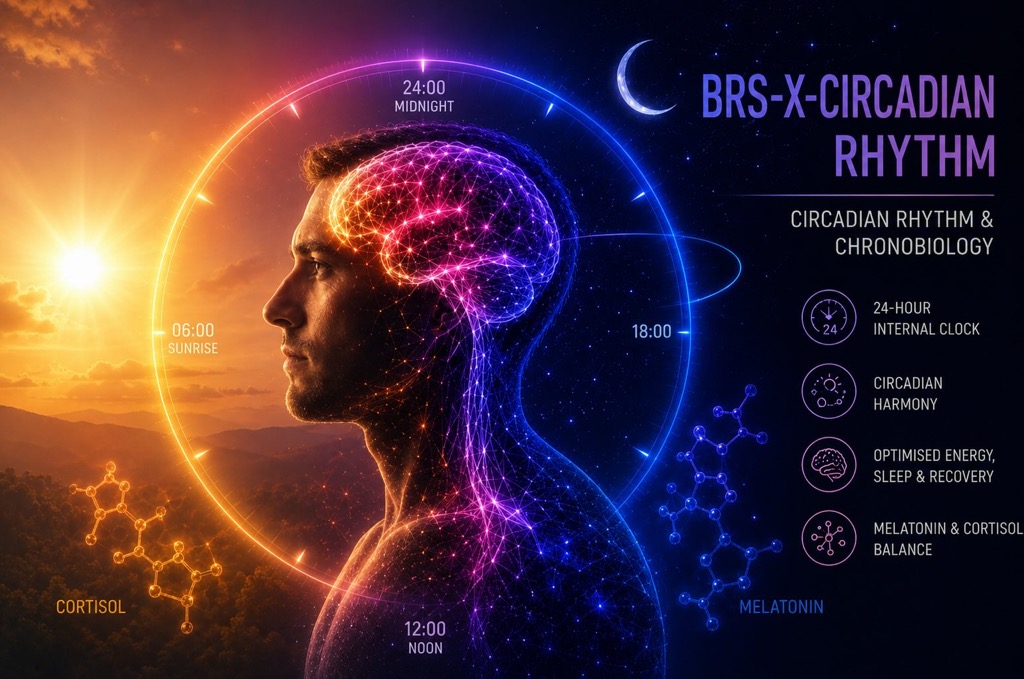
BRS-X(Circadian) — Temporal Regulation & Circadian Alignment
Cross-system timing network for retinal light, which sets the central clock, and feeding time, which can shift peripheral metabolic clocks. Cortisol output remains with BRS6. A metabolic benefit from meal timing does not, by itself, establish clock synchronisation.
Cross-BRS Dependencies
BRS-X networks interact with mechanisms across BRS1–BRS6. Each connection needs its own biological explanation and evidence boundary.
Temporal Regulation & Circadian Alignment
Circadian cross-BRS dependency evidence connects timing with dopaminergic regulation, cortisol and metabolic responses, feeding-hormone entrainment, and clock–NAD⁺ feedback. The circadian hub provides expandable evidence panels and links to the owning PMs.