Chicory Root

Overview
Chicory root contains fructans at 8.40 ± 0.186 g per 100 g fresh weight. That figure is reported separately from fructooligosaccharides and is not a combined fructo-oligosaccharide and galacto-oligosaccharide amount [4]. The nutrient table is raw chicory root. Dietary fibre in that table is 1.5 g per 100 g and does not include inulin. Prebiotic fibres have been studied for gut–brain axis markers including cortisol response [2].
Within the BRAIN Diet framework, chicory root (and inulin ingredients) support fermentable-fibre diversity; typical use is as roasted drink or inulin additive rather than whole-root bulk intake [1,2].
Key Nutritional Highlights
- Fructans, 8.40 ± 0.186 g per 100 g fresh weight, reported separately from fructooligosaccharides [4]. The table’s 1.5 g fibre is dietary fibre and does not include this fructan figure.
- Prebiotic intake studied for cortisol and emotional-bias endpoints [2].
- Roasted chicory beverage is caffeine-free coffee substitute.
- Introduce gradually to limit fermentative GI discomfort.
Food Context
Synergies
- Part of diverse prebiotic fiber strategy
Preparation
- Can be consumed as root vegetable or coffee substitute
- High inulin content
- Supports Bifidobacterium and Akkermansia
Recipes
Nutrient Tables (per 100 g)
Selected food and preparation: Chicory roots, raw (Cichorium intybus). per 100 g edible portion; dietary fibre does not include inulin.
Core nutrients
| Nutrient | Amount per 100 g | % reference intake per 100 g |
|---|---|---|
| Energy | 72 kcal | — |
| Protein | 1.4 g | — |
| Total fat | 0.2 g | — |
| Carbohydrates | 17.5 g | — |
| Sugars | 8.7 g | — |
| Fibre | 1.5 g | — |
Key vitamins and minerals
Vitamins and minerals supplying at least 10% of an adult reference intake per 100 g, derived from the composition panel.
| Nutrient | Amount per 100 g | % reference intake per 100 g |
|---|---|---|
| Manganese | 0.2 mg | 10.1% |
| Vitamin B6 | 0.2 mg | 18.5% |
Bioactive compounds
| Compound / class | Amount per 100 g | Notes |
|---|---|---|
| Fructans | 8.40 ± 0.186 g per 100 g fresh weight | — |
- Fructans: Fructans, 8.40 ± 0.186 g per 100 g fresh weight. Not a fructooligosaccharide amount and not a combined fructo-oligosaccharide plus galacto-oligosaccharide amount.
Technical provenance
Fructans: Jovanovic-Malinovska et al. 2014 reported chicory-root fructans at 8.40 ± 0.186 g per 100 g fresh weight, separately from the fructooligosaccharide figures in the same paper. This is not an oligofructose amount, not galacto-oligosaccharides, and not the combined experimental preparation.
Substances
9 substances in this food
Jovanovic-Malinovska et al. 2014 reported fructans at 8.40 ± 0.186 g per 100 g fresh weight in chicory root. The paper reports this separately from fructooligosaccharides.
Iron
USDA SR Legacy, FDC 169993 reports 0.8 mg iron per 100 g edible portion in Chicory roots, raw (Cichorium intybus).
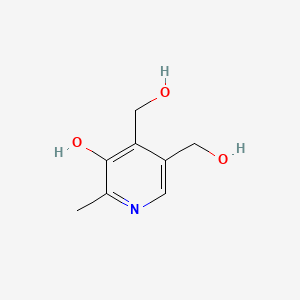
Vitamin B6 (Pyridoxine → PLP)
USDA SR Legacy, FDC 169993 reports 0.241 mg vitamin B6 per 100 g edible portion in Chicory roots, raw (Cichorium intybus).
Copper
USDA SR Legacy, FDC 169993 reports 0.077 mg copper per 100 g edible portion in Chicory roots, raw (Cichorium intybus).
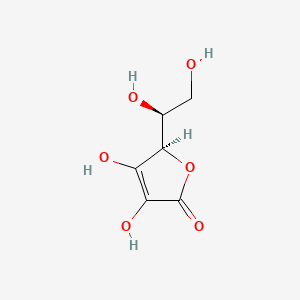
Vitamin C (Ascorbate)
USDA SR Legacy, FDC 169993 reports 5 mg vitamin C per 100 g edible portion in Chicory roots, raw (Cichorium intybus).
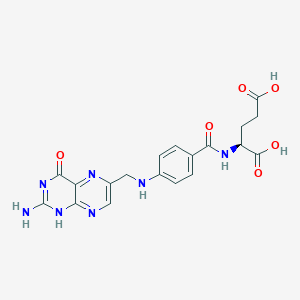
Vitamin B9 (Folate)
USDA SR Legacy, FDC 169993 reports 23 µg folate per 100 g edible portion in Chicory roots, raw (Cichorium intybus).
Selenium
USDA SR Legacy, FDC 169993 reports 0.7 µg selenium per 100 g edible portion in Chicory roots, raw (Cichorium intybus).
Zinc
USDA SR Legacy, FDC 169993 reports 0.33 mg zinc per 100 g edible portion in Chicory roots, raw (Cichorium intybus).
Magnesium
USDA SR Legacy, FDC 169993 reports 22 mg magnesium per 100 g edible portion in Chicory roots, raw (Cichorium intybus).
References
[1] High inulin content — fermentable prebiotic fibre. Pouille & Ouaza 2022. Chicory: Understanding the Effects and Effectors of This Functional Food
[2] Prebiotic intake studied for cortisol and emotional-bias endpoints. Schmidt & Cowen 2015. Prebiotic intake reduces the waking cortisol response and alters emotional bias in healthy volunteers
[3] Chicory roots, raw (Cichorium intybus), USDA SR Legacy FDC 169993
[4] Jovanovic-Malinovska et al. (2014). Oligosaccharide profile in fruits and vegetables as sources of prebiotics and functional foods. Chicory-root fructans were 8.40 ± 0.186 g per 100 g fresh weight, reported separately from fructooligosaccharides.
Food composition → admitted dietary relationships
These links join food composition to existing PM admissions. They do not establish that a portion reproduces an intervention, delivers an intact cofactor to tissue, or improves a clinical outcome. Derived supply retains its conversion and delivery limits.
- Iron → BRS1-FM1-PM3 · Type A / direct
Food form & relationship limits
Human intake-to-dopamine responsiveness and clinical benefit were not established; the direct dopamine-metabolite evidence assessed here is preclinical deficiency evidence.
Chicory roots, raw (Cichorium intybus); raw.
- Vitamin B6 → BRS1-FM1-PM3 · Type A / derived
Food form & relationship limits
Dietary B6 can supply PLP precursors, including vitamers that enter the central nervous system, but increasing B6 intake has not been shown to increase human brain dopamine synthesis.
Chicory roots, raw (Cichorium intybus); raw.
- Magnesium → BRS1-FM1-PM3 · Type A / direct
Food form & relationship limits
Catalytic capacity does not show that extra dietary magnesium increases regional catecholamine clearance or improves function. COMT isoforms, genotype, SAM availability and tissue homeostasis constrain interpretation; increased clearance is not universally desirable.
Chicory roots, raw (Cichorium intybus); raw.
- Iron → BRS1-FM1-PM4 · direct
Food form & relationship limits
Human intake-to-noradrenaline responsiveness and clinical benefit were not established; the cited dopamine-metabolite and developmental evidence is not a noradrenaline-dosing trial.
Chicory roots, raw (Cichorium intybus); raw.
- Vitamin B6 → BRS1-FM1-PM4 · Type A / derived
Food form & relationship limits
Dietary B6 can supply PLP precursors, including vitamers that enter the central nervous system, but increasing B6 intake has not been shown to increase human brain noradrenaline synthesis.
Chicory roots, raw (Cichorium intybus); raw.
- Copper → BRS1-FM1-PM4 · Type A / direct
Food form & relationship limits
Copper is required by the enzyme. Genetic copper-trafficking disease and animal deficiency models are not evidence that extra dietary copper raises brain noradrenaline when copper status is adequate.
Chicory roots, raw (Cichorium intybus); raw.
- Vitamin C (ascorbate) → BRS1-FM1-PM4 · Type A / direct
Food form & relationship limits
Ascorbate is required in the reaction. That does not show that ordinary dietary vitamin C increases human brain noradrenaline or improves attention when vitamin C status is adequate.
Chicory roots, raw (Cichorium intybus); raw.
- Magnesium → BRS1-FM1-PM4 · Type A / direct
Food form & relationship limits
Catalytic capacity does not show that extra dietary magnesium increases regional catecholamine clearance or improves function. COMT isoforms, genotype, SAM availability and tissue homeostasis constrain interpretation; increased clearance is not universally desirable.
Chicory roots, raw (Cichorium intybus); raw.
- Iron → BRS1-FM1-PM5 · Type A / direct
Food form & relationship limits
Iron is required by the hydroxylase. That is not evidence that extra dietary iron raises brain serotonin when iron status is adequate.
Chicory roots, raw (Cichorium intybus); raw.
- Vitamin B6 → BRS1-FM1-PM5 · Type A / derived
Food form & relationship limits
Dietary B6 can supply PLP precursors, including vitamers that enter the central nervous system, but increasing B6 intake has not been shown to increase human brain serotonin synthesis.
Chicory roots, raw (Cichorium intybus); raw.
- Magnesium → BRS1-FM4-PM11 · Type A / direct
Food form & relationship limits
Neuronal ion-manipulation experiments establish physiological capacity, not oral magnesium delivery at a pharmacological concentration, treatment of excitotoxic injury or benefit above adequacy. Brain homeostasis and membrane voltage remain determinants; more NMDA inhibition is not automatically beneficial.
Chicory roots, raw (Cichorium intybus); raw.
- Vitamin B6 → BRS1-FM4-PM9 · Type A / derived
Food form & relationship limits
Dietary B6 provision of PLP precursors is supported, but increasing B6 intake has not been shown to increase human brain GABA synthesis; PLP supports many enzymes and is not GABA-specific.
Chicory roots, raw (Cichorium intybus); raw.
- Vitamin B9 (folate) → BRS2-FM1-PM1 · Type A / derived
Food form & relationship limits
This conversion pathway does not show that increasing folate intake increases tissue remethylation flux. Folic acid lowers blood homocysteine, which is a circulating marker.
Chicory roots, raw (Cichorium intybus); raw.
- Zinc → BRS2-FM1-PM2 · Type A / direct
Food form & relationship limits
Human purified-enzyme metal removal/reconstitution and ligand mutants establish zinc-dependent capacity. Dietary zinc supplies the same element, but no human extra-intake BHMT flux response, intake threshold or cognitive benefit is established.
Chicory roots, raw (Cichorium intybus); raw.
- Magnesium → BRS2-FM1-PM3 · Type A / direct
Food form & relationship limits
Human MAT structural and enzymological evidence establishes catalytic capacity. Ordinary food supply is distinct from measured MAT flux; no benefit from additional magnesium in replete people or universal methylation increase is asserted.
Chicory roots, raw (Cichorium intybus); raw.
- Vitamin B9 (folate) → BRS2-FM1-PM4 · Type A / direct
Food form & relationship limits
Folic acid can lower blood homocysteine concentration. That concentration change is not a measured change in remethylation or transsulfuration rate.
Chicory roots, raw (Cichorium intybus); raw.
- Vitamin B6 → BRS2-FM1-PM4 · Type A / direct
Food form & relationship limits
In nine healthy young adults, 28 days of vitamin B6 restriction lowered plasma pyridoxal phosphate and did not change mean postprandial remethylation, transmethylation, or total transsulfuration rates.
Chicory roots, raw (Cichorium intybus); raw.
- Vitamin B6 → BRS2-FM2-PM5 · Type A / derived
Food form & relationship limits
Salvage of food vitamin B6 to pyridoxal 5'-phosphate does not show that higher vitamin B6 intake increases cystathionine beta-synthase or cystathionine gamma-lyase flux. Moderate B6 restriction changed cystathionine handling but did not significantly reduce total transsulfuration in the assessed human tracer study.
Chicory roots, raw (Cichorium intybus); raw.
- Magnesium → BRS2-FM2-PM6 · Type A / direct
Food form & relationship limits
Human GSS crystallography and cofactor annotation support capacity. The structure contains two magnesium ions; this does not establish a dietary dose, increased blood or neuronal glutathione synthesis, or benefit above adequacy. Original one-per-subunit wording is retained in history rather than used as dietary stoichiometry.
Chicory roots, raw (Cichorium intybus); raw.
- Selenium → BRS3-FM2-PM4 · direct
Food form & relationship limits
In selenium-deficient adults, plasma glutathione peroxidase activity levelled off once intake reached about 35 micrograms a day. Intake above that plateau did not raise the enzyme further, and the study did not measure net oxidative pressure.
Chicory roots, raw (Cichorium intybus); raw.
- Zinc → BRS3-FM2-PM4 · Type A / direct
Food form & relationship limits
Curated human SOD1 and experimental structural evidence support a structural capacity relationship, not zinc-dependent catalysis identical to copper. Human dietary SOD responses vary by isoform and status; extra zinc can disturb copper availability. No general oxidative-stress improvement or benefit above adequacy is established.
Chicory roots, raw (Cichorium intybus); raw.
- Copper → BRS3-FM2-PM4 · direct
Food form & relationship limits
Erythrocyte superoxide dismutase rose after copper repletion in infants with marginal copper status. That does not show that extra copper raises the enzyme when status is already adequate.
Chicory roots, raw (Cichorium intybus); raw.
- Iron → BRS3-FM2-PM4 · Type A / direct
Food form & relationship limits
Rat diet and tissue context; the kidney result is not a uniform response across organs or a human intake threshold. Human catalase haem identity supports capacity, not benefit from extra iron. Iron can also promote non-enzymatic oxidation; higher catalase activity is not a clinical benefit.
Chicory roots, raw (Cichorium intybus); raw.
- Selenium → BRS3-FM2-PM5 · Type A / direct
Food form & relationship limits
Mouse whole-organ enzyme assays do not identify mitochondrial isoforms, a human food dose or benefit above selenium adequacy. Repletion response depended on dose; antioxidant capacity does not establish clinical prevention.
Chicory roots, raw (Cichorium intybus); raw.
- Vitamin C → BRS3-FM2-PM6 · direct
Food form & relationship limits
Pulse radiolysis shows ascorbate reacting with the vitamin E radical. It does not show that more vitamin C speeds recycling in people.
Chicory roots, raw (Cichorium intybus); raw.
- Selenium → BRS3-FM2-PM6 · Type A / direct
Food form & relationship limits
Culture selenium exposure is not an oral food dose. This supports the thioredoxin arm, not selenium dependence of glutathione reductase, universal tissue recycling flux or benefit above adequacy.
Chicory roots, raw (Cichorium intybus); raw.
- Iron → BRS4-FM1-PM1 · Type A / direct
Food form & relationship limits
This identifies iron centres in the chain. It does not show that eating more iron, once iron status is adequate, raises electron transport.
Chicory roots, raw (Cichorium intybus); raw.
- Copper → BRS4-FM1-PM1 · Type A / direct
Food form & relationship limits
Specific complex-IV metal dependence and dietary-deficiency evidence support capacity supply. Rat cardiac protein/activity effects are not a human optimisation dose, a universal tissue response or proof that extra copper improves electron transport when status is adequate.
Chicory roots, raw (Cichorium intybus); raw.
- Iron → BRS4-FM1-PM10 · Type A / direct
Food form & relationship limits
Capacity admission only: no CoQ-specific intake target, rate limitation under adequate nutrition, increased synthesis from extra intake, mitochondrial delivery or clinical benefit is established.
Chicory roots, raw (Cichorium intybus); raw.
- Zinc → BRS5-FM1-PM1 · Type A / direct
Food form & relationship limits
Direct requirement evidence is principally cellular and animal, with human supplementation evidence concentrated in deficiency or disease contexts; higher intake is not established to improve PM1 in zinc-sufficient people.
Chicory roots, raw (Cichorium intybus); raw.
- Magnesium → BRS6-FM1-PM3 · Type A / direct
Food form & relationship limits
Dietary-depletion evidence is preclinical; extra intake in magnesium-replete humans is not shown here.
Chicory roots, raw (Cichorium intybus); raw.
- Zinc → BRS-X(ECS-PM1) · Type A / direct
Food form & relationship limits
Human enzyme structure and catalysis establish the metal dependency, not dietary zinc-driven brain NAE flux or benefit above adequacy. Cellular zinc homeostasis and membrane substrate access constrain loading; no extra-zinc recommendation is established.
Chicory roots, raw (Cichorium intybus); raw.
- Zinc → BRS-X(Hormones-PM5) · Type A / direct
Food form & relationship limits
This Type A relationship concerns the receptor DNA-binding domain, not stimulation of testosterone production, tissue receptor occupancy, motivation or benefit from extra zinc. Cellular zinc homeostasis and receptor expression constrain metal availability. The primary crystal used an engineered rat receptor domain; human domain identity is curated. A zinc-finger mutation study tested an arginine substitution, not dietary zinc depletion.
Chicory roots, raw (Cichorium intybus); raw.