Sourdough Soda (Fermented Cinnamon & Raisin Drink)
Overview
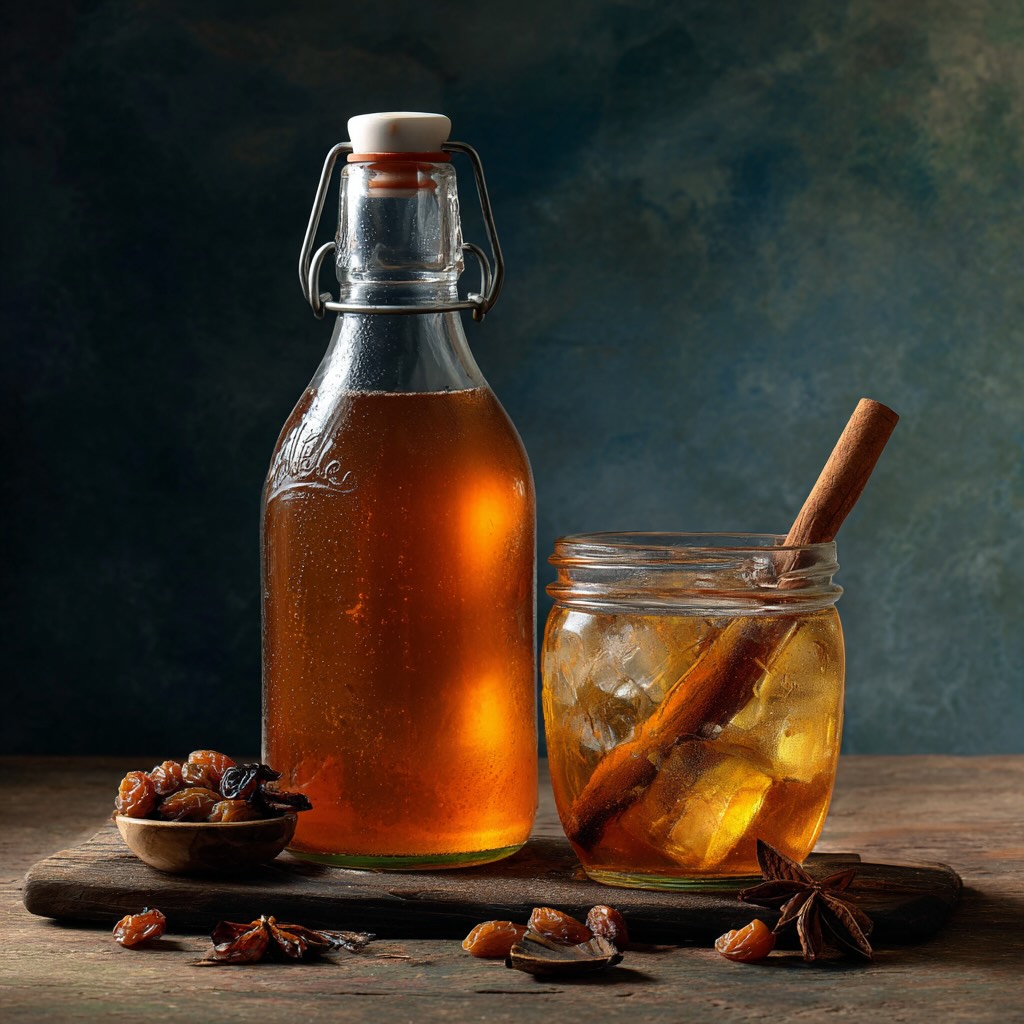
A refreshing, lightly sparkling kvass-style drink made from toasted stale sourdough, cinnamon, and raisins. Low sugar, gut-supportive, hydrating — and completely natural.
Ingredients (1.5–2 L)
- 200–250 g stale sourdough bread (ideally wholegrain or rye-based)
- 1.5 l (6.3 cup) water
- 50–70 g sugar or honey (fuel for fermentation; most is consumed)
- 1 small handful raisins (10–15)
- 1 cinnamon stick (or ½ tsp ground cinnamon)
- Optional but helpful: 1 tbsp active sourdough starter
- Optional flavour extras: strip of lemon peel; a few cloves; thin slice of fresh ginger
Method
-
Toast the bread
Cut the stale sourdough into chunks and toast at 180°C until deep golden-brown with some darker edges. This builds flavour, colour, and melanoidin/antioxidant complexity. -
Make the infusion
Add the toasted bread, raisins, cinnamon (and any optional peel/spices) to a large pot. Pour over 1.5 L of water. Bring just to a gentle simmer for 5–10 minutes, then switch off the heat. -
Steep and cool
Let the mixture steep as it cools to room temperature (about 1–2 hours). You're making a flavoured, bread-based "tea" as the base of the soda. -
Strain
Pour through a fine sieve or cheesecloth into a fermentation jug or large jar. Gently press the bread to extract liquid, but don't mash it into paste. -
Sweeten and inoculate
Once the liquid is just warm (not hot), stir in the 50–70 g sugar or honey until fully dissolved. If using, add 1 tbsp sourdough starter and stir again. -
Primary fermentation (12–36 hours)
Cover the jar with a clean cloth or a loose lid. Leave at room temperature for 12–36 hours. At ~12 h: very mild tang, little fizz; at ~24 h: more flavour, light carbonation; at ~36+ h: tangier, more pronounced fermentation. Taste every 8–12 h and stop when it reaches a pleasant balance of light sourness and gentle fizz. -
Bottle and carbonate
Strain again if needed into clean swing-top bottles or screw-cap glass bottles. Add 2–3 fresh raisins to each bottle (traditional kvass trick: they float when it's ready). Seal and leave at room temperature for 6–12 hours to build carbonation. -
Chill and serve
Move bottles to the fridge to slow fermentation. Open carefully (over the sink the first time), pour into a glass, and enjoy chilled.
Nutrition
Detailed nutrition calculation pending ingredient-weight reconciliation.
The nutrition of this drink is not the sum of its ingredients. The bread solids are strained out and discarded, most of the added sugar is consumed during fermentation, and the finished yield varies between 1.5 and 2 litres. Publishing an ingredient sum would overstate energy and carbohydrate several-fold.
Extra Guidance
- Best consumed within 3–4 days for optimal flavour and low alcohol (typically well under 1% if timings are modest).
- For a more citrusy profile, add lemon peel and reduce cinnamon slightly.
- For a ginger version, add a thin slice of fresh ginger during the initial simmer, then remove before bottling.
- If you prefer it less sweet, ferment closer to the 36-hour mark so more sugar is consumed by the microbes.
- UPF profile: 100% non-UPF; uses simple ingredients and fermentation rather than additives.
- Use case: As a low-sugar, low-alcohol alternative to soft drinks in the evening, or as a gentle digestive drink with meals.